Japanese
Taste, say and celebrate Japan, then earn the Japan stamp in World Explorer.
Free in World Explorer
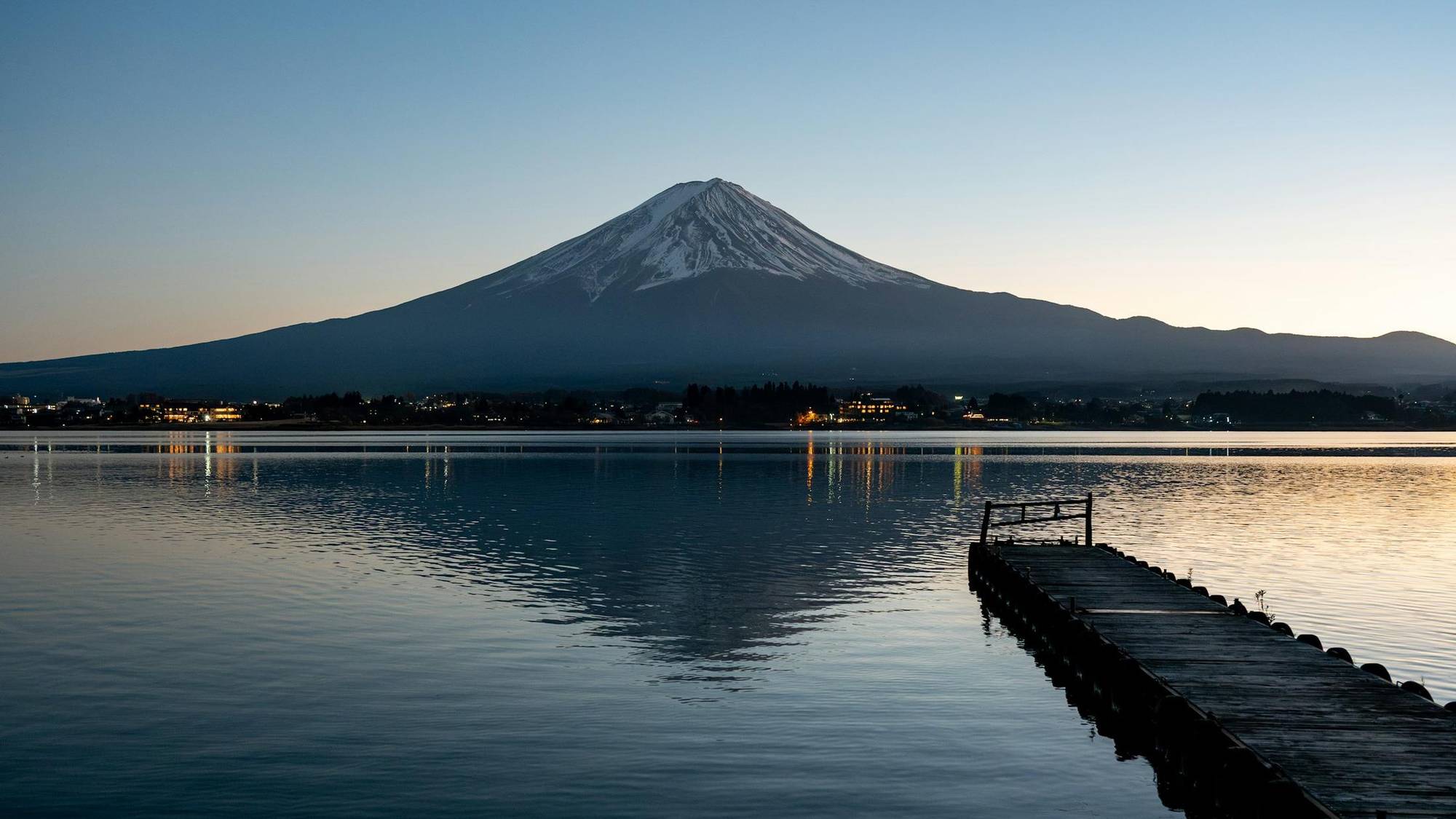
Mount Fuji at dawn, Japan · Photo: Turquo Cabbit / Unsplash
Official name
Japan (日本, Nihon or Nippon)
Capital
Tokyo
Official language(s)
Japanese (de facto)
Currency
Japanese yen (JPY)
Common greeting
Konnichiwa (こんにちは); Ohayō gozaimasu (good morning)
Calling code
+81
Time zone(s)
JST (UTC+9) nationwide; no daylight saving
Sources: Japan – Wikipedia, Time in Japan – Wikipedia, List of country calling codes – Wikipedia, ISO 4217 currency codes – SIX Group, Japan.go.jp – Government of Japan
Japan has about 125 million people spread over four main islands and thousands of smaller ones, from snowy Hokkaido to subtropical Okinawa, where Ryukyuan languages and traditions differ from the mainland. Big-city life in Tokyo or Osaka feels different from a farming village in Tōhoku. What follows describes common habits, and individuals will always depart from them.
A bow, ojigi, is the traditional greeting, and its depth and length reflect the relationship and setting. Many Japanese people will happily shake hands with visitors, but it is polite to follow their lead. Family name comes first, and -san is added to names of both men and women, as in Tanaka-san.
At business meetings, cards, meishi, are exchanged at the start. Offer yours with both hands, take theirs with both hands, read it, and place it on the table in front of you instead of pocketing it straight away. Useful phrases are hajimemashite, nice to meet you, and yoroshiku onegaishimasu, a phrase asking for good relations from now on.
Shoes come off at the genkan, the entrance of homes, and in many ryokan, temples and some restaurants; slippers are often provided, and toilet slippers are separate. Punctuality is taken seriously, public transport is quiet, and phone calls on trains are discouraged. Rubbish bins can be scarce, so many people carry their litter until they find one.
Tipping is not customary and can cause confusion; good service is part of the price. Gifts are wrapped with care and often offered with a modest remark, and the recipient may decline once before accepting. At an onsen, wash thoroughly before entering the bath and keep your towel out of the water. Policies on tattoos at baths vary, so check ahead.
Washoku, traditional Japanese food culture, was added to the UNESCO list of intangible heritage in 2013. Rice, miso soup, fish, vegetables and pickles form a classic meal, while regional specialities range from Osaka’s okonomiyaki to Hakata ramen and Okinawa’s distinct cooking. Say itadakimasu before eating and gochisōsama deshita afterwards.
Never stand chopsticks upright in rice or pass food from chopstick to chopstick, because both recall funeral rites. Slurping noodles is accepted. Pour drinks for others and let them pour for you, wait for the toast, kanpai, and pay at the till rather than at the table. Vegetarians should know that dashi, a fish-based stock, appears in many dishes, so ask clearly.
The year turns around the seasons. Shōgatsu is the New Year, with shrine visits and shared food, Tanabata pairs a star legend with paper wishes, Obon welcomes ancestral spirits in summer, and hanami gathers friends and colleagues under the cherry blossoms in spring.
On 15 November, Shichi-Go-San marks family milestones with a visit to a shrine. National holidays such as Golden Week at the turn of April and May shape travel and business calendars, so plan around them.
A Japanese wedding may follow Shinto rites at a shrine or a chapel ceremony in Western style, and the marriage becomes legal through registration at a local office. Our guest’s guide to a Japanese wedding covers the goshūgi gift envelope, dress and the timing of the day.
Decisions are often reached by building consensus before a meeting, a practice called nemawashi, so the meeting itself may confirm what colleagues have already discussed. Communication can be indirect: a response such as that would be difficult often means no. Ask open questions, allow pauses and check understanding in writing afterwards.
Seniority shapes language, with honorific speech, keigo, used towards clients and superiors, and in schools and clubs the senpai and kōhai relationship pairs older and younger members. Reporting progress early and often, known as hōrensō, is valued. After-work drinks, nomikai, are a chance to bond but are not compulsory, and you may decline politely.
Visitors are not expected to bow perfectly. A slight nod or bow with a smile is welcome, and if someone offers a handshake, you can accept it.
No. Service is included, and leaving money on the table can cause confusion. A sincere thank you is enough.
In many places it is considered impolite, especially in crowded streets and on public transport. Eat near the stall or at a designated spot.
Receive it with both hands, read it, and keep it visible on the table during the meeting. Store it respectfully afterwards.
World Explorer
Families who want to explore Japan through short games can try the Culture XI World Explorer app.