Hindi, one of India's many languages
Taste, say and celebrate India, then earn the India stamp in World Explorer.
Free in World Explorer
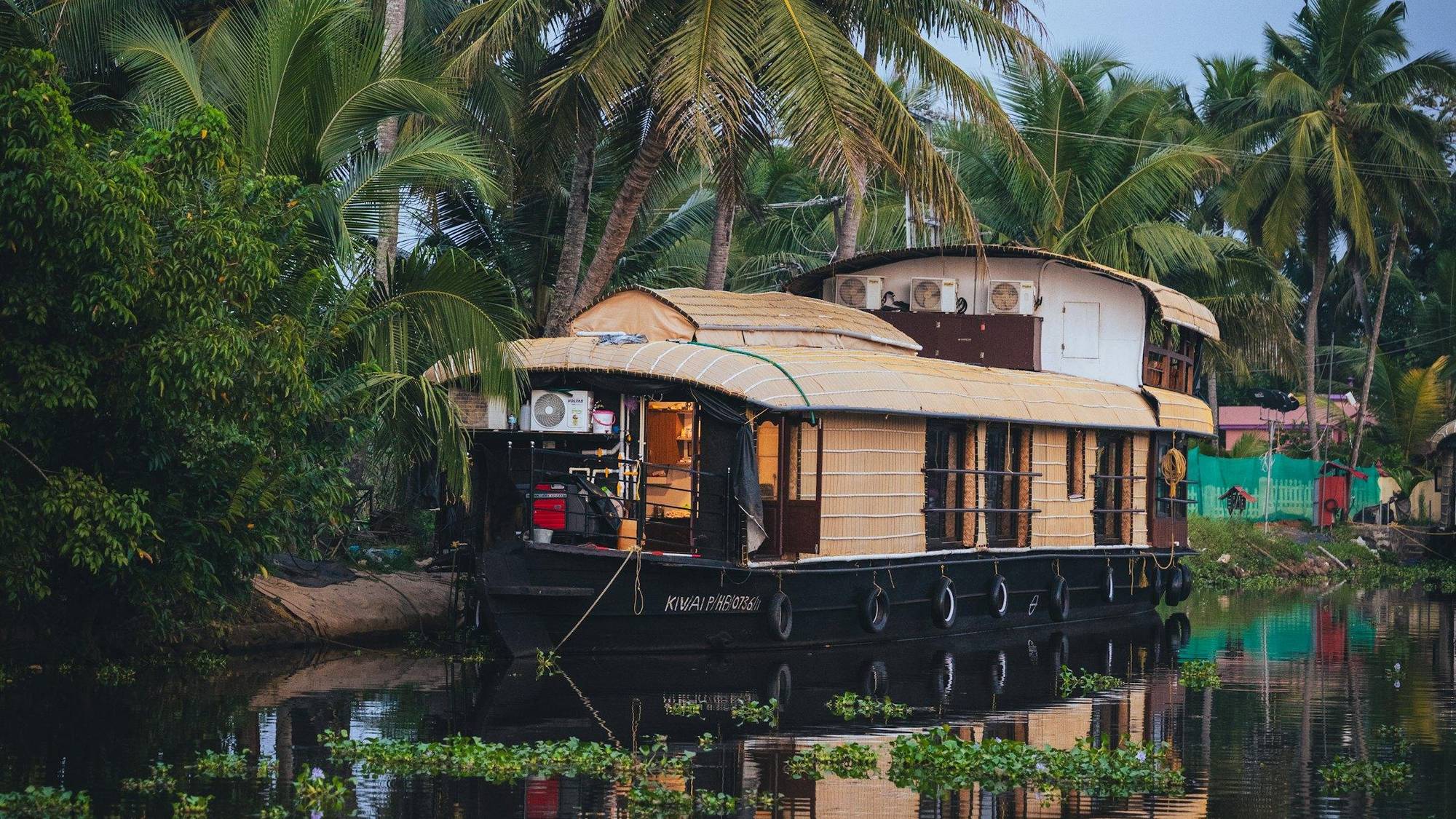
A houseboat on the Kerala backwaters, India · Photo: Vivek Kuppa / Unsplash
Official name
Republic of India (Bhārat Gaṇarājya)
Capital
New Delhi
Official language(s)
Hindi and English for the Union government; 22 languages are listed in the Eighth Schedule of the Constitution
Currency
Indian rupee (INR)
Common greeting
Namaste
Calling code
+91
Time zone(s)
IST (UTC+5:30) nationwide; no daylight saving
Sources: India – Wikipedia, Time in India – Wikipedia, List of country calling codes – Wikipedia, ISO 4217 currency codes – SIX Group, National Portal of India
India is the world’s most populous country, with 22 languages listed in its constitution, Hindi and English as official languages of the Union, and large Hindu, Muslim, Christian, Sikh, Buddhist and Jain communities. Life in Punjab, Kerala, West Bengal, Gujarat and Tamil Nadu looks and sounds different, and so does life in a village compared with a metropolis. Treat this page as an introduction, then follow the lead of the people you meet.
Namaste, said with palms pressed together and a slight nod, works across much of the country. You may also hear vanakkam in Tamil Nadu, sat sri akal among Sikhs, or as-salamu alaykum among Muslims. In business, handshakes are common; with someone of a different gender, wait to see whether they offer a hand first, and otherwise greet with namaste.
Respect for age and seniority shows in language. Adding -ji to a name, as in Sharma-ji, signals courtesy, and in many families younger people touch the feet of elders as a blessing. Visitors are not expected to do this, though a warm, unhurried greeting is always welcome.
Remove your shoes before entering a home, temple or gurdwara if others do, and cover your head where the place of worship asks you to. Offer, receive and eat with your right hand, since the left is considered less clean in many contexts. Avoid pointing your feet at people or at sacred objects.
A sideways tilt of the head can mean yes, I understand or I am listening, so look at the whole conversation rather than the gesture alone. Questions about your family, job or travels are usually friendly curiosity, and you may answer briefly and ask the same in return. Punctuality varies by city and setting, so confirm timings for important events.
There is no single Indian cuisine. Wheat breads and dairy feature in the north, rice, dosa, idli and coconut in the south, fish in Bengal and a strong vegetarian tradition in Gujarat. Many people are vegetarian for religious or family reasons, many Hindus avoid beef, many Muslims avoid pork, and some Jains avoid onion, garlic and root vegetables, so always ask before choosing dishes for a group.
Meals are often shared from a thali or from dishes placed in the centre. Wash your hands first, eat with the right hand if that is the custom, and avoid offering food from your own plate, since food that has touched the mouth is considered unclean by many families. Hosts will press second helpings on you; accepting a little is a compliment.
The festival calendar follows several lunar and solar systems, so dates move each year. Diwali lights homes in autumn, Holi greets spring with coloured powder, Raksha Bandhan honours the bond between siblings, Onam is Kerala’s harvest feast, and Durga Puja transforms Bengali neighbourhoods with art and processions.
Other occasions include Eid, Christmas, Guru Nanak Jayanti, Pongal and Makar Sankranti, as well as Republic Day on 26 January and Independence Day on 15 August. Holiday lists differ by state and by workplace.
Indian weddings range from a single-day civil registration to several days of ceremonies, and the rituals depend on faith, region and family. Our guest’s guide to an Indian wedding explains dress, gifts and the order of events.
English is widely used in business and higher education, and WhatsApp is a common channel for quick work messages. Respect for seniority can mean that junior colleagues hesitate to disagree in front of a manager, so invite views one to one. A yes may mean I have heard you, so confirm deadlines, owners and next steps in specific terms.
Colleagues may take leave for festivals whose dates are set by lunar calendars, so check the calendar before setting deadlines. For team lunches, ask about vegetarian, no-beef and no-pork needs. Students and professionals who move between India and elsewhere often switch between languages mid-sentence; this is normal and not a sign of confusion.
Namaste is safe in almost every situation. In business, handshakes are common, but with a person of a different gender wait to see whether they offer a hand.
At temples, gurdwaras, mosques and in many homes, yes. If you see shoes by the door, add yours to the pile.
No. Estimates vary, but a large share of people are vegetarian, and many others avoid certain meats. Ask your hosts and offer vegetarian options when you cater.
No. They are Hindu-centred festivals with wider participation, and many Indians celebrate other occasions. Greet people who celebrate and ask what the day means to them.
World Explorer
Families who want to explore India through short games can try the Culture XI World Explorer app.