Portuguese
Taste, say and celebrate Brazil, then earn the Brazil stamp in World Explorer.
Free in World Explorer
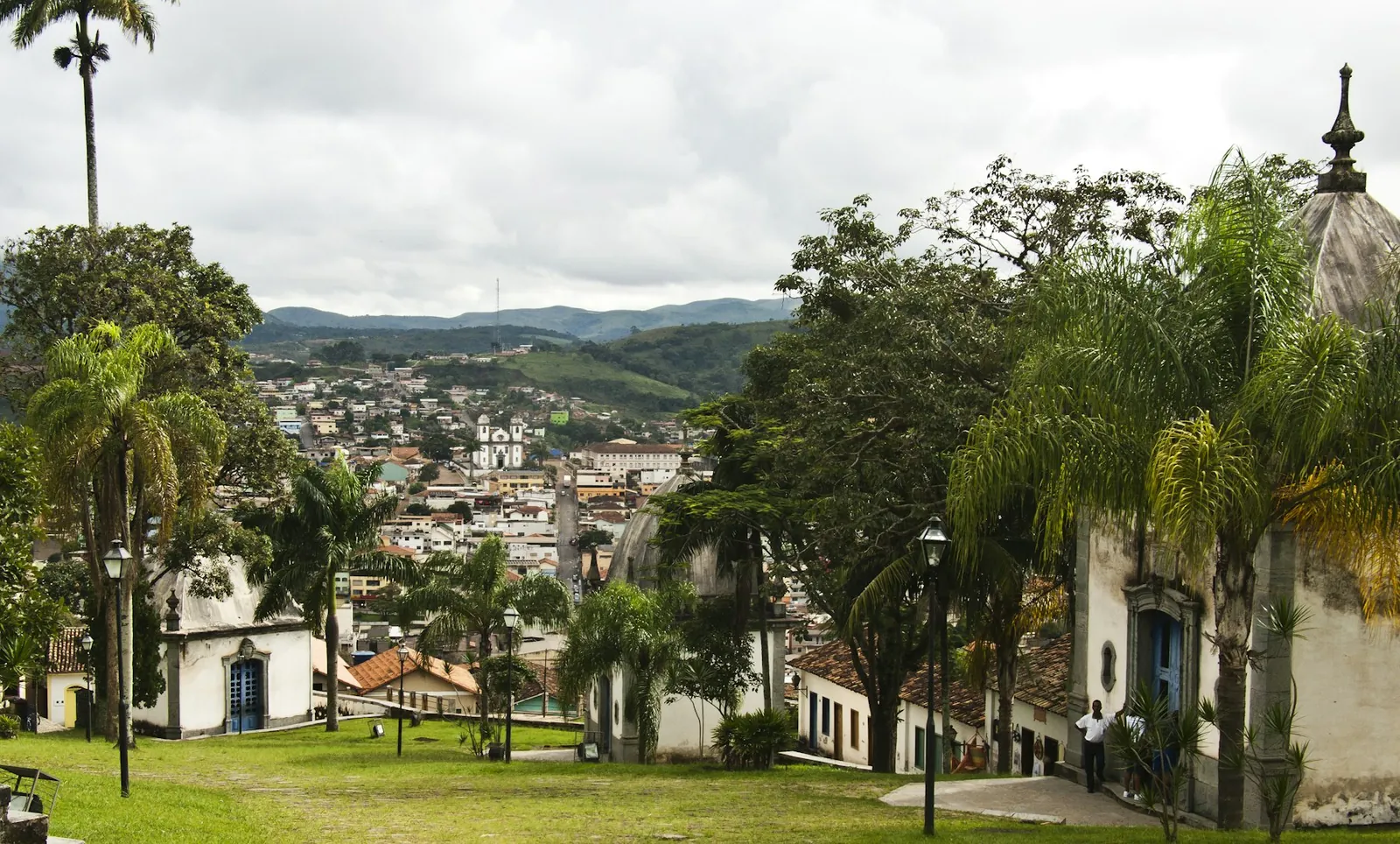
Colonial streets and palms in Congonhas, Minas Gerais · Photo: gustavo nacht / Unsplash
Official name
Federative Republic of Brazil (República Federativa do Brasil)
Capital
Brasília
Official language(s)
Portuguese
Currency
Brazilian real (BRL)
Common greeting
Oi; Olá; Bom dia (good morning)
Calling code
+55
Time zone(s)
Four zones: UTC−2 (Fernando de Noronha), UTC−3 (Brasília Time), UTC−4 and UTC−5 (Acre); no daylight saving
Sources: Brazil – Wikipedia, Time in Brazil – Wikipedia, List of country calling codes – Wikipedia, ISO 4217 currency codes – SIX Group
Brazil is the largest country in South America, home to more than 200 million people in 26 states and a federal district. Portuguese is the national language, a sign language, Libras, is also official, and hundreds of Indigenous peoples still speak their own languages. Indigenous, African, Portuguese and later Italian, German, Japanese, Lebanese and many other communities shaped the nation, and the Amazon, the dry North-East, the big cities of the South-East and the southern pampas each have their own character.
Brazilians are warm and tactile. In business a handshake with eye contact is standard, while friends and relatives greet with a hug and cheek kisses, one to three depending on the region. Oi and tudo bem? are the everyday openers, and prazer means pleased to meet you. First names are common, but use senhor or senhora, or doutor for professionals, until invited to relax. Thumbs up is positive, but the circle “OK” sign can be offensive, so avoid it.
A little Portuguese goes a long way. Remember that Brazilians speak Portuguese, not Spanish, and a greeting in the wrong language can feel dismissive.
Social time is flexible: a party invitation for eight often means people arrive after nine, whereas business meetings, especially in São Paulo, start close to schedule. Personal space is smaller than in northern Europe, and standing close or touching an arm in conversation is friendly. Small talk about family, food and football is welcome, and criticism of the country by outsiders is not.
Visitors are often invited to homes and expected to accept. Bring flowers, chocolate or wine, but avoid purple or black flowers, which are linked to mourning. Many cities are cosmopolitan, but dress for the occasion: Brazilians tend to be well groomed, even at the beach, and swimwear stays on the beach or by the pool.
Rice and beans appear daily, with meat or fish, salad and farofa, toasted manioc flour. Feijoada, a black-bean and pork stew, is a Saturday classic; moqueca is a fish stew whose Bahian and Espírito Santo versions differ; and pão de queijo, cheese bread, is everywhere. In the south churrasco, grilled meat, is a tradition shared with neighbouring countries, while the North features tacacá, açaí and river fish.
Lunch is the main meal and many restaurants serve it by weight, por quilo. Even sandwiches and pizza are often eaten with knife and fork. A service charge of ten percent is normally on the bill, and extra tipping is optional. Brigadeiro, a chocolate sweet, appears at every party, and guaraná and cafezinho, small sweet coffee, are served throughout the day. Say if you have dietary restrictions, as hosts like to feed guests generously.
Carnaval before Lent fills the streets with samba schools, street blocos and regional styles. The Círio de Nazaré in Belém is one of the biggest religious processions in the world. Festa Junina brings bonfires and square dances in June, and the Parintins Festival stages the Boi-Bumbá rivalry of the Amazon.
On New Year’s Eve, Réveillon is celebrated in white on beaches such as Copacabana, often with offerings to Iemanjá, goddess of the sea.
Brazilian weddings combine a civil or religious ceremony with a long party. Our guest’s guide to a Brazilian wedding explains dress, gifts and timing.
Relationships come first. Expect a meeting to start with coffee and conversation, and give time to build trust before pushing for decisions. Colleagues are expressive, and communication can be indirect when something is difficult; “vamos ver”, we’ll see, may mean no. Follow up politely in writing and ask open questions. WhatsApp is widely used for work, even with clients, so reply to messages in a friendly tone.
Brazil has four time zones, with Brasília time, UTC−3, covering most of the population, and no daylight saving time. Carnaval and the year-end holidays slow business down, and offices may be quiet in late December and January. In a team, be mindful of regional differences: a colleague from the South, the North-East or the Amazon may have very different habits, accents and humour.
They are related but different, and many Brazilians prefer being addressed in Portuguese. A few words such as obrigado or obrigada, thank you, are appreciated.
It varies by region, from one to three. Follow your counterpart’s lead, and use a handshake in formal business.
Yes, social events often start later than the time on the invitation, but for work or a restaurant booking be punctual.
World Explorer
Families who want to explore Brazil through short games can try the Culture XI World Explorer app.