Invited to a Japanese wedding? Here is what to expect, from the gift of money in a special envelope to what to wear, so you can celebrate with confidence and respect.
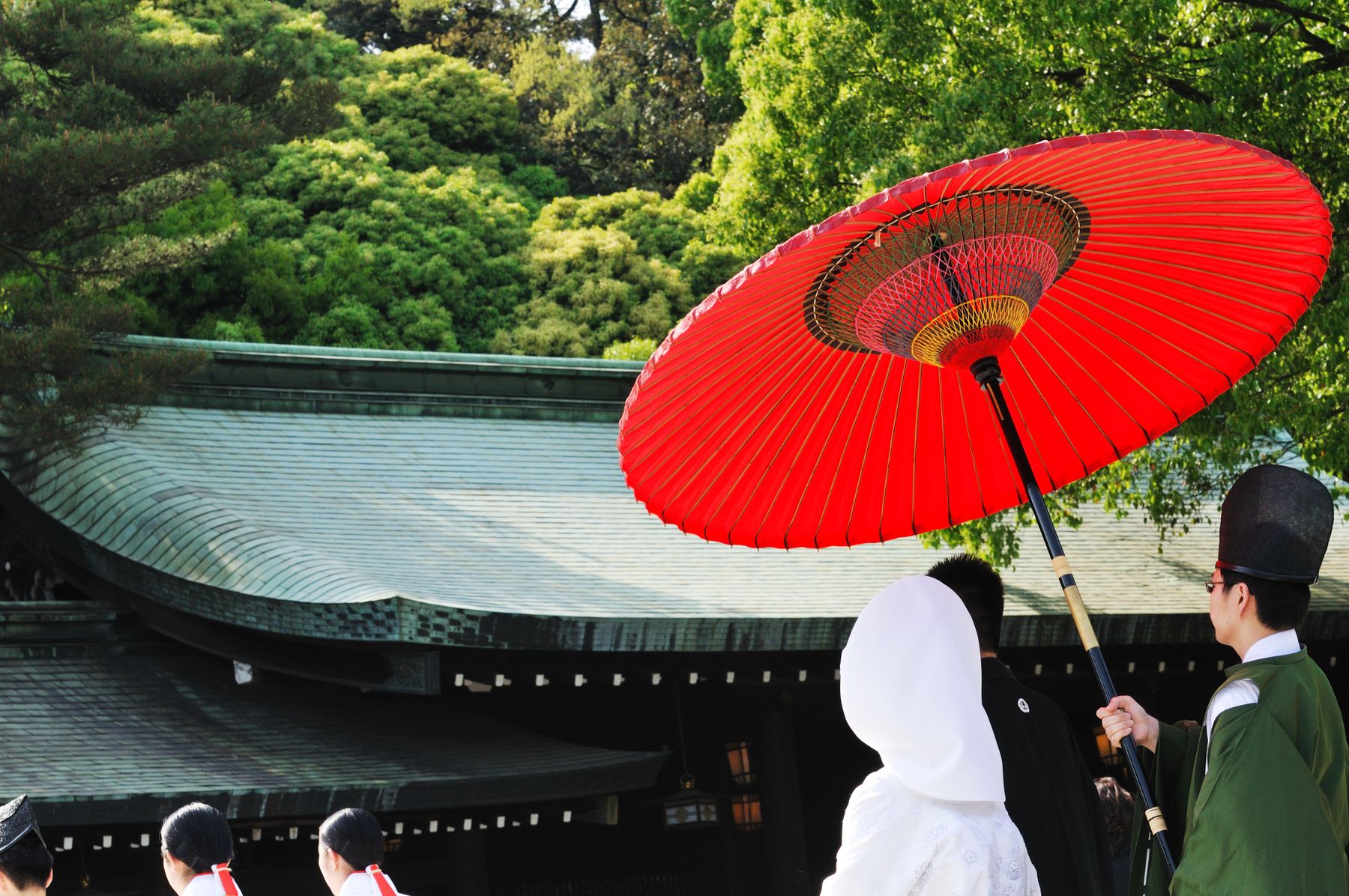
Photo: ajari / Wikimedia Commons, CC BY 2.0
Men: dark suit, white shirt, light tie. Women: smart dress, never white, shoulders covered at the ceremony.
Goshūgi: cash in new notes inside a shūgi-bukuro envelope; 30,000 yen is common from friends. Avoid 4 and 9.
Reception about 2 to 3 hours; with the ceremony, allow half a day. An after-party may follow.
Go-kekkon omedetō gozaimasu: Congratulations on your marriage
Return the reply postcard within about a week, adding a short message of congratulations.
Customs vary by region, religion and family, so treat this as a general guide. Many couples hold a small ceremony, whether Shinto, Christian-style or non-religious, often attended by close family only, followed by a reception, the hirōen, for a wider circle of guests. The marriage itself becomes legal when it is registered at the local government office. At the reception, guests sit at named places, and the programme often includes speeches from a manager or friends, a toast (kanpai), a cake cutting, the couple changing outfits and a letter read to the parents. Guests usually leave with a return gift, hikidemono, and friends may continue at an after-party, the nijikai, which normally has its own fee.
The traditional gift is goshūgi, money presented in a decorative envelope called a shūgi-bukuro, tied with a mizuhiki cord knotted so that it cannot be untied, a symbol of a bond made once. Use crisp new notes, which you can request from a bank, to show you prepared in advance. Odd amounts are preferred because they cannot be divided evenly; 30,000 yen is common from a friend or colleague, and relatives or senior guests often give more. Avoid amounts containing 4 or 9, as these numbers can sound like the words for death and suffering. Write your name on the envelope, carry it wrapped in a cloth called a fukusa if you have one, and hand it over at the reception desk rather than to the couple.
Men usually wear a formal black or dark suit with a white shirt and a white, silver or light-coloured tie. Women wear a smart dress or suit in any colour except white, which is reserved for the bride, and avoid very revealing outfits. Cover your shoulders for the ceremony with a jacket or shawl. Kimono is also entirely appropriate.
Receptions usually serve a multi-course meal, often French or Japanese, with drinks throughout. Listen attentively during speeches, join the toast and applaud warmly. If you are asked to speak, keep it short and avoid words linked to parting or ending, such as cut, break or return.
Invitations in Japan are usually addressed to named guests, so check who is included before bringing your partner or other family members. The whole family is often welcome, especially among relatives, but it is always best to ask the couple directly. If younger family members attend, many couples arrange seats and a simple meal for them, and guests often add a little to their goshūgi to reflect this.
Coming soon to the App Store.
If a colleague invites you, reply promptly and ask others how much they plan to give: 30,000 yen is common, while managers often give more. If you cannot attend, a smaller gift sent in advance is a kind gesture.
Around 30,000 yen is common from a friend or colleague, and relatives or senior guests often give more. Choose odd-numbered amounts, avoid 4 and 9, and use new notes. If unsure, ask other guests what they plan to give.
Money is the custom for guests attending the reception, as it helps cover the cost of hosting. If you cannot attend, a gift or a smaller sum of money sent before the wedding is a thoughtful alternative.
No. A warm smile and a simple go-kekkon omedetō gozaimasu (congratulations on your marriage) are much appreciated. Speeches and the programme are usually in Japanese, so following other guests’ cues is perfectly fine.