Seasonal custom
Each spring, people across Japan gather beneath the cherry trees to share food, conversation and a moment of wonder at blossom that is at its best for only a short time.
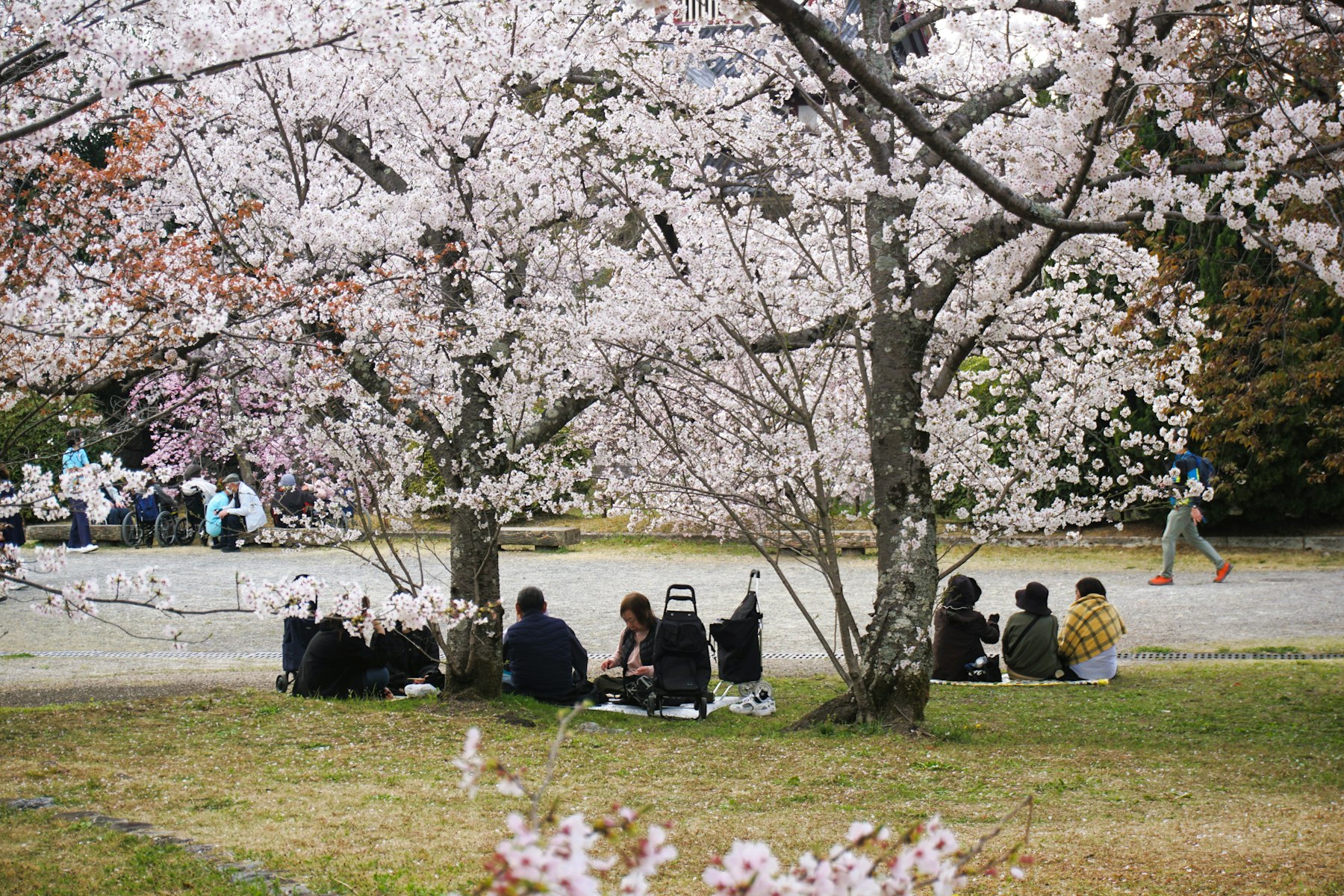
Photo: Syadza Salsabyla / Unsplash
Late March to early May, following the blossom north
Parks, riversides, temple and castle grounds across Japan, from Okinawa in the south to Hokkaido in the north.
Picnic under the blossom with friends, family or colleagues, stroll beneath lit-up trees at night and share seasonal sweets.
Sakura ga kirei desu ne: The cherry blossom is beautiful, isn't it?
Flower viewing in Japan has a long history. In the Nara period, court poets often admired plum blossom, a taste shared with China, but by the Heian period cherry blossom, sakura, had become the flower most closely associated with the word hana. Hanami spread from aristocrats to samurai and, during the Edo period, to townspeople, helped by cherry trees planted in public spaces. The brief life of the blossom came to be linked with the beauty of things that pass, an idea that still runs through Japanese poetry and art.
Each spring, private weather companies forecast the cherry blossom front as it moves north, and the Japan Meteorological Agency records first and full bloom at its sample trees. Blossom can appear in Okinawa as early as January, usually reaches Tokyo, Kyoto and Osaka in late March or early April, and arrives in Hokkaido from late April into May. The blossom is at its best in any one place for only a week or two, so people gather quickly: friends, families and colleagues spread picnic sheets in parks, along rivers and in castle grounds. Some prefer yozakura, blossom illuminated at night, while others simply take a quiet walk. Rules differ by park, and some limit alcohol, barbecues or reserving space.
Hanami is as much about sharing food as viewing flowers. Favourites include hanami bentō boxes, hanami dango skewers in pink, white and green, and sakura mochi, a sweet rice cake wrapped in a salted cherry leaf, made differently in the Kanto and Kansai regions. The Somei Yoshino variety, whose pale flowers open before the leaves, is the most widely planted, though many other varieties bloom earlier or later. The traditional melody Sakura Sakura is known across the country, and blossom appears on everything from coins to seasonal packaging.
Bring a little hanami home, wherever you live:
Coming soon to the App Store.
Enjoy the trees without touching them: shaking branches or picking blossom is frowned upon and can damage the trees. Take all rubbish home, as bins may be scarce, and keep noise reasonable near homes. Check each park's rules before bringing alcohol, stoves or large sheets. If a colleague invites you to a work hanami, it is a relaxed occasion, but arriving on time and offering to help carry food is appreciated.
It depends on where you go. In Tokyo, Kyoto and Osaka, full bloom usually falls in late March or early April, but the timing moves north and changes each year with the weather, so check the latest forecasts before you travel.
Today hanami almost always means cherry blossom, but earlier in spring many people also enjoy plum blossom, ume. The word hana itself simply means flower.
Yes. Hanami takes place in public parks and is open to everyone. Bring a picnic, find a free space, respect any park rules and take your rubbish home with you.