Seasonal festival
Tanabata, the star festival, celebrates two star-crossed lovers who meet once a year across the Milky Way. People write their wishes on paper and hang them from bamboo.
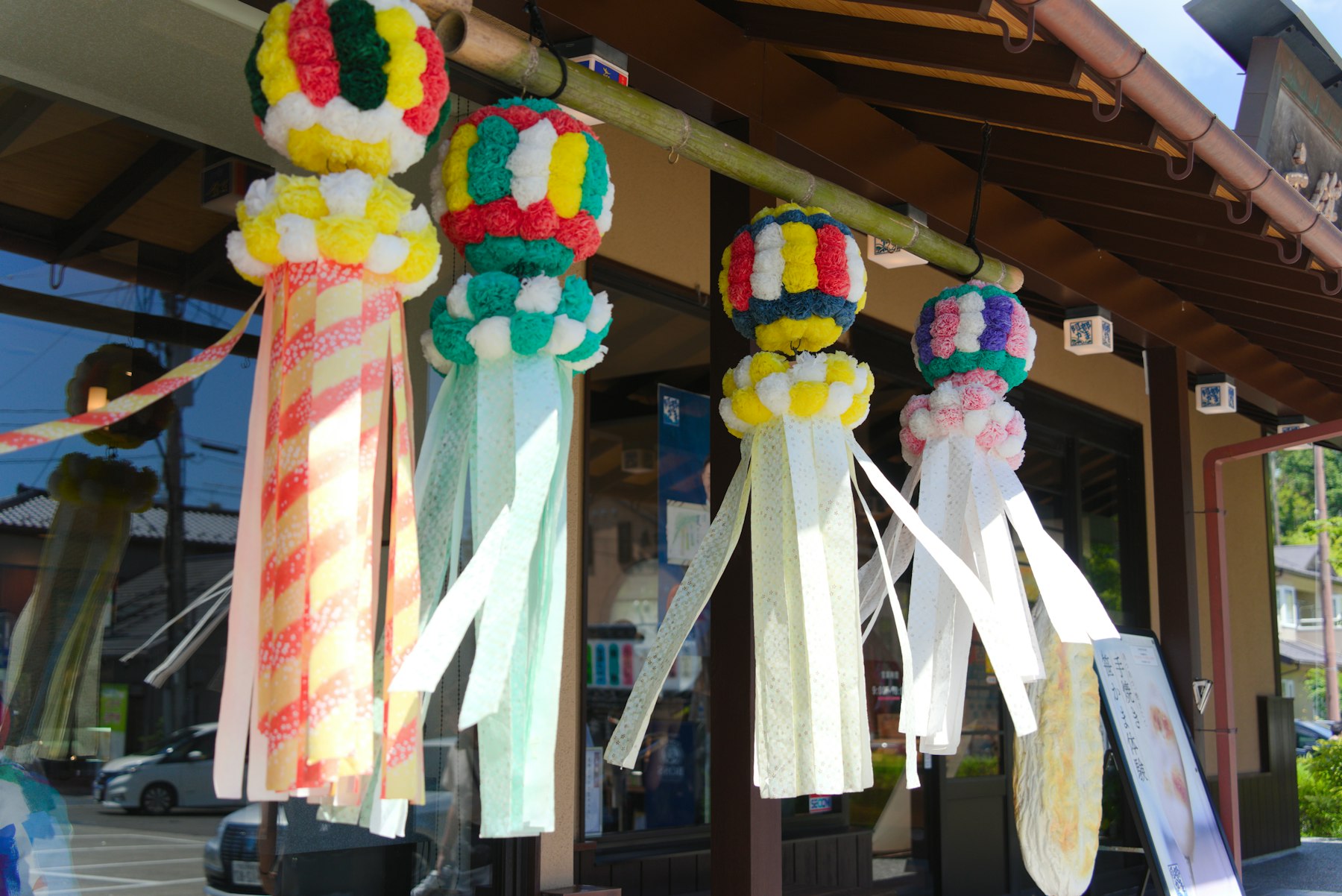
Photo: waa towaw / Unsplash
7 July (7 August in some regions)
Homes, schools, shopping streets and shrines across Japan, with large festivals in Sendai and Hiratsuka.
Write wishes on paper strips, tie them to bamboo, make paper decorations and stroll through festival streets.
Tanzaku: the paper strips on which wishes are written
Tanabata grew from a Chinese legend about two stars: Orihime, a weaver, represented by Vega, and Hikoboshi, a cowherd, represented by Altair. Their love made them neglect their work, so they were separated by the Milky Way, known in Japanese as Amanogawa, the river of heaven, and allowed to meet only once a year, on the seventh night of the seventh month. The story reached Japan more than a thousand years ago and blended with court customs of praying for skill in weaving, poetry and the arts, as well as with local summer traditions.
Many people write wishes on tanzaku, narrow strips of coloured paper, and tie them to bamboo branches at home, at school, in shopping streets and at shrines. Most places celebrate on 7 July, but some regions choose a date closer to the old lunar calendar and celebrate in August. Sendai's Tanabata festival, held in early August, is famous for its enormous, colourful paper streamers, while Hiratsuka, south-west of Tokyo, holds a large festival in July. July falls in the rainy season in much of Japan, so the stars are often hidden, and some say rain means the couple could not meet that year. In some areas, decorations were traditionally sent down rivers afterwards, a practice that has largely changed for environmental reasons.
Chilled sōmen, fine wheat noodles, are a traditional Tanabata food, sometimes linked with the weaver's threads or the flowing river of stars. Decorations carry their own meanings: paper cranes for long life, paper nets for a good harvest or catch, and small paper kimono for skill in sewing. The gentle song Tanabata-sama is taught in many schools. Above all, the bamboo, tall and fast-growing, is thought to carry wishes upwards.
Three ways to celebrate the star festival together:
Coming soon to the App Store.
If you are visiting during Tanabata, you are usually welcome to add a wish to public bamboo displays in stations, shops or festival streets; look for a table with paper and pens. Write kindly, as wishes are on view to everyone. At crowded festivals such as Sendai's, keep to the flow of people. The decorations are made by local schools, shops and community groups, so admire them without pulling or touching.
Tanabata was originally tied to the lunar calendar. After Japan adopted the Gregorian calendar in 1873, many places kept 7 July, while others, including Sendai, moved the festival to August to stay closer to the traditional season.
Anything they hope for: good health, success in exams, a new skill or happiness for their family. Wishes are usually short and written in a single line down the strip of paper.
No. Tanabata is not a national holiday in Japan, so schools and offices stay open. Large festivals, however, attract many visitors and local hotels can fill well in advance.