Buddhist observance
During Obon, families across Japan welcome the spirits of their ancestors home with lanterns, offerings and visits to family graves, then send them off with fire, light and dance.
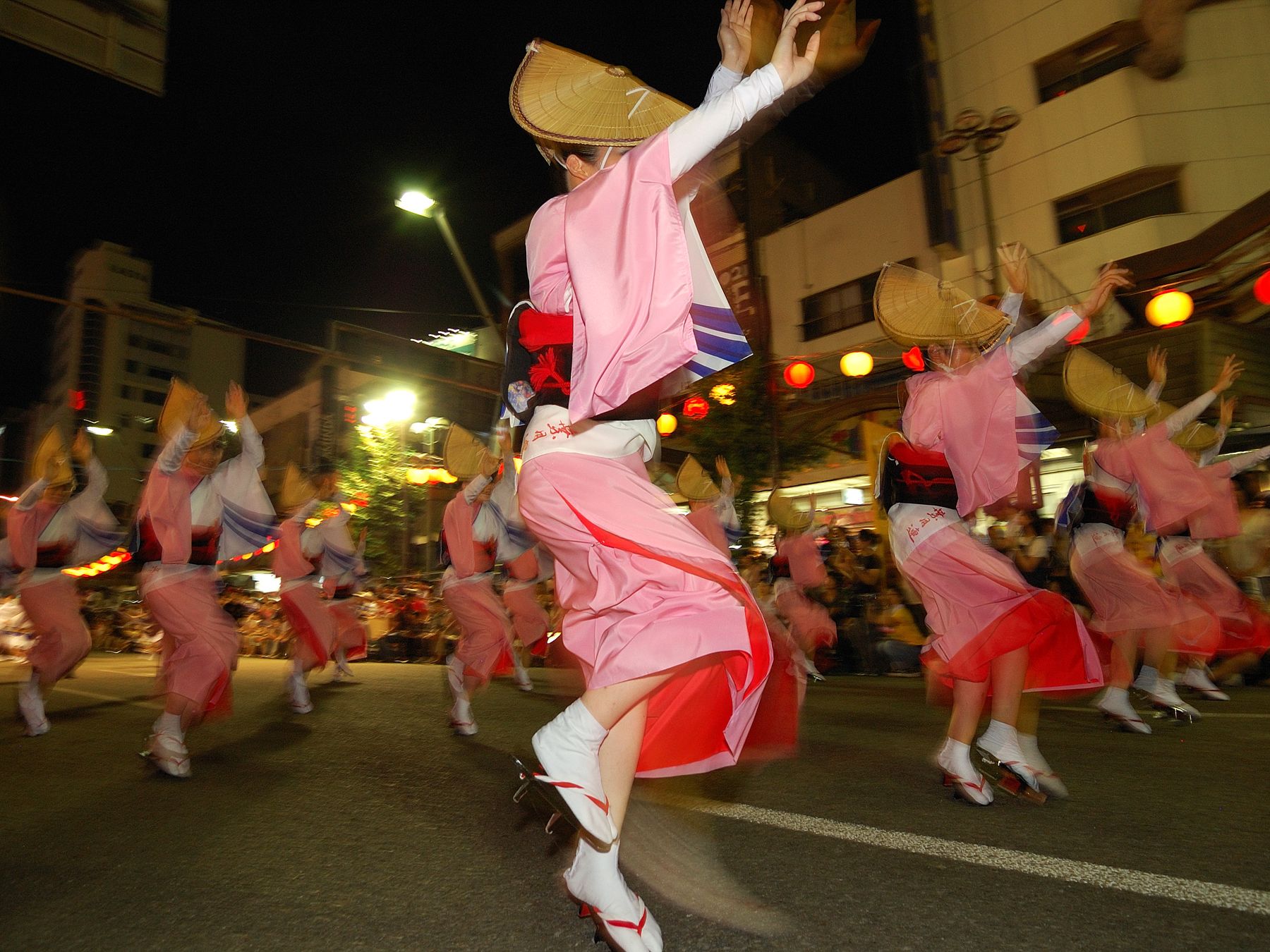
Photo: Rosino / Wikimedia Commons, CC BY-SA 2.0
Mid-August in most regions (mid-July in parts of Tokyo)
Homes, family graves and temples across Japan, with community dances in neighbourhoods, parks and town squares.
Return home, clean and visit graves, light welcoming and farewell fires, make offerings and join bon odori dances.
Bon odori: the Bon dance, open to everyone in the circle
Obon, also called Bon or Urabon, is a Buddhist observance during which families welcome the spirits of their ancestors back home for a few days. Its name is linked to the Ullambana Sutra, which tells of a disciple of the Buddha, known in Japan as Mokuren, who made offerings to relieve his late mother's suffering. In Japan this story blended with older customs of honouring the dead in summer, and Obon became one of the most important family occasions of the year.
Obon was traditionally held around the 15th day of the seventh lunar month. Today most regions observe it in mid-August, typically from around 13 to 16 August, while parts of Tokyo and some other areas keep mid-July, and parts of Okinawa follow the lunar calendar. Many people return to their family homes, so trains, roads and flights become very busy. Families clean and visit graves, place offerings at the household altar and light small welcoming fires, mukaebi, and farewell fires, okuribi. Some communities float lanterns on rivers or the sea, and Kyoto marks the end of Obon with great bonfires on the surrounding mountains. Practice varies by region, Buddhist school and family, and the first Obon after a death is often observed with particular care.
The most joyful part is bon odori, a circle dance performed around a raised stage to drums and folk songs, often at local summer festivals. Each region has its own songs and steps, and Tokushima's Awa Odori and Okinawa's Eisā are especially well known. In many homes, cucumbers and aubergines are given legs of sticks to become shōryō-uma: a swift horse to bring the ancestors home and a slow cow to carry them gently away. Offerings often include seasonal fruit, vegetables, sweets and the ancestors' favourite foods, while paper lanterns light the way.
Obon is a time of remembrance, so these ideas centre on family memories:
Coming soon to the App Store.
Bon odori dances at summer festivals usually welcome visitors: watch a round, then join the outer circle and follow the dancers in front of you. Light cotton yukata are common and fine for guests. Remember that Obon is also a time of mourning for some families, so be quiet and respectful near graves and household altars. Many businesses slow down in mid-August, so avoid planning important meetings with Japanese colleagues then.
Obon is not an official national holiday, but many companies close for several days in mid-August and many people take leave. Trains, motorways and holiday destinations are very busy at this time.
After Japan adopted the Gregorian calendar in 1873, some areas, including parts of Tokyo, kept the seventh month and moved Obon to July. Most of the country settled on mid-August, roughly a month later, closer to the traditional season.
Yes. Bon odori is a community dance and newcomers are usually welcome. The steps repeat many times, so you can learn simply by watching and following the people in front of you.