Family festival
Raksha Bandhan celebrates the bond between brothers and sisters: a sister ties a decorative thread on her brother's wrist, and both share sweets, gifts and promises of care.
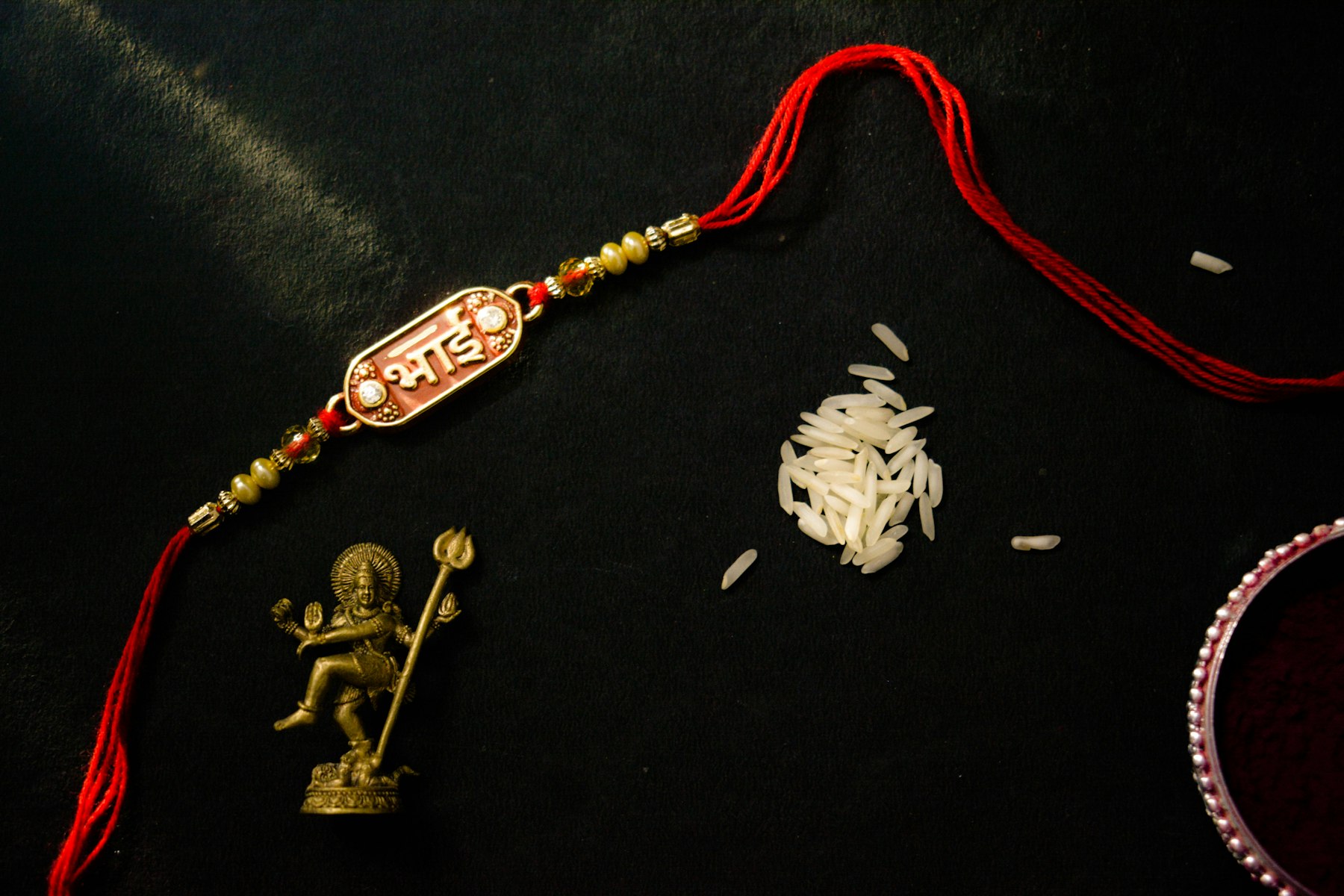
Photo: Paras Kaushal / Unsplash
August, on the full moon of Shravana
Homes across India, especially in the north and west, and in families of Indian heritage worldwide.
Tie rakhis, mark foreheads with vermilion, exchange sweets and gifts, and share a family meal.
Raksha Bandhan ki shubhkamnayein: Best wishes for Raksha Bandhan (Hindi)
Raksha Bandhan means the bond of protection. On this day a sister ties a rakhi, a decorative thread, around her brother's wrist and prays for his well-being, and he promises to support and protect her, often with a gift. Several stories are linked to the festival. In one, Draupadi tears a strip from her sari to bind the bleeding finger of Krishna, who vows to protect her. In 1905, Rabindranath Tagore encouraged people to tie rakhis on one another as a symbol of unity during protests against the partition of Bengal.
Raksha Bandhan falls on the full moon of the Hindu month of Shravana, usually in August. It is widely celebrated in northern and western India and by many families elsewhere and abroad. Today the meaning has broadened: sisters tie rakhis on sisters, cousins and close friends exchange them, and many families see the promise of care as running both ways. Rakhis are sent by post to relatives living far away. The same full moon carries other names and customs in different regions, such as Narali Purnima on the Maharashtra coast, when fishing communities offer coconuts to the sea, and Avani Avittam in parts of southern India.
The ritual often begins with a small plate, or thali, holding the rakhi, rice grains, vermilion, a lamp and sweets. The sister applies a mark to her brother's forehead, ties the rakhi and offers a sweet, and he gives a gift in return. Shops fill with rakhis, from simple cotton threads to designs with beads, mirrors and silk tassels. Popular sweets include barfi, laddoos and ghevar, and families often share a festive meal together.
Celebrate the bond between siblings, cousins and friends:
Coming soon to the App Store.
If a colleague or friend is celebrating, a simple Happy Raksha Bandhan is warm and appropriate. Many people take the morning off or travel to see family, so be flexible with meetings. If someone ties a rakhi on your wrist, it is a gesture of affection and kinship: thank them and, if you can, give a small gift or sweets in return. Avoid joking about the bond it represents.
Raksha Bandhan falls on the full moon of the Hindu month of Shravana, usually in August. Some families tie the rakhi at a particular auspicious time of day, which can vary each year.
Traditionally a sister ties a rakhi on her brother, but today many people celebrate more widely: sisters tie rakhis on each other, and cousins and close friends exchange them too.
It is a holiday in some Indian states but not across the whole country. Many offices stay open, though people often take time off to be with family.