Spring festival
Holi, the festival of colours, welcomes spring with bonfires, music and clouds of bright powder, as friends, families and neighbours celebrate the triumph of good over evil.
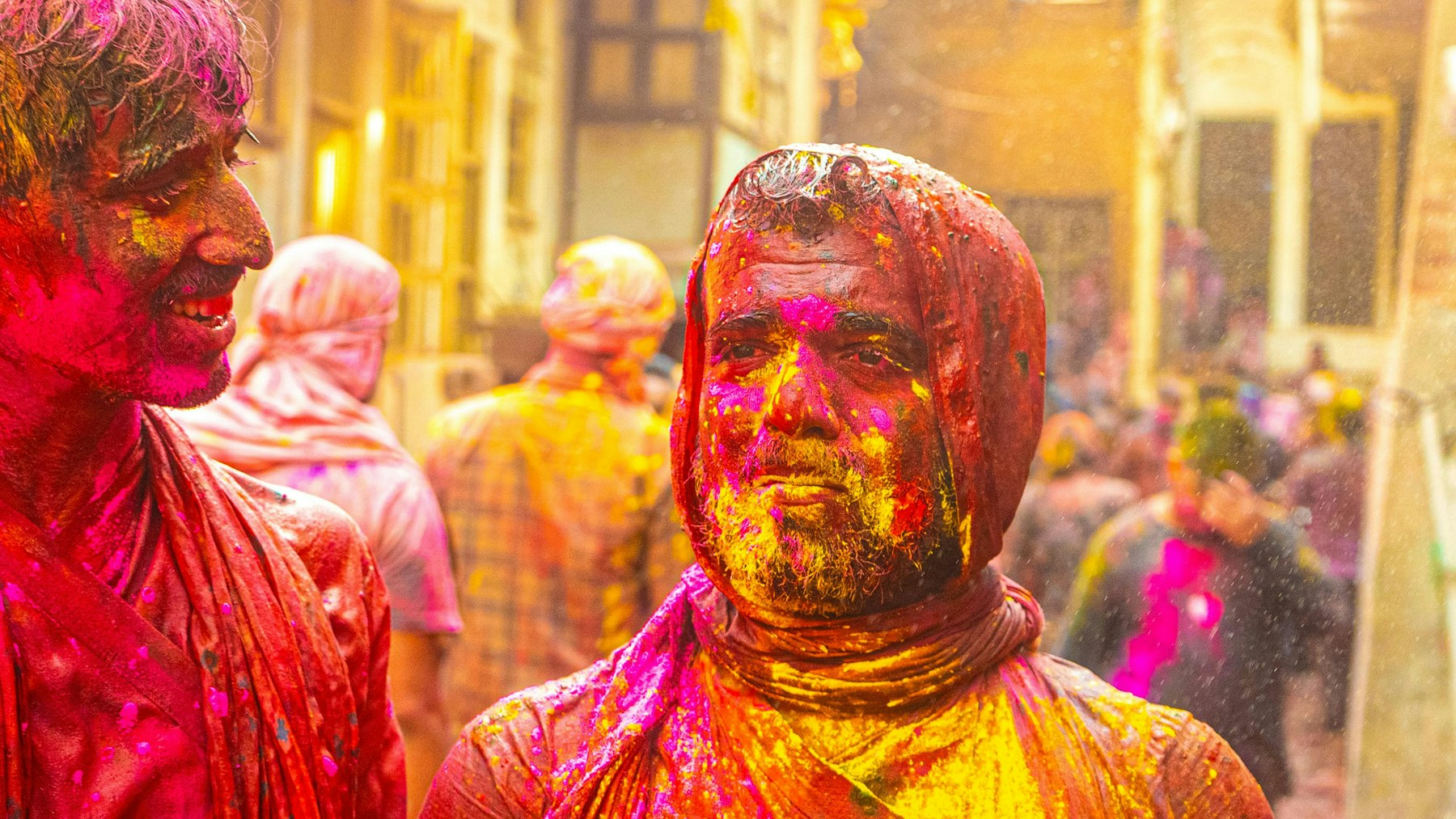
Photo: Mohit Sharma / Unsplash
March, on the full moon of Phalguna
Across India, especially the north, with famous celebrations in Mathura, Vrindavan and Barsana in the Braj region.
Light Holika bonfires, throw coloured powder and water, share sweets and thandai, and visit friends and family.
Holi hai!: It's Holi!
Holi celebrates the arrival of spring and the triumph of good over evil. Its best-known story tells of Prahlad, a young devotee of Lord Vishnu, whose father, the king Hiranyakashipu, tried to kill him with the help of his sister Holika. Holika, believed to be protected from fire, sat with Prahlad in a blaze, but she burned while he survived. Holi is also linked with the playful love of Krishna and Radha, which is why the region of Braj, around Mathura and Vrindavan, is famous for its celebrations.
Holi falls on the full moon of the month of Phalguna, usually in March. On the evening before, communities light bonfires for Holika Dahan. The next morning, people of all ages take to streets and courtyards to throw coloured powder, gulal, and spray coloured water, greeting friends, neighbours and even strangers. Celebrations differ widely: in Barsana and Nandgaon, Lathmar Holi features women playfully striking men with sticks; in West Bengal, Dol Jatra and Basanta Utsav bring songs and processions; and in Punjab, Sikhs mark Hola Mohalla with displays of martial skill. In some places colour play lasts several days, while elsewhere it ends by midday.
Favourite treats include gujiya, sweet dumplings filled with khoya and dried fruit, and thandai, a chilled milk drink with nuts and spices; some versions contain bhang, a cannabis preparation, so it is worth asking. Puran poli is popular in Maharashtra. Folk songs, drums and Bollywood Holi songs set the mood. The bright colours themselves symbolise spring, joy and the setting aside of differences, as people of different ages and backgrounds celebrate together.
Celebrate spring the Holi way:
Coming soon to the App Store.
If you join in, wear old clothes, oil your hair and skin so colour washes off more easily, and protect your eyes. Always ask before putting colour on someone, and respect anyone who says no, especially women and older people. Choose gentle, skin-safe colours. Holi hai, meaning it's Holi, is the cheerful cry you will hear everywhere. In busy places, go with friends and keep valuables in a sealed bag.
Holi falls on the full moon of the Hindu month of Phalguna, usually in March. Holika Dahan bonfires are lit on the evening before, and colour play takes place the following day.
They can. Some powders stain skin, hair and clothes for days. Wear old clothes, oil your skin and hair beforehand and choose natural or skin-safe colours where possible.
Yes, visitors are usually warmly welcomed. Join friends or a hotel or community event, ask before applying colour to anyone, and respect people who prefer not to take part.