Festival of lights
Diwali, the festival of lights, fills homes across India with lamps, colour and sweets, celebrating the triumph of light over darkness with family, friends and neighbours.
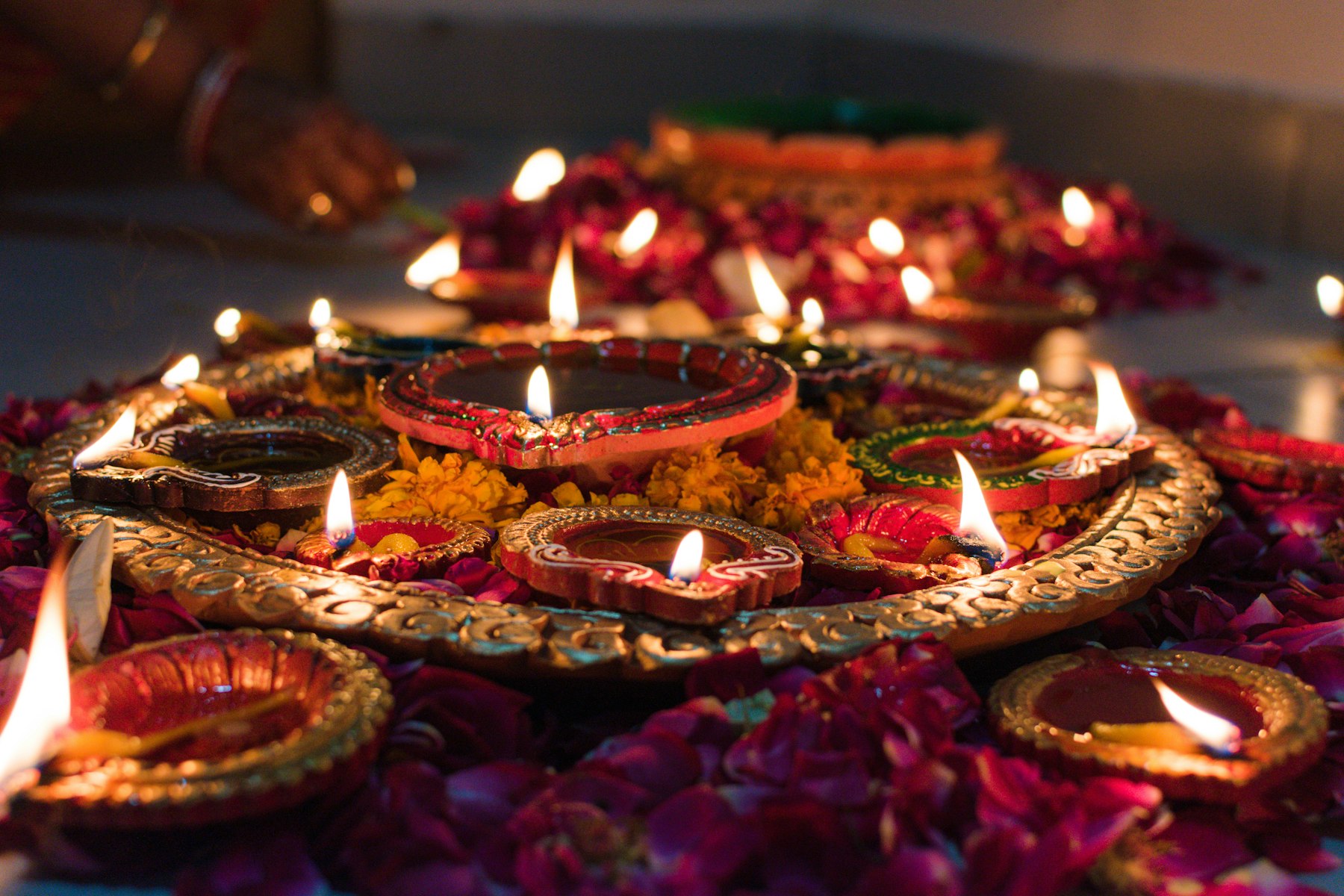
Photo: Udayaditya Barua / Unsplash
October or November, on the new moon of Kartika
Across India and wherever Hindu, Sikh and Jain communities live, in homes, temples, gurdwaras and markets.
Clean and decorate homes, light diyas, make rangoli, pray, exchange sweets and gifts and visit family and friends.
Shubh Deepavali: Auspicious Diwali (Hindi)
Diwali, also called Deepavali, takes its name from the Sanskrit for a row of lamps, and celebrates the victory of light over darkness and good over evil. Its stories vary. In much of northern India it marks the return of Lord Rama to Ayodhya after defeating Ravana, while in parts of the south it recalls Lord Krishna's victory over the demon Narakasura. Many Hindus worship Lakshmi, goddess of prosperity, on the main night. Sikhs celebrate Bandi Chhor Divas, honouring Guru Hargobind's release from imprisonment, and Jains mark the nirvana of Mahavira.
Diwali falls on the new moon night of the Hindu month of Kartika, usually in October or November, and in many regions is part of a five-day festival. Families clean and decorate their homes, buy something new, often gold, kitchen utensils or clothes, on Dhanteras, and light rows of oil lamps on the main evening. In West Bengal and nearby regions, the same night is devoted to Kali Puja, while in Gujarat the following day marks the start of the new year. The festival often ends with Bhai Dooj, celebrating brothers and sisters. Fireworks are traditional, but many cities now restrict them because of air pollution, and some families choose quieter celebrations.
The diya, a small clay oil lamp, is Diwali's best-known symbol, alongside strings of lights and rangoli, colourful patterns made at the entrance with powder, rice or flower petals, known as kolam in Tamil Nadu. Families exchange boxes of mithai, sweets such as laddoos, barfi and kaju katli, as well as dried fruit and gifts. Homes fill with savoury snacks, devotional songs and prayers, and visiting relatives and neighbours is a large part of the joy.
Share the warmth of Diwali together:
Coming soon to the App Store.
Say Happy Diwali or Shubh Deepavali to friends and colleagues who celebrate, and a box of sweets or dried fruit is a welcome gift if you visit. Remove your shoes when entering a home if your hosts do, and take care not to step on a rangoli or into the prayer area. Remember that not everyone in India celebrates Diwali, and some families observe it quietly, for example after a death.
Diwali follows the Hindu lunisolar calendar, so its date changes each year. It usually falls in October or November, on the new moon night of the month of Kartika, with related celebrations over several days.
No. Diwali is celebrated by Hindus, Sikhs and Jains, each with their own meanings, and many people of other faiths join in the festivities with friends and neighbours.
Yes, the main day of Diwali is a public holiday across India, and many offices and schools close for longer. Exact holiday dates vary by state and employer.