Religious festival
Durga Puja celebrates the goddess Durga's victory over evil with artistic pandals, drumming, food and devotion, turning Kolkata and many other places into one great festival.
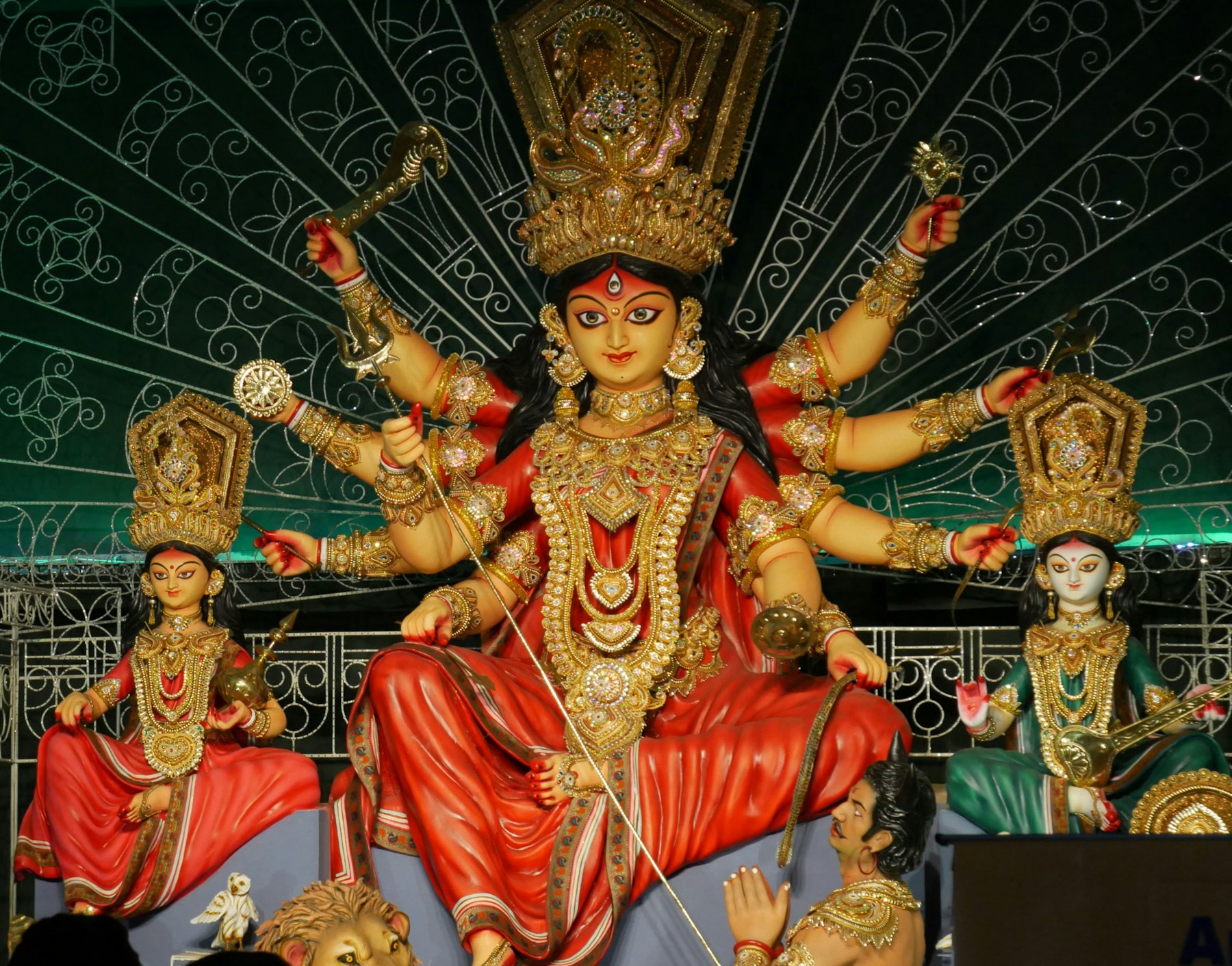
Photo: Ritanuka Ghosh / Unsplash
September or October, over five main days
Across West Bengal, especially Kolkata, and in Assam, Odisha, Tripura, Bihar and Bengali communities worldwide.
Visit pandals, offer prayers, share bhog, dance to the dhak and accompany the goddess for immersion on the final day.
Shubho Pujo: Happy Puja (Bengali)
Durga Puja honours the goddess Durga and her victory over Mahishasura, a shape-shifting buffalo demon, a story that celebrates the triumph of good over evil and the power of the divine feminine. In Bengal, the festival is also seen as Durga's annual return to her parental home with her four children, Lakshmi, Saraswati, Ganesha and Kartikeya. Grand pujas hosted by wealthy families flourished in Bengal from the eighteenth century; community-funded pujas open to all followed from the late 1700s and became the norm in the twentieth century. In 2021 UNESCO inscribed Durga Puja in Kolkata on its list of the Intangible Cultural Heritage of Humanity.
Durga Puja falls in the Hindu month of Ashvin, usually in September or October, and the main days run from Shashthi, the sixth day, to Bijoya Dashami, the tenth. In Kolkata and across West Bengal, communities build pandals, temporary structures ranging from traditional temple designs to striking works of contemporary art, housing clay images of the goddess. Families go pandal-hopping late into the night in new clothes. On the last day, married women smear vermilion on each other in sindoor khela, and the images are taken for immersion in rivers or other water. Durga Puja is also widely celebrated in Assam, Odisha, Tripura and Bihar, and by Bengali communities worldwide, while other regions mark the same season as Navaratri or Dussehra.
The rhythm of the dhak, a large drum, announces the festival, and devotees perform the dhunuchi dance with smoking clay incense burners. Many pandals serve bhog, food offered to the goddess and shared with visitors, often khichuri with vegetables, while street stalls offer everything from rolls to sweets such as rosogolla and sandesh. The images, many made by artisans in Kolkata's Kumartuli neighbourhood, are a central symbol of skill and devotion.
Bring the spirit of Durga Puja into your home:
Coming soon to the App Store.
Pandals are open to all, so visitors are welcome to look around; dress modestly, remove your shoes where asked and do not touch the images. Crowds are huge in the evenings, especially in Kolkata, so go early, carry little and keep together. Greet Bengali friends with Shubho Pujo during the festival and Shubho Bijoya after Dashami. Sindoor khela is traditionally for married women, so watch rather than join unless invited.
Durga Puja follows the Hindu lunisolar calendar and usually falls in September or October. The main celebrations run for five days, from Shashthi to Bijoya Dashami.
They fall in the same season and both honour the goddess, but traditions differ. In Bengal the focus is Durga Puja, while in Gujarat Navaratri is known for garba dancing and in much of northern India Dussehra marks Rama’s victory.
Yes. Pandals are open to everyone, and people of many backgrounds visit to admire the art and atmosphere. Dress modestly, follow any instructions and be respectful during prayers.