Festival
Carnaval fills Brazil with music, colour and dancing in the days before Lent, but it looks very different in Rio, Salvador, Recife and Olinda, and every family celebrates in its own way.
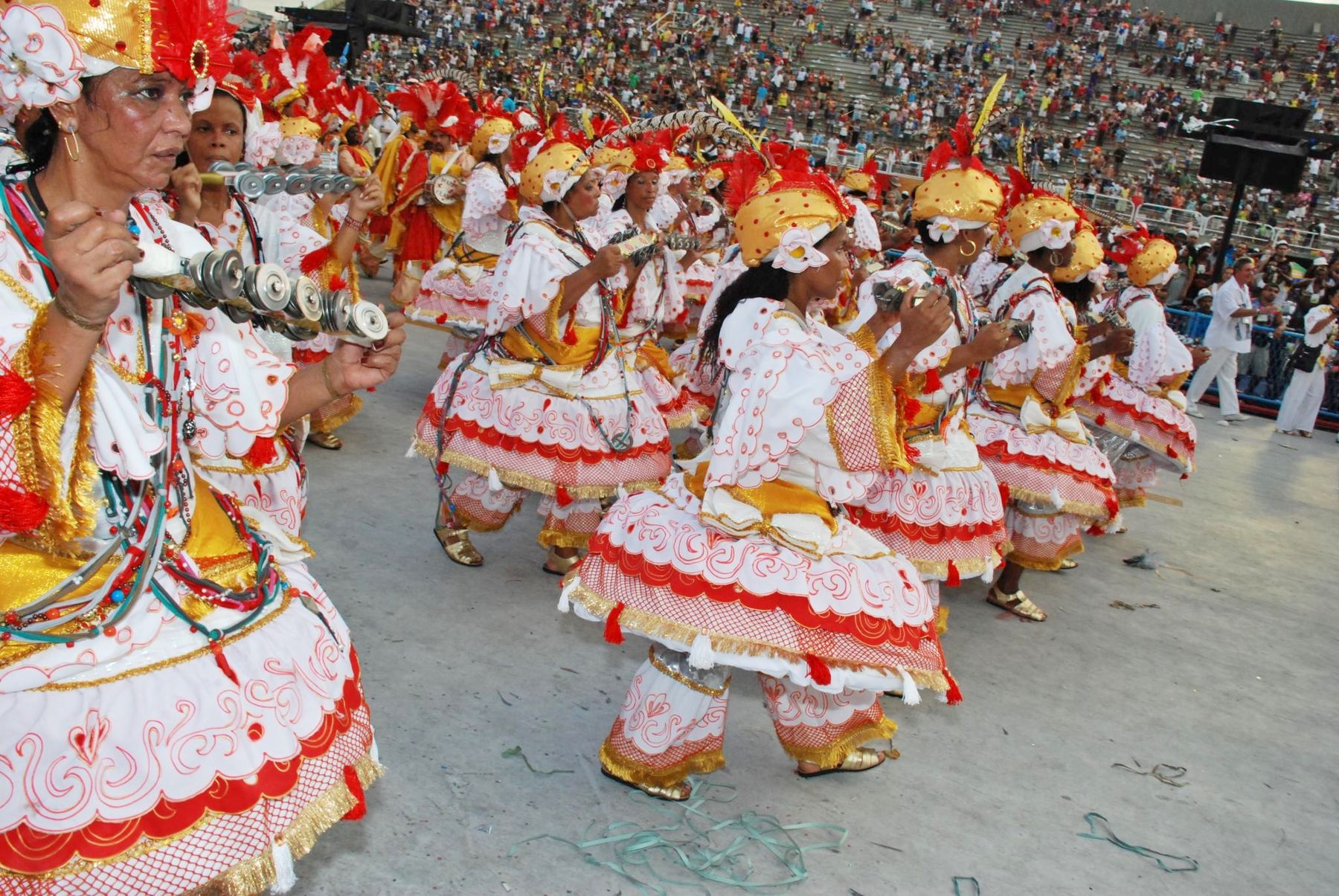
Photo: Wim Gevonden / Wikimedia Commons, CC BY-SA 2.0
February or early March, ending on Shrove Tuesday
Cities and towns across Brazil, with famous celebrations in Rio de Janeiro, Salvador, Recife, Olinda and São Paulo.
Dance in street blocos, watch samba school parades, follow trios elétricos and wear colourful costumes.
Bom Carnaval!: Have a great Carnaval!
Carnaval is the festive period before Lent, the Christian season of fasting that begins on Ash Wednesday, so its dates move each year with Easter. In Brazil it grew from the Portuguese entrudo, a boisterous game of throwing water and powder, and from European-style masked balls, and was transformed by African-Brazilian music, dance and community organisation. Samba, which took shape in Rio de Janeiro in the early twentieth century, became its best-known sound, but Carnaval has always meant different things in different places.
Carnaval traditionally runs from Saturday to Shrove Tuesday, though in many cities the parties begin earlier and some continue into Ash Wednesday. In Rio de Janeiro, samba schools spend months preparing for competitive parades at the Sambódromo, while hundreds of blocos, free street parades, fill neighbourhoods across the city. In Salvador, crowds follow trios elétricos, trucks carrying live bands, as well as afoxés and blocos afro rooted in Afro-Brazilian culture. Recife and Olinda are known for frevo, maracatu and Olinda's giant puppets, and São Paulo holds its own samba school parades. Many people prefer a quiet break instead, a trip to the countryside or a religious retreat.
Each region has its own soundtrack: samba and its marching songs, marchinhas, in Rio; axé and samba-reggae in Salvador; fast-paced frevo, recognised by UNESCO as intangible cultural heritage, in Pernambuco. Costumes range from elaborate samba school outfits to homemade fancy dress and glitter. Street vendors keep the party going with snacks such as pastel, crisp fried pastries, and grilled queijo coalho cheese on a stick, while water and coconut water help in the heat. Streamers, confetti and masks remain classic symbols.
Bring some Carnaval colour home with these ideas:
Coming soon to the App Store.
Carnaval crowds are huge, so carry only what you need, drink plenty of water and agree a meeting point with your group. Brazil's Não é Não (no means no) campaigns are a reminder to respect everyone's boundaries, including unwanted kisses. Choose costumes with care and avoid outfits that caricature Indigenous peoples or other groups. Some colleagues celebrate enthusiastically while others escape the noise, so ask rather than assume.
Carnaval falls in February or early March and ends on Shrove Tuesday, the day before Ash Wednesday. Its dates change every year because they are calculated from the date of Easter.
At national level the Monday and Tuesday are usually optional days off rather than official holidays, but many states, cities and employers give the time off, and some businesses close for the whole period.
Not for street blocos, which are free and open to everyone. Tickets are needed for the Sambódromo parades in Rio and São Paulo, some organised groups in Salvador, and private Carnaval balls and parties.