Religious festival
Every October, Belém in the Brazilian Amazon hosts the Círio de Nazaré, one of the world's largest Catholic processions and a moving blend of faith, family reunion and regional food.
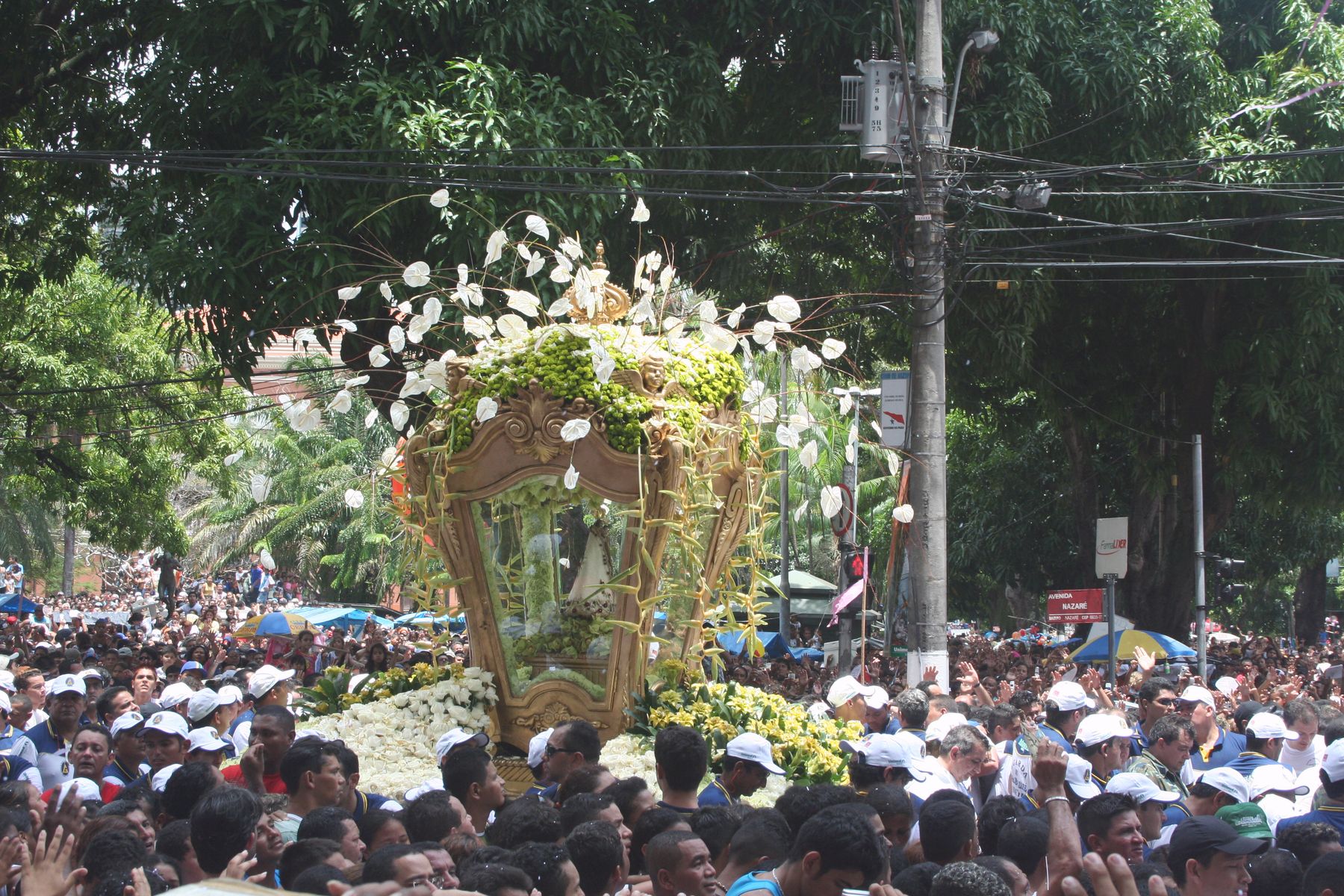
Photo: Celso Abreu / Wikimedia Commons, CC BY 2.0
Second Sunday of October, with events across two weeks
Belém, capital of Pará in northern Brazil, along the route from the cathedral to the Basilica of Nazaré.
Walk with the procession, hold the rope in devotion, watch the river procession and share a festive family lunch.
Feliz Círio!: Happy Círio!
The Círio de Nazaré honours Our Lady of Nazareth, Nossa Senhora de Nazaré, in Belém, the capital of the state of Pará. According to tradition, a small statue of the Virgin was found around 1700 by a man named Plácido beside a stream, and it kept returning to the spot where he found it, so a chapel was built there. The first procession was held in 1793. The word círio means a large candle, recalling the candles carried by early pilgrims. In 2013 UNESCO inscribed the Círio on its list of the Intangible Cultural Heritage of Humanity.
On the second Sunday of October, a vast crowd, often estimated at around two million people, accompanies the statue from the cathedral to the Basilica Sanctuary of Nazaré. Many walk barefoot or carry wax models of body parts or houses in thanks for prayers answered. Thousands of devotees hold on to the corda, a long rope linked to the carriage carrying the image, a moving and physically demanding act of faith. The Sunday is the peak of several days of events, including a river procession of decorated boats and an evening procession the night before, with celebrations continuing for about two weeks. Many people from Pará travel home for the Círio, which some describe as the region's Christmas.
After the procession, families gather for the almoço do Círio, a festive lunch. Typical dishes include pato no tucupi, duck in a yellow broth made from manioc, and maniçoba, made from ground manioc leaves that are cooked for about a week to make them safe to eat. Colourful brinquedos de miriti, toys made from the light, spongy stalks of the miriti palm, are sold in the streets. Hymns accompany the procession, and the image of Our Lady of Nazareth, surrounded by flowers, is the central symbol.
Learn about the Círio and the Amazon region together:
Coming soon to the App Store.
The Círio is a deeply religious event, so dress modestly, stay calm in the crowd and give devotees on the rope space; do not join the corda without understanding how demanding it is. Carry water, wear comfortable shoes and keep valuables to a minimum. Feliz Círio (happy Círio) is the customary greeting. Ask before photographing people praying, especially those fulfilling a personal promise.
The main procession takes place on the second Sunday of October in Belém. Related events, including a river procession and an evening procession, happen in the days before, and festivities continue for around two weeks.
No. Visitors of all backgrounds come to watch and share the atmosphere. It is a religious event, so respectful behaviour, modest clothing and patience in the crowds are appreciated.
The corda is a long rope linked to the carriage carrying the statue of Our Lady of Nazareth. Devotees hold it for hours as an act of faith or to fulfil a promise. It is very crowded and physically demanding.