Seasonal festival
Throughout June, Brazilians gather around bonfires and strings of paper flags to honour Saints Anthony, John and Peter with corn dishes, forró music and lively quadrilha dances.
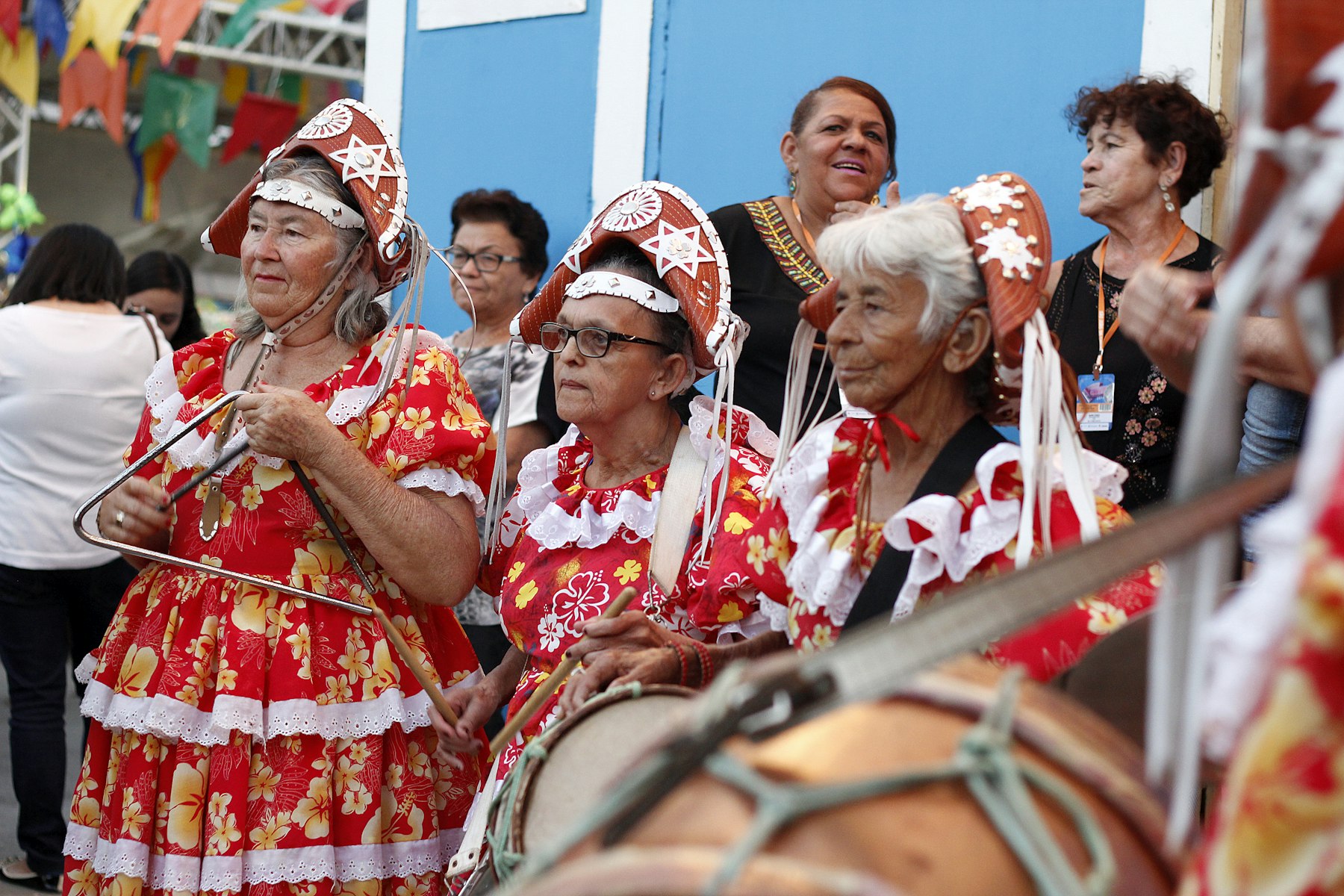
Photo: Karla Vidal / Unsplash
Throughout June, sometimes continuing into July
Schools, churches and neighbourhoods across Brazil, with the largest festivals in the Northeast.
Dance the quadrilha, eat corn dishes and peanut sweets, play fairground games and gather around bonfires.
Viva São João!: Long live Saint John!
Festa Junina, also known as the festas de São João, celebrates three Catholic saints whose feast days fall in June: Saint Anthony on 13 June, Saint John on 24 June and Saint Peter on 29 June. The custom arrived with the Portuguese, who brought European midsummer traditions such as bonfires, and in Brazil it became linked with the corn harvest, especially in the Northeast. Over time it absorbed Indigenous and African-Brazilian influences and became one of the country's best-loved celebrations, enjoyed by people of many faiths and none.
Across Brazil, schools, churches, neighbourhoods and clubs host an arraial, often written arraiá, a party decorated with strings of small paper flags, or bandeirinhas. The Northeast celebrates on the grandest scale: Caruaru in Pernambuco and Campina Grande in Paraíba each hold month-long festivals that draw large crowds, and São João (24 June) is a public holiday in many northeastern cities and across the whole state of Alagoas. Elsewhere, parties continue into July as festas julinas. A highlight is the quadrilha, a group dance led by a caller and inspired by the European quadrille, often including a playful mock country wedding. Traditional outfits draw on rural life, with chequered shirts and straw hats, though many people now avoid caricaturing country people.
Corn is the star: pamonha, sweet or savoury corn parcels cooked in husks, curau, a creamy corn pudding, boiled corn on the cob and popcorn. Peanut sweets such as paçoca and pé-de-moleque are favourites, and adults may drink quentão, a hot spiced drink. Names and recipes vary: canjica means one dish in the Southeast and another in the Northeast. The music is forró, played on accordion, triangle and zabumba drum, and closely linked with Luiz Gonzaga. The bonfire, or fogueira, remains a central symbol.
Throw a small arraiá at home:
Coming soon to the App Store.
Festas juninas are usually relaxed and welcoming, and guests are often encouraged to join the quadrilha even without knowing the steps. Wear casual clothes; a chequered shirt is a friendly nod to tradition. Paper flags and bonfires are part of the fun, but releasing paper hot-air balloons is illegal in Brazil because of the fire risk. If a friend or colleague invites you, bring a dish or drink to share.
It began as a celebration of Catholic saints and many events still include Masses and processions, but today most people enjoy it as a cultural and community festival, whatever their beliefs.
The Northeast holds the largest celebrations. Campina Grande in Paraíba and Caruaru in Pernambuco both host month-long festivals, while cities such as Salvador and São Luís have their own strong traditions.
A lively group dance performed in pairs, with a caller announcing the moves. It draws on the European quadrille and often tells the story of a playful country wedding. Some groups compete in elaborate quadrilha contests.