Arabic
Taste, say and celebrate the UAE, then earn the UAE stamp in World Explorer 2.
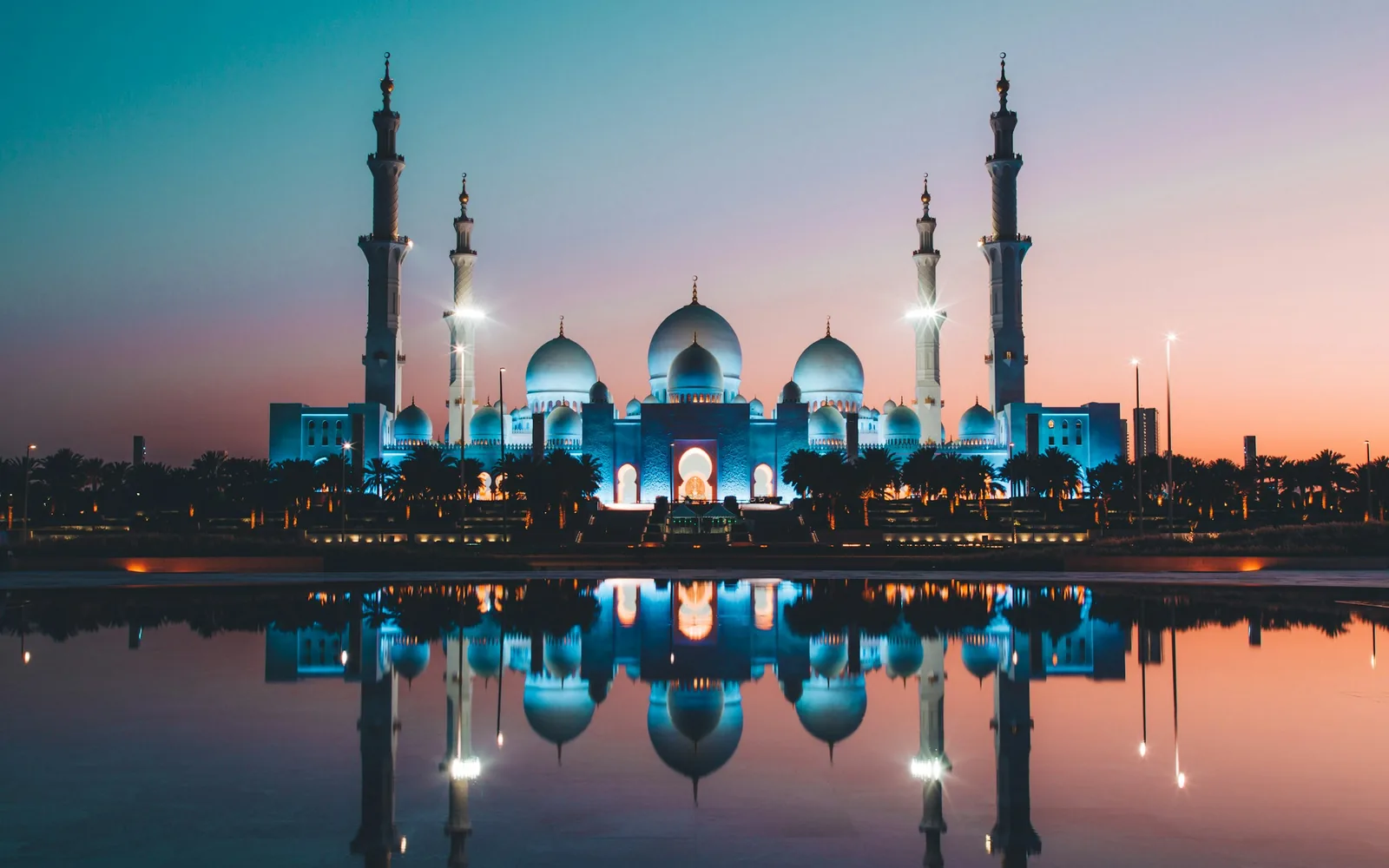
Sheikh Zayed Grand Mosque, Abu Dhabi, UAE · Photo: David Rodrigo / Unsplash
Official name
United Arab Emirates (الإمارات العربية المتحدة)
Capital
Abu Dhabi
Official language(s)
Arabic (English is widely used in business and daily life)
Currency
UAE dirham (AED)
Common greeting
As-salāmu ʿalaykum; Marhaba
Calling code
+971
Time zone(s)
Gulf Standard Time (UTC+4) all year; no daylight saving
Sources: United Arab Emirates – Wikipedia, Time in United Arab Emirates – Wikipedia, List of country calling codes – Wikipedia, ISO 4217 currency codes – SIX Group, The UAE Government portal
The United Arab Emirates is a federation of seven emirates, Abu Dhabi, Dubai, Sharjah, Ajman, Umm Al Quwain, Ras Al Khaimah and Fujairah, which came together in 1971. Around 10 million people live here, and Emiratis are a minority alongside residents from South Asia, the Arab world, Southeast Asia, Africa, Europe and beyond. Arabic is the official language and English is the common language of business. Islam is the state religion, and places of worship for other faiths also exist.
Greet with “as-salamu alaykum” and reply with “wa alaykum as-salam”. Men often shake hands, sometimes with a hand over the heart, and Emirati men may touch noses in a traditional greeting, the khushm; follow your host’s lead. Wait for a woman to extend her hand, and otherwise nod and smile. Take time to ask about health and family, and use your right hand.
Emiratis wear the kandura, a white robe, with a ghutra headcloth for men, and an abaya for women, and these are everyday dress. Address people by first name with a title, such as Dr Ahmed or Mrs Mariam; family names are less central, and many people use a patronymic.
Hospitality is important. In a majlis, a reception room, you will be offered Arabic coffee, gahwa, poured in small cups, often with dates; accept with your right hand and shake the cup gently when you have finished. Dress modestly in public places, covering shoulders and knees, and follow local guidance in malls, mosques and government buildings.
Public displays of affection are discouraged, and photographing people, especially women, without permission is not acceptable. During Ramadan, avoid eating, drinking or smoking in public in daylight hours, and be patient with adjusted hours. Be punctual, but accept that meetings may run late and that prayer times may pause them.
Traditional Emirati cooking includes machboos, spiced rice with meat or fish, harees, slow-cooked wheat and meat, thareed, a bread-and-stew dish, and luqaimat, sweet fried dumplings with date syrup. Seafood, dates and cardamom coffee have long roots on the coast and in the oases.
Today the UAE is among the world’s most diverse places to eat, with Indian, Pakistani, Iranian, Lebanese, Filipino and many other cuisines in every district. Eat with your right hand or a spoon, and expect to be offered more. Halal food is the standard, and pork products are sold separately. A service charge is often included, and an extra tip of ten to fifteen percent is common.
Eid al-Adha, the Feast of the Sacrifice, follows the Hajj pilgrimage and is celebrated with prayers, family gatherings, a shared meal and gifts, with several days off work. Eid Al Etihad, National Day on 2 December, marks the 1971 union with flags, fireworks, performances and national dress.
Ramadan and Eid al-Fitr are the other major occasions, and Dubai also hosts festivals for Diwali, Christmas, Chinese New Year and other communities.
Emirati weddings are major family occasions, often with separate celebrations for men and women. Our guest’s guide to an Emirati wedding explains dress, gifts and customs.
The UAE workplace is multinational, and teams may include colleagues from dozens of countries. Relationships and respect matter, so start with greetings and a short conversation. Seniority is acknowledged, decisions may be made at higher levels and agreements may be reached over several meetings, so be patient. Communicate clearly, confirm in writing and keep a courteous, calm tone.
Many public bodies work Monday to Friday, with a shorter day on Friday, and the weekend is Saturday and Sunday. The UAE uses Gulf Standard Time, UTC+4, all year. During Ramadan working hours are reduced for private-sector employees, and prayer breaks are normal. Public holidays follow the Islamic calendar for Eid and the Gregorian calendar for National Day, and dates are announced shortly before.
A reception room or gathering where guests are welcomed, served coffee and dates, and where conversation takes place. The word also means the gathering itself.
Wait for her to extend her hand. If she does not, a nod and a smile with a hand on the heart is polite.
Saturday and Sunday for most employers. Many public bodies work a half-day on Friday.
World Explorer
Families who want to explore the United Arab Emirates through short games can try the Culture XI World Explorer app.