isiZulu, one of South Africa's 12 official languages
Taste, say and celebrate South Africa, then earn the South Africa stamp in World Explorer 2.
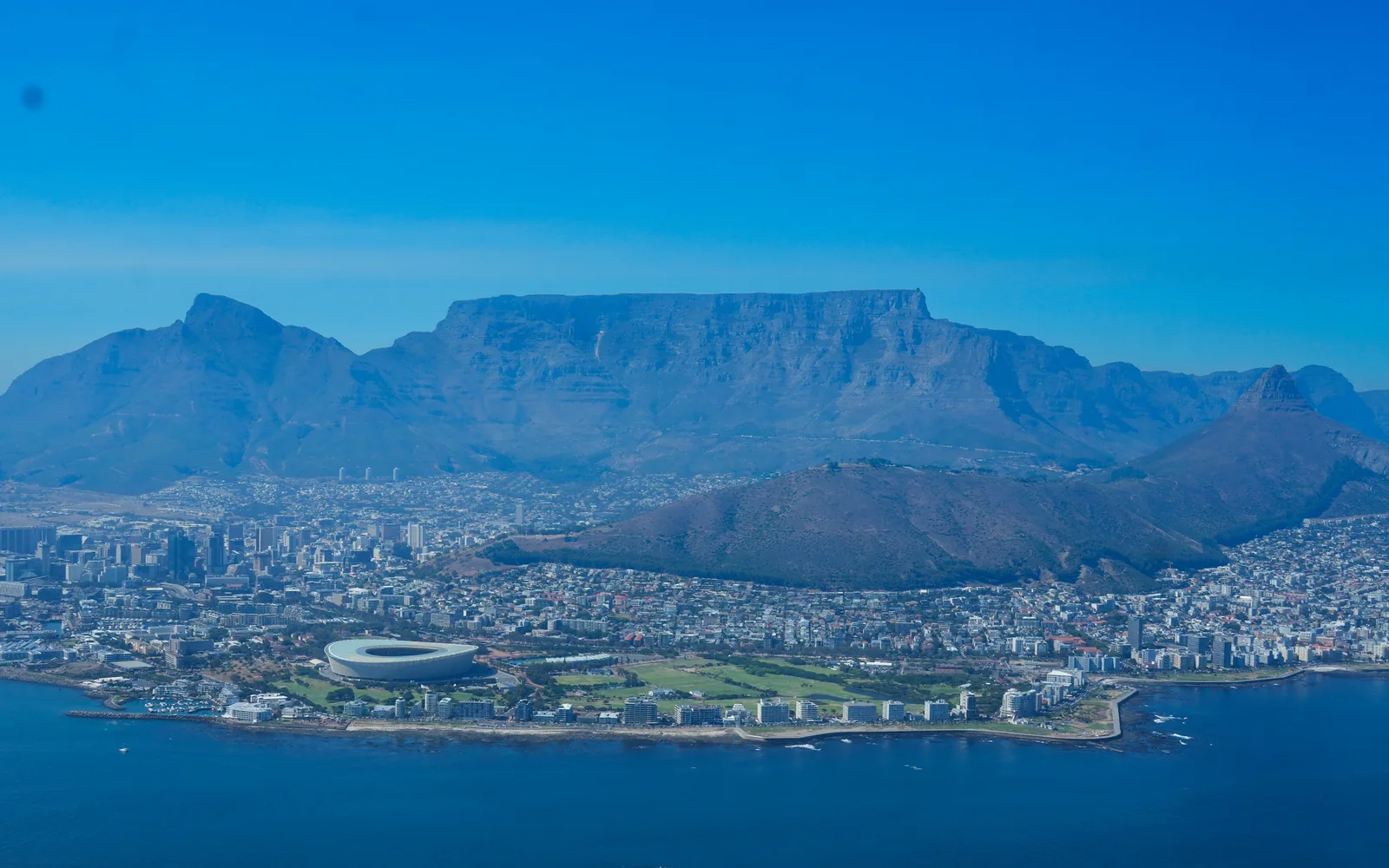
Table Mountain, Cape Town, South Africa · Photo: ryan mayes / Unsplash
Official name
Republic of South Africa
Capital
Pretoria (executive), Cape Town (legislative), Bloemfontein (judicial)
Official language(s)
12 official languages: isiZulu, isiXhosa, Afrikaans, English, Sepedi, Setswana, Sesotho, Xitsonga, siSwati, Tshivenda, isiNdebele and South African Sign Language
Currency
South African rand (ZAR)
Common greeting
Hello; Sawubona (Zulu); Molo (Xhosa)
Calling code
+27
Time zone(s)
SAST (UTC+2) all year; no daylight saving
Sources: South Africa – Wikipedia, Time in South Africa – Wikipedia, List of country calling codes – Wikipedia, ISO 4217 currency codes – SIX Group, Parliament of South Africa
South Africa has about 60 million people, nine provinces and 12 official languages, including isiZulu, isiXhosa, Afrikaans, English and South African Sign Language, with Sesotho, Setswana, Sepedi, Xitsonga, siSwati, Tshivenda and isiNdebele making up the rest. Black African, white, Coloured, Indian and Asian communities and Indigenous Khoi and San peoples have shaped the country, and the long period of apartheid ended with democratic elections in 1994. Cape Town, Johannesburg, Durban and rural areas can feel very different, so treat any summary as a start.
Greeting is important, and you greet each person, with a handshake and a smile. Many people use a longer greeting, including how are you and how is the family. “Sawubona”, I see you, is the Zulu greeting, “Molo” is Xhosa, “Dumela” is Sotho and Tswana, and “Goeie dag” is Afrikaans; often the reply is “Yebo”, yes. Friends may use a three-part handshake, and hugs are common among friends.
Address older people as “Mama”, “Tata” or “Ma’am” and “Sir”, as a sign of respect, and use titles in formal contexts. The Nguni idea of ubuntu, “I am because we are”, expresses community, kindness and shared humanity, and it explains why greetings are unhurried.
South Africans are warm and informal, but respect for elders is strong. Be careful with terms of address: colleagues and friends may describe themselves in different ways, so ask how people identify and avoid assumptions based on appearance. History matters, and discussions of race, land or politics can be sensitive; listen first.
A few local words help. “Now-now” means in a little while, “just now” can mean later and “lekker” means nice. Wait for invitations to household events, and bring a gift such as wine or something for the braai. Tipping 10 to 15 percent is expected in restaurants, since service wages are low, and car guards are tipped a small amount. Take security advice seriously: ask locals about areas and times, and keep valuables out of sight.
The braai, a barbecue, is a social institution, with boerewors, a spiced sausage, lamb chops, steak and chicken, served with pap, maize porridge, and chakalaka, a spicy relish. Bobotie, a spiced minced-meat dish, and Cape Malay curries reflect the Cape’s history, bunny chow, a hollowed loaf of curry, comes from the Indian community of Durban, and biltong, dried cured meat, is a snack everywhere.
Sweet treats include koeksisters, melktert and malva pudding. Vetkoek, fried dough with mince, is popular at markets. Food is often shared, and in many homes you wash your hands and eat from communal dishes. Hosts may urge you to eat more, and refusing food entirely can feel unwelcoming. Many South Africans are vegetarian or halal, and urban restaurants cater well to diets.
Freedom Day on 27 April marks the first democratic elections in 1994 with ceremonies and reflection. Heritage Day on 24 September celebrates the diversity of South African cultures, languages and foods, and is also known as National Braai Day.
Youth Day on 16 June recalls the 1976 Soweto uprising, and Women’s Day on 9 August marks the 1956 march of women against pass laws. Christmas falls in summer, and Eid, Diwali, Easter and traditional ceremonies are widely observed.
South African weddings can mix traditions such as lobola negotiations, church services and large receptions. Our guest’s guide to a South African wedding explains dress, gifts and customs.
South African workplaces are diverse and relationship-focused. Start meetings with a greeting and a few personal questions, address people by first names unless told otherwise and allow time for small talk. Communication can be direct but respectful, and disagreement is usually expressed politely. Be mindful of history and of employment equity policies, and avoid making assumptions about colleagues’ backgrounds.
South Africa uses South African Standard Time, UTC+2, all year, with no daylight saving. Time can feel flexible in social settings, but be punctual in business. Scheduled power cuts, called load-shedding, have affected planning in recent years, so ask about contingency plans such as generators. Annual leave is often concentrated in December and January, and public holidays falling on a Sunday move to Monday. Colleagues may attend funerals and family events on weekends, which are important community obligations.
Twelve, including South African Sign Language. English is widely used in business, but most people speak at least two languages.
Soon, in a little while. “Just now” is vaguer and can mean later today, so confirm a time if it matters.
A philosophy from Nguni languages that stresses community and mutual care. It is often summarised as “a person is a person through other people”.
A South African barbecue, usually over wood or charcoal, and a social occasion rather than just a meal.
World Explorer
Families who want to explore South Africa through short games can try the Culture XI World Explorer app.