Turkish
Taste, say and celebrate Türkiye, then earn the Türkiye stamp in World Explorer.
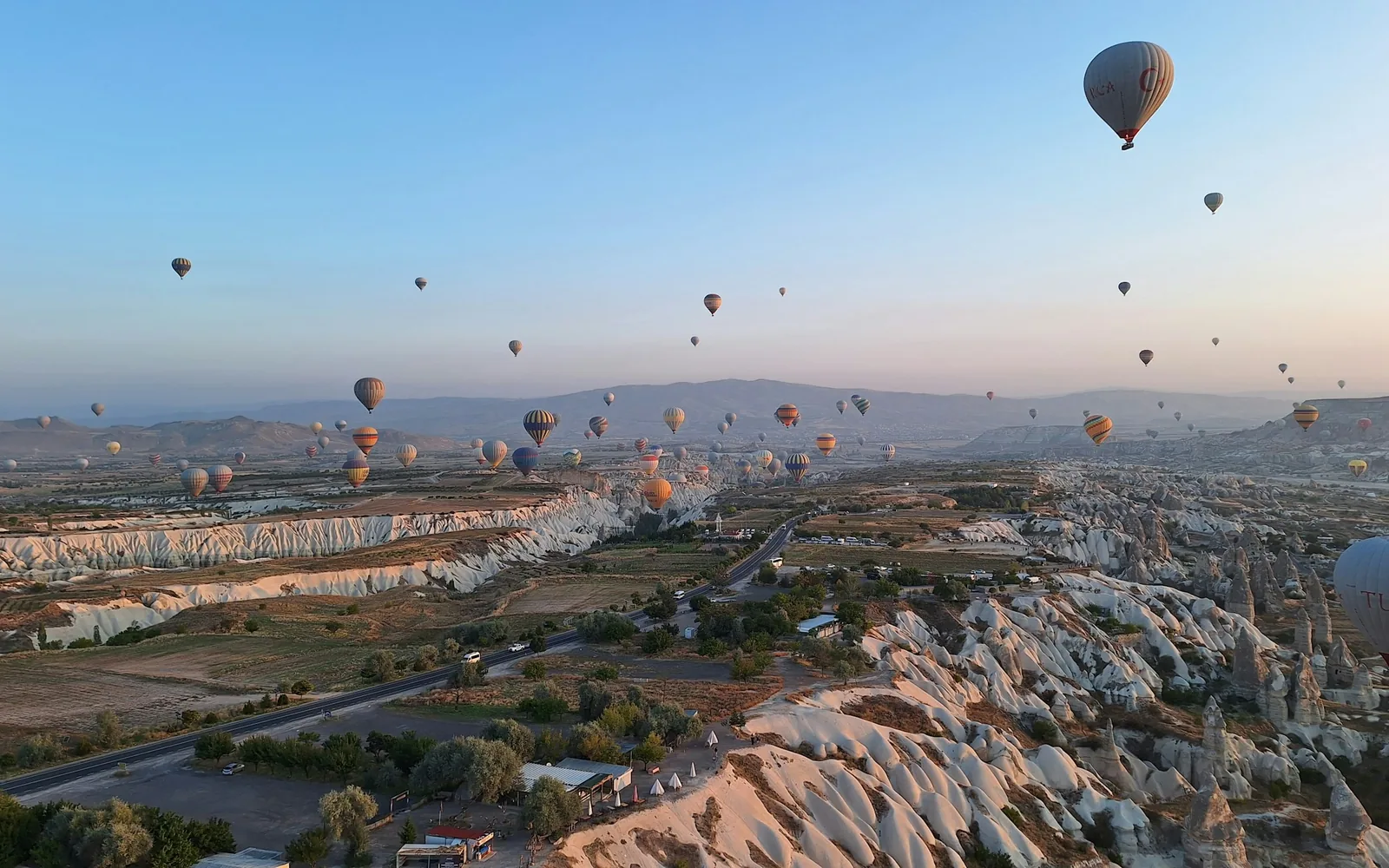
Balloons over Cappadocia, Türkiye · Photo: Radomir Brkovic / Unsplash
Official name
Republic of Türkiye (Türkiye Cumhuriyeti)
Capital
Ankara
Official language(s)
Turkish
Currency
Turkish lira (TRY)
Common greeting
Merhaba
Calling code
+90
Time zone(s)
UTC+3 all year; no daylight saving
Sources: Türkiye – Wikipedia, Time in Türkiye – Wikipedia, List of country calling codes – Wikipedia, ISO 4217 currency codes – SIX Group, Presidency of the Republic of Türkiye
Türkiye has about 85 million people and straddles Europe and Asia, with Istanbul on both sides of the Bosphorus and Ankara as the capital. Turkish is the official language, and Kurdish, Arabic, Circassian, Laz and other languages are spoken, alongside Armenian, Greek and Jewish communities with long histories. Most people are Muslim, but the state is secular, and the Aegean coast, the Black Sea, central Anatolia and the south-east differ in food, humour and pace of life.
A handshake is common, and friends and relatives often kiss on both cheeks. “Merhaba” is the all-purpose hello, “günaydın” is good morning, and “nasılsınız?” asks how you are. Use “Bey” after a man’s first name and “Hanım” after a woman’s, such as Ahmet Bey or Ayşe Hanım, and “abi” or “abla”, older brother or sister, for someone a little older. Younger people greet elders by kissing their hand and touching it to the forehead, especially at Bayram.
You will often be greeted warmly and asked about your family, health and journey. It is polite to ask in return, and Turkish people appreciate any effort to say “teşekkür ederim”, thank you.
Hospitality, misafirperverlik, is a source of pride. Visitors are offered tea in small tulip-shaped glasses, often several times, and refusing every offer can seem cold; accept at least one, and put a spoon across the glass when you want no more. Remove your shoes when entering a home, and bring something sweet, such as baklava or chocolates, or flowers.
Dress modestly in mosques and rural areas, covering shoulders and knees, and women cover their hair in a mosque. Do not point the soles of your feet at others and avoid blowing your nose at the table. Respect for the flag, the national anthem and the founder of the Republic, Atatürk, is expected. Topics such as politics, Cyprus, the Kurdish issue and the Armenian question are sensitive; listen before offering opinions.
Breakfast, kahvaltı, is a feast of bread, cheese, olives, tomatoes, eggs, honey and jam, served with plenty of tea. Lunch and dinner may begin with meze, small cold dishes, followed by kebabs, which vary from Adana to İskender in Bursa, pide, lahmacun, börek, dolma and mantı. Menemen, simit and ayran are everyday favourites, and baklava, lokum and Turkish coffee, recognised by UNESCO, finish a meal.
Bread is on every table, and food is usually shared from the middle. Hosts insist you eat more, and “afiyet olsun” is said before a meal, “elinize sağlık”, bless your hands, to the cook. Hosts often pay for guests, and arguing over the bill is a ritual; ten percent tips are customary in restaurants. Many people do not drink alcohol, so avoid assumptions, and pork is rare because most are Muslim. Vegetables and olive oil dishes make vegetarian eating easy.
Cumhuriyet Bayramı, Republic Day on 29 October, marks the 1923 declaration of the Republic with flags, ceremonies, concerts and fireworks. Ramazan Bayramı, the three-day festival after Ramadan, is a time for visiting relatives, kissing the hands of elders and sharing sweets, with the greeting “Bayramınız kutlu olsun”.
Kurban Bayramı, the Feast of Sacrifice, is the other major religious holiday, and national days include 23 April and 19 May. Many families also celebrate Nevruz in spring, and regional festivals such as the oil wrestling at Kırkpınar.
Turkish weddings can include a henna night, a ceremony and a large celebration with dancing. Our guest’s guide to a Turkish wedding explains gifts, gold and dress.
Relationships matter in Turkish business. Meetings begin with tea and personal conversation, and trust built over several encounters leads to cooperation. Hierarchy is clear, and decisions are often made by senior people, so be patient and respectful of seniority. Address colleagues with first names plus Bey or Hanım, and use titles such as Doktor or Mühendis, engineer, where relevant.
Türkiye uses one time zone, UTC+3, all year, with no daylight saving. Timekeeping is more flexible socially than at work, but be punctual yourself, and expect meetings to run over because of conversation. The working week is Monday to Friday, Friday prayers may take a longer lunch for some, and during Ramadan there may be adjusted hours and fasting colleagues. Check the dates of Bayram holidays, which can extend to nine days and close offices. WhatsApp is widely used at work.
They are polite suffixes added to a first name: Bey for men and Hanım for women, such as Mehmet Bey and Elif Hanım.
Yes, at least once. It is a sign of welcome; put the spoon on the glass to indicate you have had enough.
Türkiye is the Turkish name of the country, and in 2022 the government asked that it be used in English too. Both forms remain in use.
World Explorer
Families can explore Türkiye through short games with Sercan in Culture XI World Explorer 2.