Twi, one of Ghana's many languages
Taste, say and celebrate Ghana, then earn the Ghana stamp in World Explorer 2.
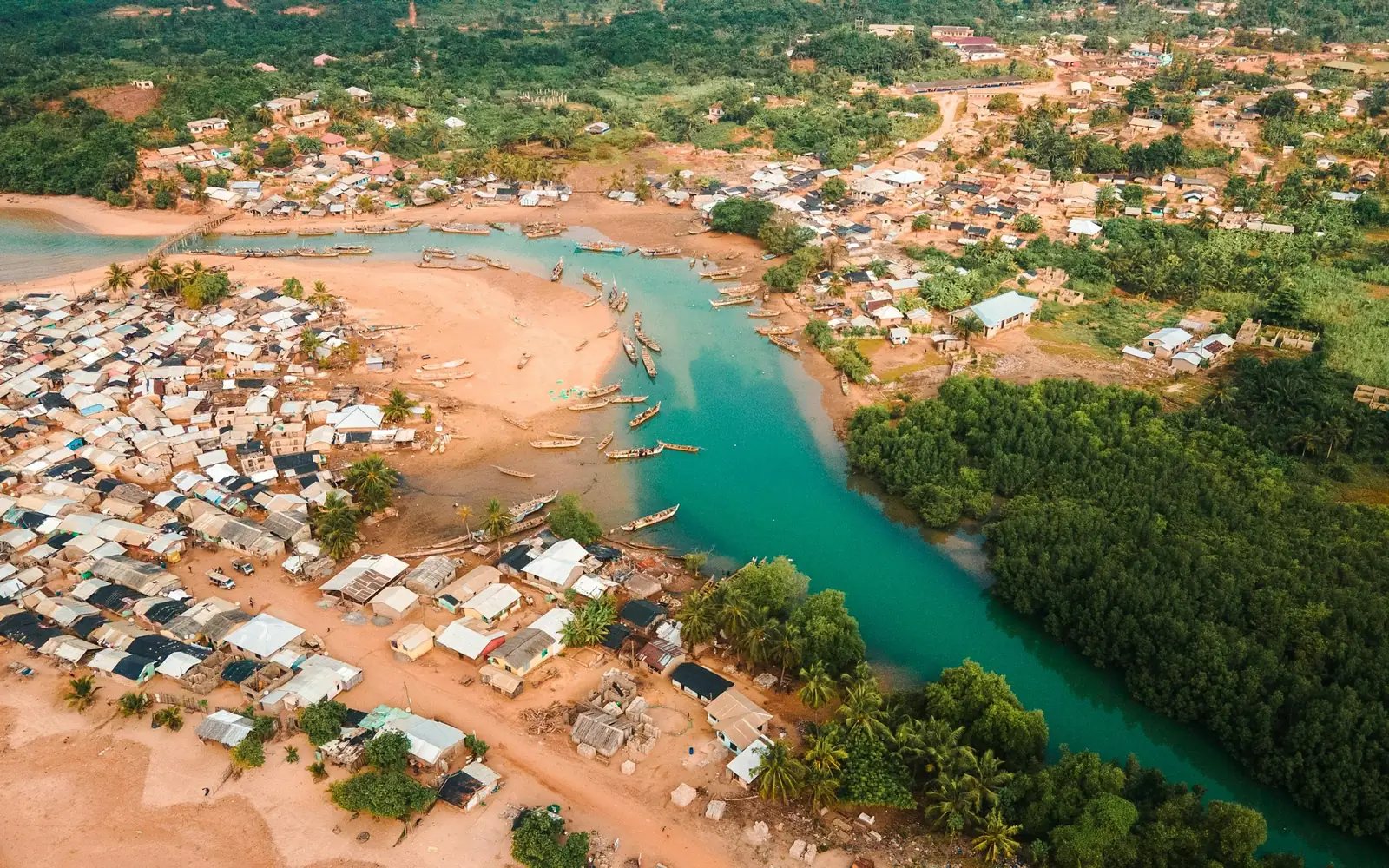
Akwidaa and the Ezile River, Ghana · Photo: Ato Aikins / Unsplash
Official name
Republic of Ghana
Capital
Accra
Official language(s)
English
Currency
Ghanaian cedi (GHS)
Common greeting
Akwaaba (welcome, Akan); Good morning
Calling code
+233
Time zone(s)
GMT (UTC+0) all year; no daylight saving
Sources: Ghana – Wikipedia, Time in Ghana – Wikipedia, List of country calling codes – Wikipedia, ISO 4217 currency codes – SIX Group, Government of Ghana
Ghana is a West African country of more than 30 million people, in sixteen regions from the coast and Accra to the forests of Ashanti and the savannah of the north. English is the official language, and dozens of local languages are spoken, including Akan, with its Twi and Fante forms, Ewe, Ga, Dagbani and Nzema. Christianity is the largest religion, with a large Muslim community, especially in the north, and traditional beliefs remain important. In 1957 Ghana became the first sub-Saharan African country to gain independence from colonial rule.
Greeting is a sign of respect, so greet each person individually, and ask how they and their family are before getting to business. Use your right hand for handshakes; some friends add a finger snap. Elders are greeted first, with titles such as Mr, Madam, Doctor or Auntie and Uncle. In Akan-speaking areas the greeting varies with the time of day: “Maakye” is good morning and “Akwaaba” means welcome.
Many Ghanaians carry an Akan day name according to the day of the week they were born, such as Kofi for a boy born on Friday or Ama for a girl born on Saturday. Entering a home, you may call “Agoo” and hear “Amee” in reply, which is permission to come in.
Respect for elders, hierarchy and community is strong. Give and receive with your right hand, or both hands, never the left. Stand to greet older people and avoid pointing with your finger. Modest, neat dress is appreciated, and many Ghanaians dress up for church, funerals and celebrations, often in kente or locally printed fabrics.
Events frequently start later than announced, so check whether a time is firm. When someone is eating and you pass, you may hear “You are invited”; a polite “Thank you, enjoy” is the usual reply, and you only join if you really are hungry. Public displays of affection are uncommon, and conversations about religion, politics and family are usually carried out with courtesy.
Ghanaian meals centre on starch and soup or stew. Fufu, pounded cassava and plantain, is eaten with light soup, palm nut soup or groundnut soup; banku, from fermented corn and cassava, is served with grilled tilapia and pepper sauce; and kenkey comes with fried fish and shito, a spicy sauce. Waakye, rice and beans, is sold at street stalls, red red is bean stew with fried plantain, and kelewele is spiced fried plantain.
Wash your hands before eating, since many meals are eaten by hand, with the right hand only. Take food from the part of the bowl in front of you, and expect to be invited to eat more. Most Muslims do not eat pork, and many Christians and Muslims avoid alcohol, so ask before offering. A tip of ten percent is welcome in restaurants, and hosts often send guests home with food.
Independence Day on 6 March recalls 1957 with parades, school marches and national pride. Homowo, the harvest festival of the Ga people of Accra, takes place in August or September and means “hooting at hunger”, with a ceremonial meal of kpokpoi and palm nut soup.
Other important events include Christmas and Easter, Eid, the Akan Adae and Akwasidae ceremonies, Republic Day and Founders’ Day, as well as regional festivals such as Aboakyir and Hogbetsotso.
Ghanaian weddings are often a two-stage affair, with a traditional ceremony followed by a church or civil wedding. Our guest’s guide to a Ghanaian wedding explains the customs, clothing and gifts.
Relationships come first. Expect greetings, personal enquiries and a short chat before starting a meeting, and do not rush through them. Seniority matters: address managers and elders by title, wait to be invited to speak and avoid public disagreement. Written confirmation after a call is a good habit, as is a friendly message by WhatsApp, which many professionals use daily.
Ghana uses Greenwich Mean Time all year round, with no daylight saving. Mobile money services are widely used for payments, and bank transfers may take longer than a phone payment. Meetings may begin a little late, but arrive on time yourself. Church services on Sunday, Friday prayers and funerals on Saturdays can take priority over work, and colleagues may take time off for family events; plan with some flexibility.
Use your right hand, greet each person, ask how they are, and greet elders first. A few words in the local language, such as “Akwaaba” or “Medaase”, thank you in Twi, are warmly received.
A name given according to the weekday of birth. For example, Kofi is a boy born on Friday, and Ama a girl born on Saturday.
It is an invitation to share the meal, but a polite “Thank you, enjoy your meal” is the usual reply unless you are really invited to sit.
World Explorer
Families who want to explore Ghana through short games can try the Culture XI World Explorer app.