National day
On 6 March, Ghana celebrates the day in 1957 when it became the first country in sub-Saharan Africa to win independence from European colonial rule, with parades, speeches and national pride at home and in the diaspora.
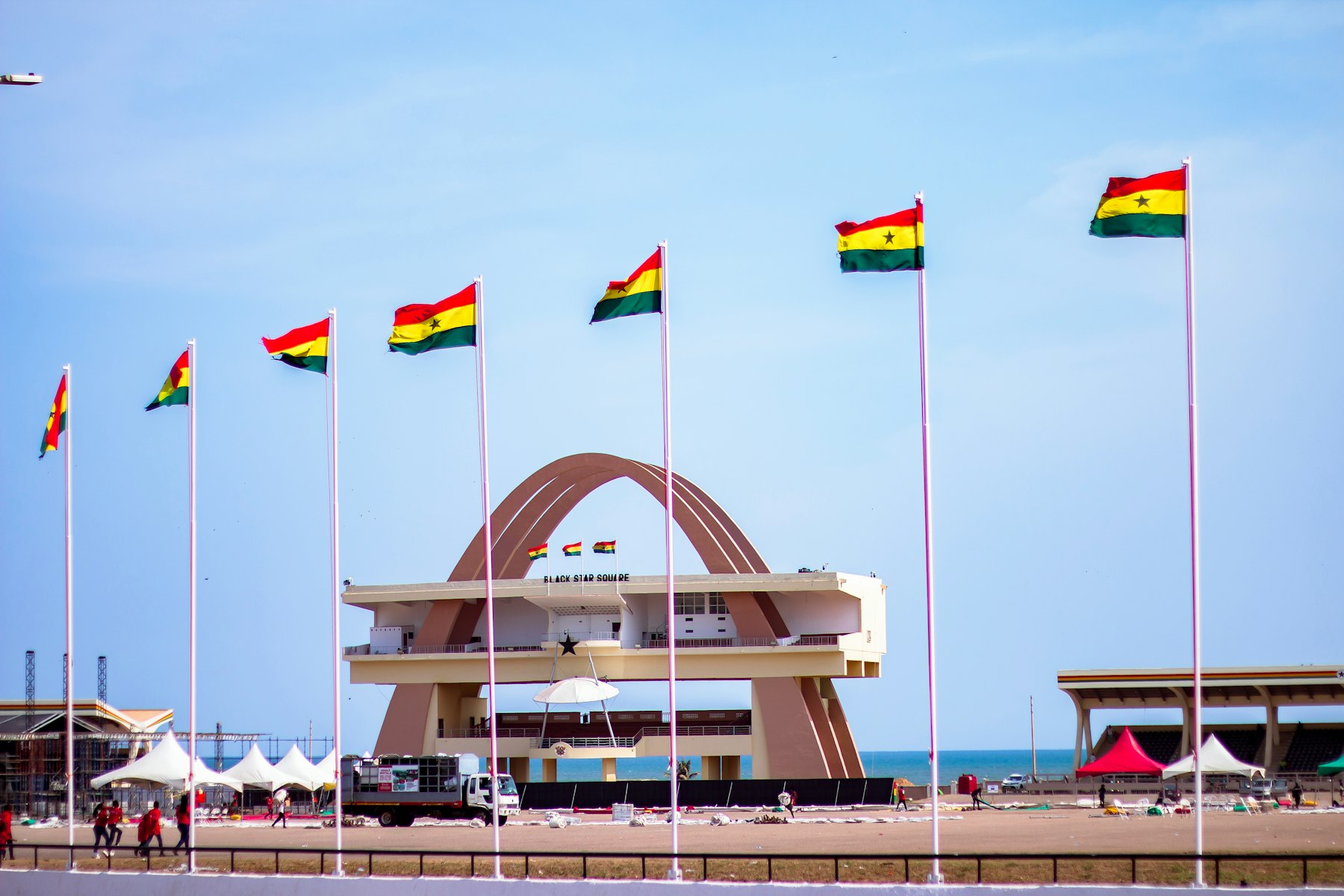
Ghana’s Independence Day, on 6 March, marks 6 March 1957, when the former Gold Coast became independent from British rule and was renamed Ghana, the first country in sub-Saharan Africa to win independence from European colonial rule. The main national event is a parade at Black Star Square in Accra. The day is a public holiday and is also remembered in Ghanaian communities abroad. Its symbols appear on the flag, whose red, gold and green stripes carry a black star, often described as a sign of African freedom.
6 March each year
Across Ghana, with the main parade at Black Star Square in Accra, and in Ghanaian communities abroad.
Watch the parade, learn about the independence story and join community celebrations.
Ghana, our beloved country, is free forever: Kwame Nkrumah, 6 March 1957
Before independence, the territory was the British colony of the Gold Coast. After the Second World War, calls for self-government grew, and Kwame Nkrumah and the Convention People’s Party won elections in 1951. On 6 March 1957, the Gold Coast became independent under the name Ghana, the first country in sub-Saharan Africa to gain independence from European colonial rule. That night Nkrumah, who became the first Prime Minister, declared that “the African people are capable of managing their own affairs” and that Ghana was “free forever”. The celebrations in 1957 drew guests from around the world, including Martin Luther King Jr.
Independence Day is a public holiday. If 6 March falls on a weekend, the following Monday is a holiday. The best-known event is the parade at Black Star Square in Accra, with marching contingents and a ceremony that includes trooping the colour, a tradition dating from the colonial era. Leaders give speeches, and in some years heads of state from other countries join the celebrations as guests. Celebrations have also been held in other cities, such as Kumasi and Tamale. Many Ghanaians use the day to honour those who led the country to independence, and Ghanaian communities abroad hold their own events. Ghana has many regions, languages and traditions, and the way people mark the day varies.
Mark Ghana’s Independence Day at home:
On the App Store now. Coming soon on Google Play.
If you plan to watch the parade in Accra, arrive early and expect security checks and road closures. Bring water and sun protection, as March is hot. Many offices and shops close for the public holiday.
Prepared with AI assistance and reviewed by the Culture XI Editorial Team.
Written by
Culture XI Editorial TeamThe Culture XI Editorial Team researches and writes our guides to cultures, celebrations, weddings and cultural intelligence. Each article draws on published research and reputable sources, which we cite on the page. We update articles when we find newer or better sources.
On 6 March 1957 Ghana became independent from British colonial rule, the first country in sub-Saharan Africa to do so.
The Gold Coast, a British colony.
At Black Star Square in Accra.
Red, gold and green stripes with a black star. Red is commonly explained as the blood of those who fought for independence, gold as the country’s mineral wealth and green as its forests and farmland. The black star is a symbol of African freedom.