Invited to a wedding in Ghana? Many couples hold a colourful traditional marriage, often called the engagement, where two families meet, gifts are presented and the bride gives her consent, sometimes followed by a church or civil white wedding.
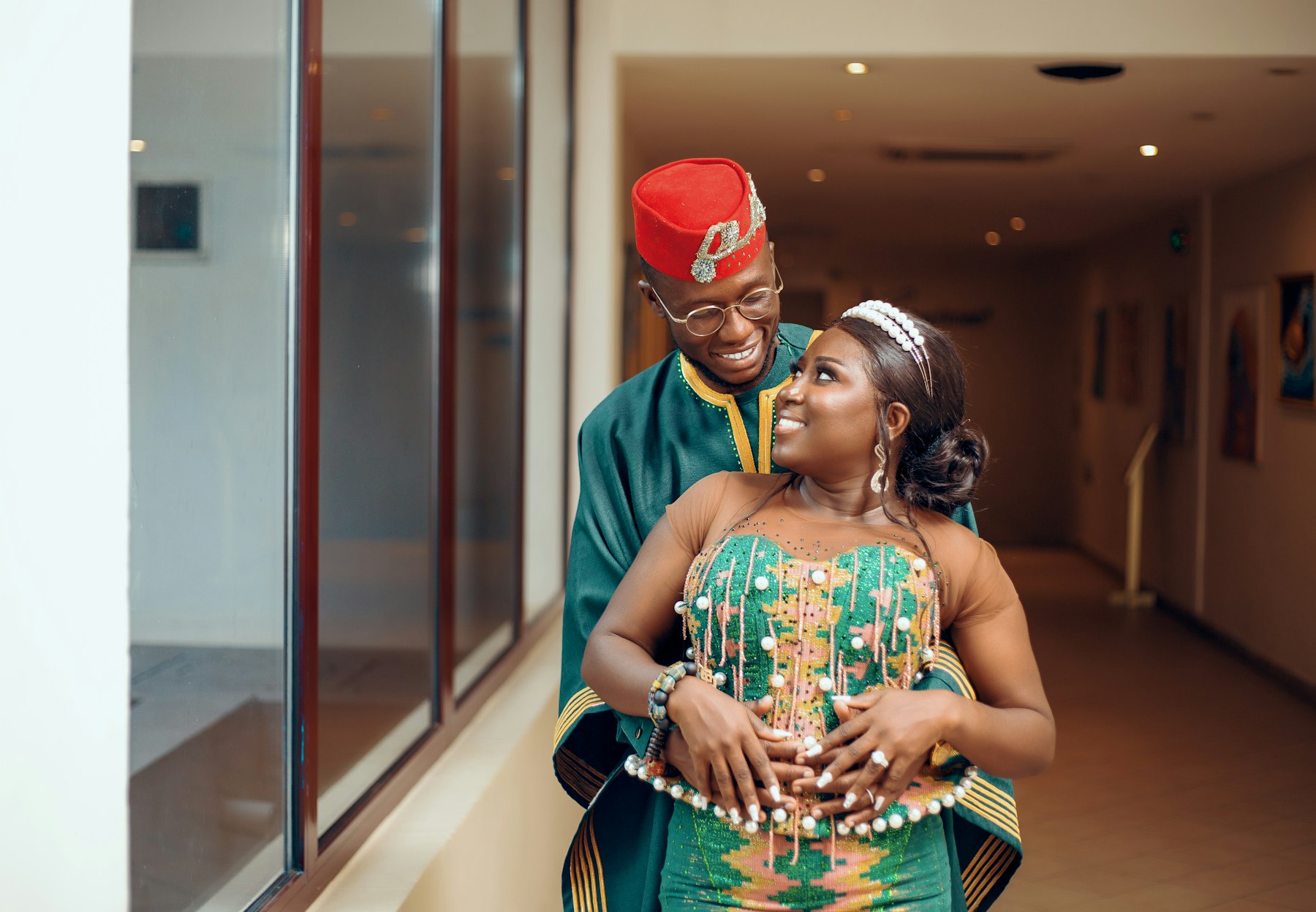
Photo: Patrick Amofah / Unsplash
Bright and formal. Kente or a colourful, well-made outfit is ideal; ask the couple if there is a colour theme.
Often a gift or money in a card. At some celebrations guests also honour the couple by dancing with them.
A traditional ceremony can take several hours, followed by food, music and dancing.
Congratulations!: English is widely understood; many families also speak Twi, Ga, Ewe or other languages.
Reply as the invitation asks and check whether you are invited to the traditional ceremony, the white wedding or both.
In Ghana, marriage is first and foremost a union of two families. Among many communities, the process starts with the knocking ceremony, called kokooko in Akan, when the groom’s family visits the bride’s family with drinks to announce their intentions. If the drinks are accepted and the bride agrees, the families may set a date and the bride’s family may share a list of gifts.
At the traditional marriage, often held at the bride’s family home or another venue, the two families sit opposite each other, and spokespersons for each side lead the proceedings with warmth and humour. The groom’s family arrive with the gifts on the list, which may include cloth, jewellery, a Bible and ring, drinks and money for the bride’s parents, and a gift for her brothers, known in Akan as akonta sekan, to thank them for protecting their sister. The bride is then welcomed in with music and dancing, often dressed in rich kente and beads, and the couple frequently wear matching outfits. She is asked, sometimes more than once, whether she accepts the gifts and the groom, and her “yes” is greeted with celebration. Prayers and advice from elders follow. How the ceremony is performed depends on the family’s ethnic and religious background, so customs vary.
Afterwards, guests share food such as jollof rice, waakye, banku and okro stew or kenkey and fish, with music and dancing. The couple go round to greet and thank their guests, and personalised favours such as mugs or towels are often given out. For some couples the traditional marriage is complete in itself; others follow it with a blessing or a white wedding in church, or register their marriage in court.
Traditional ceremonies are family occasions, and relatives of all ages often attend. Expect a long event and bring something for younger family members to do during the formal speeches.
Coming soon to the App Store.
If a colleague invites you, a card with money or a gift is a kind gesture. Ask whether you are invited to the traditional ceremony, the white wedding or the reception.
The first formal step, when the groom’s family visits the bride’s family with drinks to ask for her hand in marriage.
Bright, formal clothing. Kente or a well-made outfit in wax print is ideal, but ask the couple about any colour theme.
Yes. For many couples it is complete in itself, though some also hold a church or civil wedding.