Spanish
Taste, say and celebrate Argentina, then earn the Argentina stamp in World Explorer.
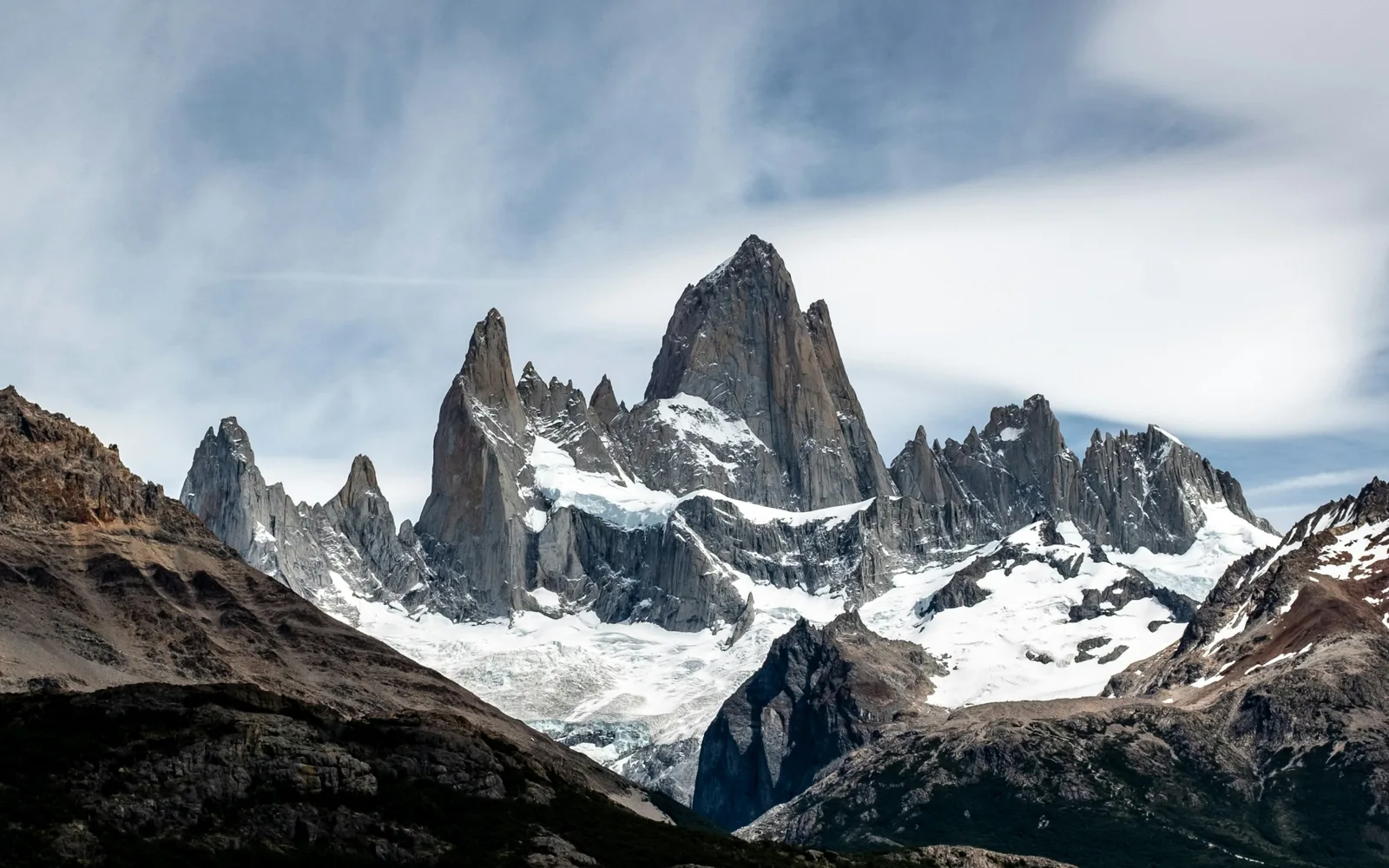
Mount Fitz Roy, Patagonia, Argentina · Photo: Timur Kozmenko / Unsplash
Official name
Argentine Republic (República Argentina)
Capital
Buenos Aires
Official language(s)
Spanish (de facto national language)
Currency
Argentine peso (ARS)
Common greeting
Hola; Buen día (good morning)
Calling code
+54
Time zone(s)
UTC−3 all year (Argentina Time); no daylight saving
Sources: Argentina – Wikipedia, Time in Argentina – Wikipedia, List of country calling codes – Wikipedia, ISO 4217 currency codes – SIX Group
Argentina stretches from subtropical forests and the Andes to the glaciers of Patagonia, and its roughly 46 million people live mostly in cities. Spanish is the national language, spoken in a distinctive Río de la Plata accent, and Indigenous languages such as Quechua, Guaraní, Mapuzugun and Wichí are still used in several provinces. Waves of immigration from Italy, Spain and many other countries, together with Indigenous and Afro-Argentine heritage, shape everyday life, and regions differ noticeably.
Friends, relatives and most new acquaintances greet each other with one kiss on the right cheek, including men with women and often men with men who know each other well. In formal business settings a handshake with eye contact is normal. Argentines usually use vos instead of tú, with its own verb forms, and usted for people you do not know or who are much older.
People tend to move quickly to first names, but titles such as doctor, licenciado or ingeniero are used for professionals, and they appreciate being addressed that way at first. Asking about someone’s family or city before starting a conversation about work is natural.
Social life revolves around unhurried conversation. Lunch is often around one or two in the afternoon and dinner rarely starts before nine, so arrive at a dinner invitation fifteen to thirty minutes after the stated time unless told otherwise. For business meetings, be punctual even if your counterpart is delayed.
Mate, an infusion of yerba mate drunk from a shared gourd with a metal straw, is an everyday gesture of friendship. One person, the cebador, refills the gourd and passes it round in order; drink it all, hand it back and say gracias only when you want no more. Football matters to many, but let others raise team loyalties, and avoid joking about regional rivalries or about the Malvinas, a sensitive subject.
Beef roasted slowly over embers, the asado, is the best known meal, shared on weekends with provoleta, chorizo and salads. Beyond it you will find empanadas, which vary from province to province, milanesas, pasta and gnocchi, a legacy of Italian migration, and in the north dishes such as locro, humitas and tamales.
At the table, wait until everyone is served and offer to share. Meals are long, and the conversation afterwards, the sobremesa, is as important as the food. Ask for the bill, la cuenta, because it will not arrive unprompted. A tip of about ten percent is customary in restaurants, and a cover charge, cubierto, may appear on the bill. Vegetarians are increasingly well catered for in cities, but meat is central to many gatherings, so tell your hosts early.
Día de la Independencia on 9 July recalls the 1816 declaration made in Tucumán and is marked with flags, patriotic events and, in many homes, locro. Día del Amigo on 20 July is a day to phone, message or meet your friends.
Argentine weddings usually include a civil ceremony, often a religious one, and a party that lasts until the early morning. Read our guest’s guide to an Argentine wedding for dress, gifts and the length of the night.
Business relationships are built through conversation and trust, so expect an initial meeting that includes personal topics before decisions. Colleagues are often direct in discussions and open to disagreement, and then keep it friendly. Meetings can start late and overrun, so keep your own schedule flexible and confirm details in writing afterwards.
Argentina uses a single time zone, UTC−3, all year, so the gap with Europe changes with daylight saving time. Economic uncertainty has been part of recent history, and many colleagues are practical about prices and planning; avoid assuming how anyone feels about it. Use vos if invited, or stay with usted until offered otherwise, and thank people for hospitality such as a shared mate.
Yes, one kiss on the right cheek is the usual greeting among friends, family and many new acquaintances. In formal business situations a handshake is safer, and you can follow your counterpart’s lead.
Accept if you can, drink the whole gourd and return it to the person serving. Say gracias only when you do not want any more, and do not stir the straw.
Usually from nine in the evening, often later on weekends. If invited to someone’s home, ask when to arrive.
Argentines use vos in most informal speech. Using tú is understood, but trying vos shows you listened.
World Explorer
Families who want to explore Argentina through short games can try the Culture XI World Explorer app.