Sranan Tongo, spoken alongside Dutch
Taste, say and celebrate Suriname, then earn the Suriname stamp in World Explorer.
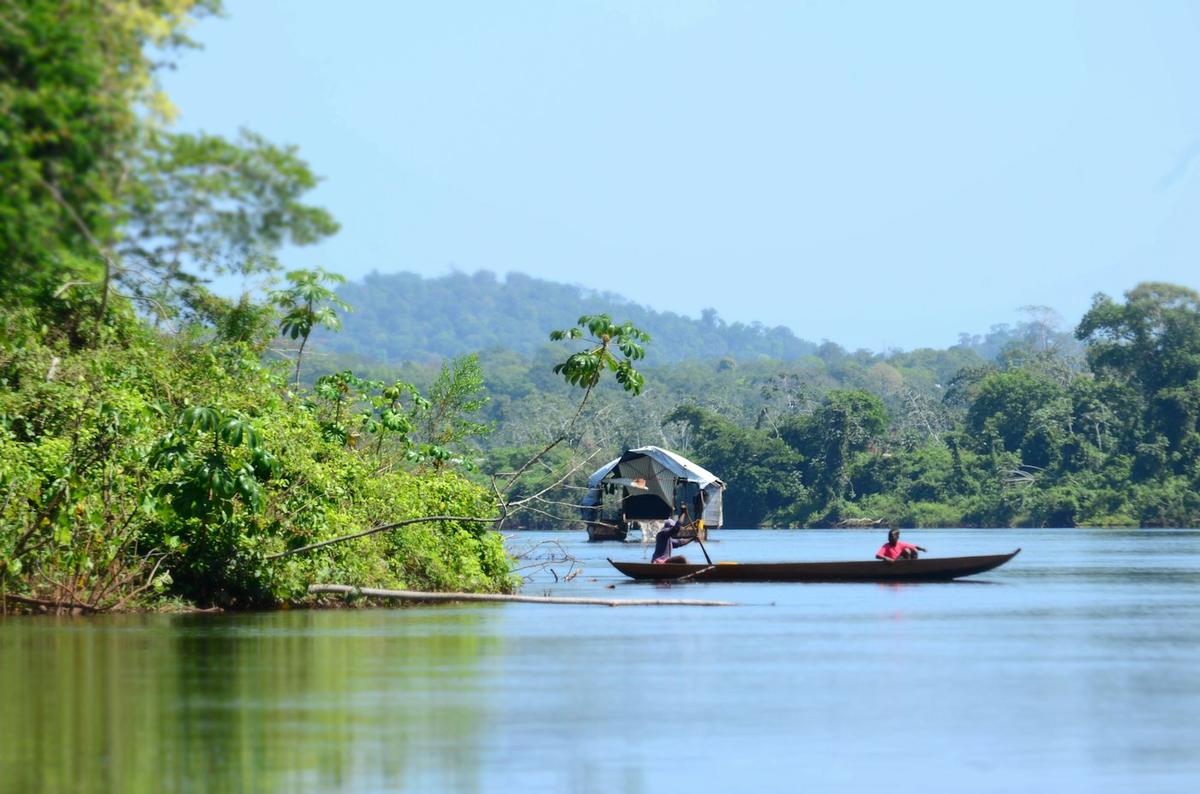
A boat on the river in Boven Suriname · Photo: Anoeskha B / Unsplash
Official name
Republic of Suriname (Republiek Suriname)
Capital
Paramaribo
Official language(s)
Dutch
Currency
Surinamese dollar (SRD)
Common greeting
Goedendag; Hallo (Dutch); Fa waka? (Sranan Tongo, how are you?)
Calling code
+597
Time zone(s)
UTC−3 all year; no daylight saving
Sources: Suriname – Wikipedia, List of time zones by country – Wikipedia, List of country calling codes – Wikipedia, ISO 4217 currency codes – SIX Group, Government of Suriname
Suriname is a small country of around 600,000 people on the north coast of South America, culturally close to the Caribbean and covered by rainforest across roughly nine tenths of its land. Its communities include Hindustani, Creole, Javanese, Maroon, Indigenous, Chinese, Lebanese and mixed families, whose ancestors arrived from Africa, South Asia, Indonesia and elsewhere. Independence from the Netherlands came on 25 November 1975, and the historic centre of Paramaribo is a UNESCO World Heritage site.
Dutch is the official language and is used in government and schools, while Sranan Tongo is the common language of the street, the market and the family home. Fa waka, literally how do you walk, is a friendly way to ask how someone is, and odi works as a casual hello. Many Surinamese people also speak Sarnami, Javanese, a Maroon language or an Indigenous language at home.
A handshake, a smile and a spoken greeting are normal, and people often greet everyone in the room. Older acquaintances are commonly addressed with respect, sometimes as oom or tante. Switching between Dutch and Sranan Tongo in the same conversation is natural and does not mean someone is excluding you.
Religious and cultural diversity is part of daily life: in Paramaribo a mosque and a synagogue stand side by side, and temples, churches and mosques are common across the country. Respect for each community’s holidays and practices is expected, so ask before assuming what a colleague or neighbour celebrates, and dress modestly when visiting places of worship.
Hospitality is warm, and a visitor is often offered something to drink or eat. Many social events start later than the stated time, though business and official appointments are more punctual. Avoid asking people where they are really from; Surinamese identities are layered, and many people are proud of several roots at once.
Surinamese cooking blends its communities. Roti with chicken, potato and long beans comes from the Hindustani kitchen, bami and nasi from Javanese cooks, pom is a baked dish of grated root and chicken, and bakabana, fried plantain, is often a snack with peanut sauce. Warungs, small Javanese eateries, serve soto soup and saté, and peanut soup is another favourite.
Peppers, especially Madame Jeanette, can be fierce, so ask for the sambal on the side. Roti is often eaten with the hands, and sharing dishes is common. Because many Muslims avoid pork and many Hindus avoid beef, check dietary needs before ordering for a group. Thank the cook and accept at least a small portion; refusing everything may seem cold.
Keti Koti, meaning broken chains, marks the abolition of slavery on 1 July 1863 and is also observed in the Netherlands. Phagwa, the Hindustani spring festival, brings abir powder, songs and shared food, and has its own Surinamese character.
The calendar also includes Independence Day on 25 November, Eid al-Fitr, Divali, Christmas, Chinese New Year, and days that remember arrivals: Indian Arrival Day on 5 June and Javanese Immigration Day on 9 August. Public holidays reflect the country’s several faiths.
Because families come from many backgrounds, Surinamese weddings follow no single pattern: a civil marriage is common, and religious or customary celebrations may add days of music and shared food. Our guest’s guide to a Surinamese wedding suggests how to ask the family about customs and dress.
Dutch is the language of administration and study, so written work usually follows Dutch conventions, while meetings may slide into Sranan Tongo for warmth. If you are working with Surinamese colleagues in the Netherlands, remember that many are Dutch citizens with Surinamese roots, and personal histories differ widely.
Relationships and courtesy matter, and a friendly exchange before business goes a long way. Include colleagues from different communities in planning, and check which holidays matter to each person rather than guessing. Many Surinamese teams are used to mixing languages and faiths, so curiosity is welcome as long as you listen first.
Dutch is the official language, and Sranan Tongo is the main everyday language. Sarnami, Javanese, Maroon languages, Indigenous languages, Chinese and English are also spoken.
Geographically it is in South America, and culturally it is close to the Caribbean. It is a member of the Caribbean Community, CARICOM.
A flatbread served with curried chicken, potato and long beans, which came to Suriname with Hindustani contract workers and is now a national favourite.
Keti Koti, meaning broken chains, remembers the abolition of slavery on 1 July 1863. It is observed in Suriname and by many people in the Netherlands.
World Explorer
Families who want to explore Suriname through short games can try the Culture XI World Explorer app.