French
Taste, say and celebrate France, then earn the France stamp in World Explorer.
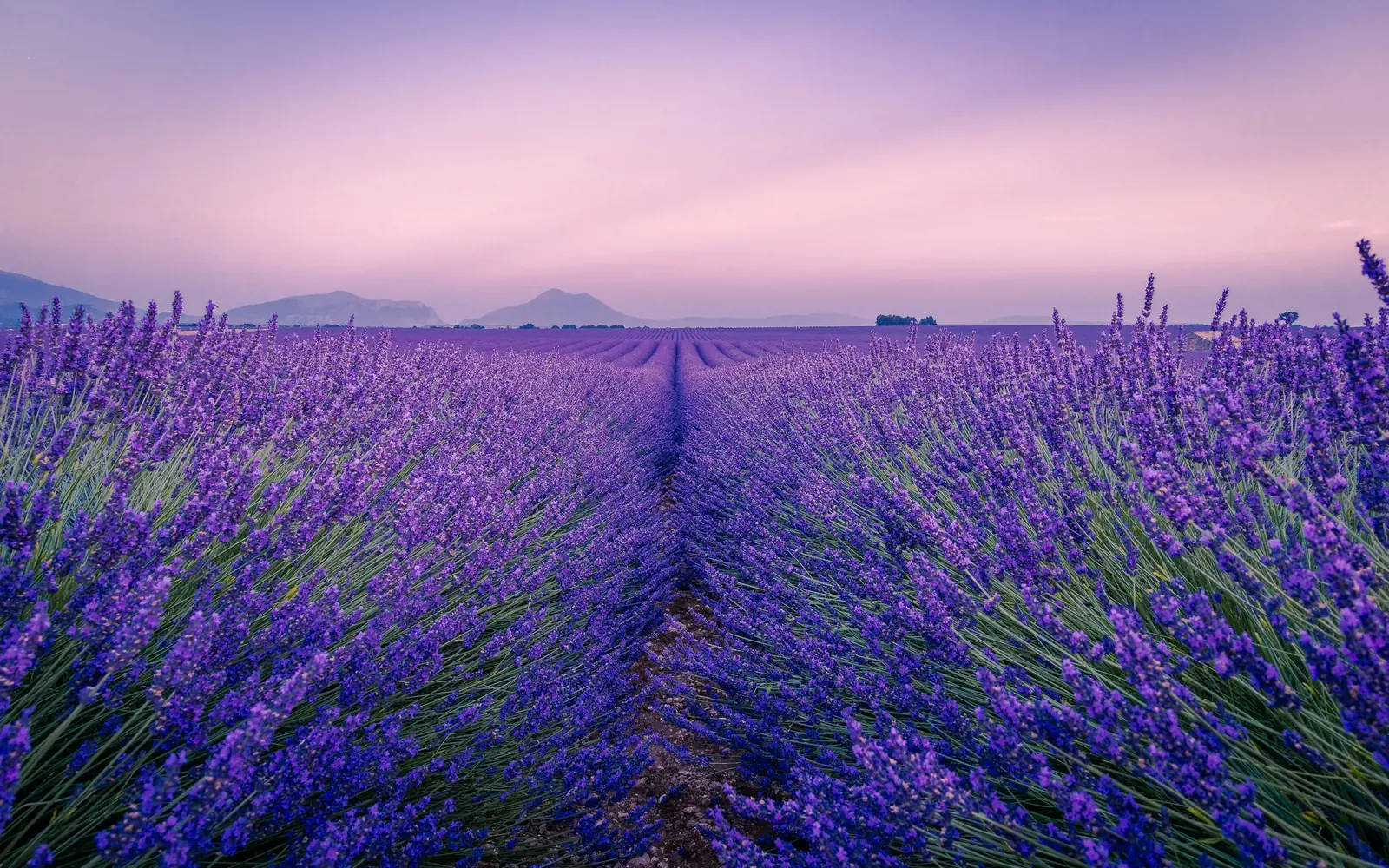
Lavender fields near Valensole, France · Photo: Antony BEC / Unsplash
Official name
French Republic (République française)
Capital
Paris
Official language(s)
French
Currency
Euro (EUR)
Common greeting
Bonjour
Calling code
+33
Time zone(s)
Metropolitan France: CET (UTC+1), CEST (UTC+2) in summer; overseas territories use other zones
Sources: France – Wikipedia, Time in France – Wikipedia, List of country calling codes – Wikipedia, ISO 4217 currency codes – SIX Group
France has about 68 million people in mainland France and its overseas regions and territories, from Martinique and Guadeloupe to Réunion, French Guiana and Mayotte. French is the official language, and regional languages such as Breton, Occitan, Alsatian, Basque, Corsican and Catalan are still spoken, as are Arabic, Portuguese and many other languages brought by migration. Paris is only one face of the country: Brittany, Provence, Alsace, the Basque Country and the overseas departments each have distinct customs, food and accents.
Say bonjour, or bonsoir in the evening, when you enter a shop, café or office, and say au revoir when you leave; skipping the greeting is considered rude. Among friends and relatives people exchange la bise, kisses on the cheeks, whose number and starting side vary by region; at work a handshake is more usual unless colleagues are close. Use monsieur and madame with the formal vous for strangers, older people and in business, and wait to be invited to use tu.
People often ask “ça va ?” as a greeting. A short “ça va, et vous ?” is enough.
Politeness formulas matter: s’il vous plaît, merci and excusez-moi are expected, and a dismissive tone can offend even if the words are polite. French people value discussion, and debating an opinion is often a way of showing interest rather than aggression. Dress tends to be neat, and ordinary clothes are usually well put together, even for a trip to the market.
Be on time for work and appointments; for a dinner at home arrive about ten to fifteen minutes late. Bring flowers, chocolates or wine, but avoid chrysanthemums, which are associated with funerals. France is a secular republic, and religion is generally not discussed openly in public institutions, so avoid asking about it in a professional setting. Service is included in restaurant prices by law, so tipping is optional, and a few euros or rounding up shows appreciation.
Meals matter, and the French gastronomic meal is inscribed by UNESCO as an intangible heritage. A typical lunch or dinner consists of a starter, a main course, cheese and dessert, with bread but rarely a side plate for it. Bread is placed next to the plate, not on it, and torn instead of cut. Each region has its own specialities: choucroute and tarte flambée in Alsace, crêpes and cider in Brittany, bouillabaisse and ratatouille in Provence, and cassoulet in the south-west.
Keep your hands visible on the table, with wrists resting at the edge, wait for “bon appétit” before eating and make eye contact when clinking glasses with “santé”. Lunch is normally at noon or one, and dinner after half past seven. Ask for the bill, “l’addition, s’il vous plaît”, because it will not arrive unprompted. Vegetarian options are more common in cities, but tell hosts early.
Fête de la Musique on 21 June fills squares, streets and courtyards with free concerts by amateurs and professionals. The Fête nationale on 14 July marks the 1790 Fête de la Fédération and the storming of the Bastille in 1789, with a military parade in Paris, fireworks and local dances, often at fire stations.
Other holidays include 1 May, with sprigs of lily of the valley, Armistice Day on 11 November, the Epiphany with its galette des rois, Candlemas crêpes in February and Christmas.
French weddings begin with a civil ceremony at the town hall, which is the only legally binding one. Our guest’s guide to a French wedding explains the religious service, the meal and the dress code.
French workplaces tend to be formal at first. Use vous and surnames until invited otherwise, and write polite emails with a proper greeting and closing, such as “cordialement”. Hierarchy is respected, but ideas are discussed critically and disagreement is not personal. Meetings are structured, often start with an overview, and may overrun, while lunch is a real break, usually an hour or more.
Employees are entitled to five weeks of paid leave, and many take vacation in August, so offices may be quiet. France guarantees a right to disconnect from work outside working hours, so avoid sending requests late in the evening. France uses Central European Time, with daylight saving in summer, and public holidays such as 8 May and 14 July. Keep written follow-ups clear and avoid assuming that every French person shares one style; Parisians, Marseillais, Alsatians and colleagues from overseas departments differ.
Yes. Greeting the staff on entering and saying au revoir when leaving is considered basic politeness.
It varies by region and age group, from one to four. Follow your counterpart’s lead, and use a handshake at work unless colleagues greet with la bise.
Service is included in menu prices, so tipping is optional. Rounding up or leaving a few euros for good service is appreciated.
With friends, family and often among younger colleagues. Use vous until the other person offers tu.
World Explorer
Families who want to explore France through short games can try the Culture XI World Explorer app.