Invited to a wedding in Mexico? Expect a meaningful ceremony with padrinos, the lazo and the arras, followed by a generous party that often runs late. Here is what guests can expect.
A Mexican wedding is typically a ceremony with meaning in every detail, followed by a fiesta that runs late. Many couples hold a civil and a religious ceremony, often a Catholic Mass, with padrinos, chosen relatives and friends who sponsor parts of the day. The lazo, a loop placed over the couple’s shoulders, and the arras, thirteen coins given by the groom, are well-known symbols. Receptions usually offer dinner, toasts and music, sometimes mariachi, and some families continue the next day with the tornaboda. Customs vary by region and family.
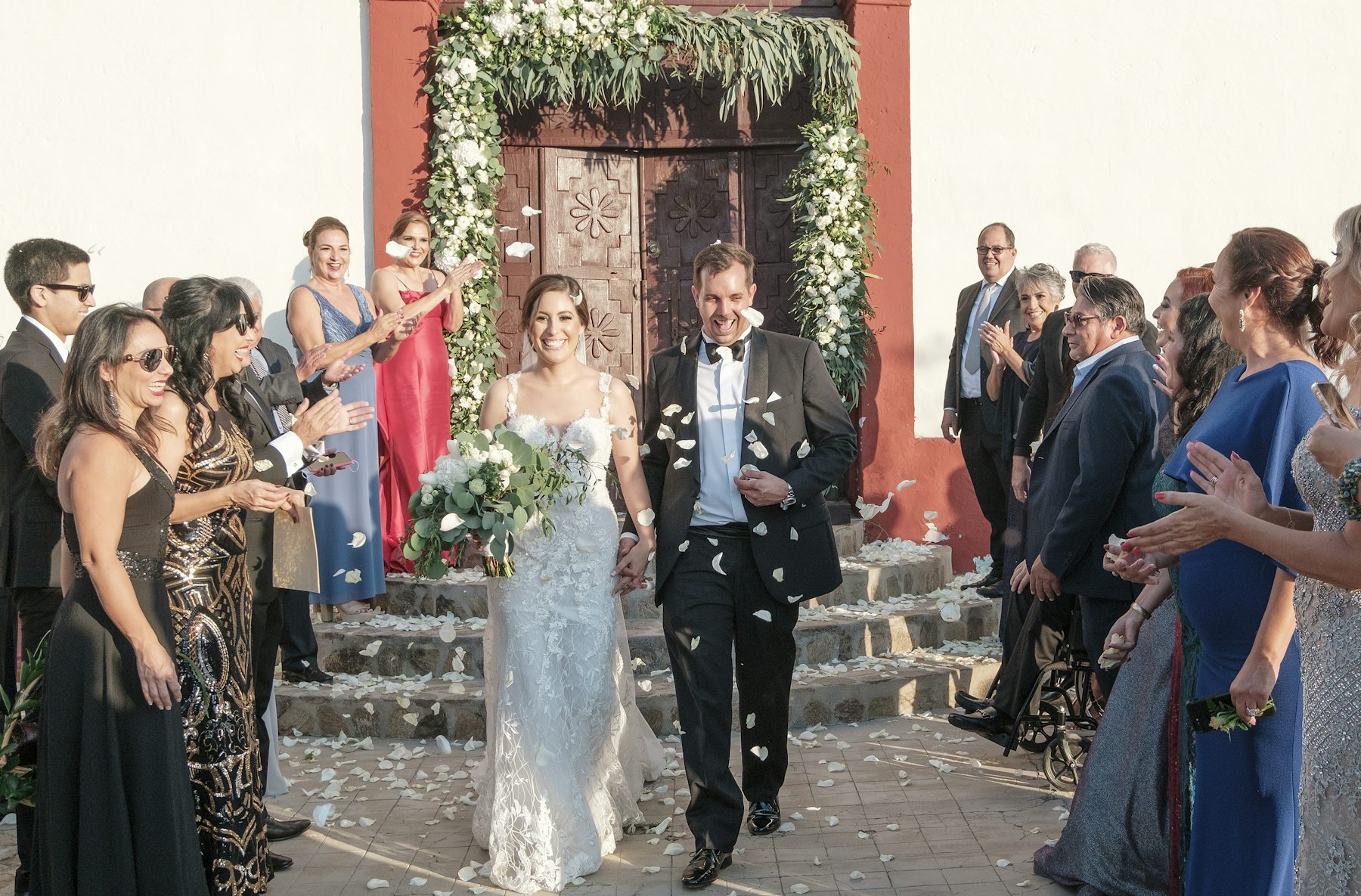
Photo: Asdrubal luna / Unsplash
Smart or formal, as the invitation says; linen is fine for beach weddings. Avoid white.
Check the couple’s mesa de regalos (gift registry) first; cash in an envelope is an accepted alternative.
Ceremony around an hour; the party often goes on late into the night.
¡Felicidades!: Congratulations!
Confirm your place by the date on the invitation; seating is usually planned.
Many Mexican couples hold a civil ceremony as well as a religious one, often a Catholic Mass, although weddings in other faiths and civil-only celebrations are common too. A distinctive feature is the role of the padrinos: relatives and friends chosen to sponsor or present particular parts of the ceremony, such as the rings, the lazo and the arras. The lazo is a loop, often of flowers, rosary beads or silk cord, placed over the couple’s shoulders as a symbol of their union. The arras are thirteen coins the groom gives the bride, a tradition also found at weddings in Spain. Customs vary by region, faith and family, so follow the lead of your hosts.
After the ceremony comes the celebration, or fiesta, often in a salón or garden venue. Expect a welcome drink, dinner, toasts and plenty of music, which may include a live band or mariachi. Dancing usually continues late into the night. Hosts take pride in making sure everyone has eaten, so you may be asked more than once whether you have had enough. In some families, the celebration continues the next day with the tornaboda, a smaller, relaxed gathering, often at someone’s home, for family and close friends.
Arrive on time for the ceremony, greet the couple and their families warmly and join in the toasts. If you are not sure about something, ask a fellow guest; people are usually happy to explain.
Many Mexican weddings are family occasions, and families with younger children are often welcome, but check how the invitation is addressed. The party can run late, so plan breaks, bring a change of clothes and do not feel bad about leaving earlier after thanking the hosts.
On the App Store now. Coming soon on Google Play.
If a colleague invites you, a gift from the mesa de regalos or a cash envelope is appropriate. Colleagues sometimes club together for a larger gift.
Prepared with AI assistance and reviewed by the Culture XI Editorial Team.
Written by
Culture XI Editorial TeamThe Culture XI Editorial Team researches and writes our guides to cultures, celebrations, weddings and cultural intelligence. Each article draws on published research and reputable sources, which we cite on the page. We update articles when we find newer or better sources.
Relatives or friends chosen by the couple to sponsor or present parts of the ceremony, such as the rings, the lazo or the arras. Being asked is an honour.
A loop, often of flowers, rosary beads or silk cord, placed over the couple’s shoulders during the ceremony to symbolise their union.
A smaller follow-on gathering, usually the day after the wedding and often at a family home, for family and close friends.