Invited to a wedding in China? Expect a joyful banquet with many courses, toasts from table to table and red envelopes. Customs vary a lot between regions and families, so here is a general guide.
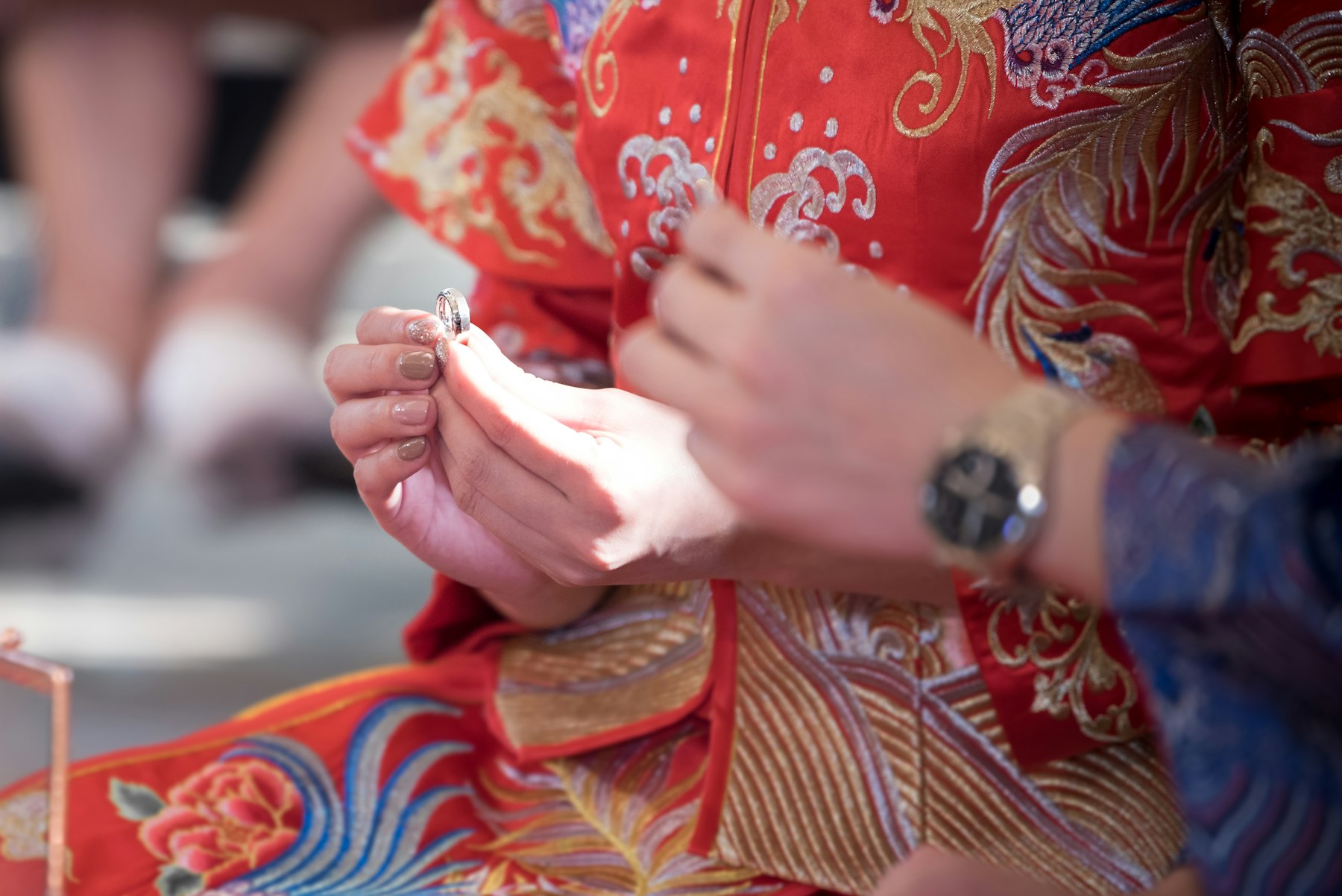
Photo: Arisa Chattasa / Unsplash
Smart and festive. Avoid red, which is often the bride’s colour, and all-white or all-black outfits, linked to mourning.
Cash in a red envelope (hongbao), handed over at the reception desk or to the couple. Avoid amounts containing the number four.
Morning rituals are usually for family; the banquet lasts around two to three hours, often in the evening.
恭喜恭喜 (gōngxǐ gōngxǐ): Congratulations!
Reply when asked so the hosts can plan tables; banquets are seated and carefully arranged.
A marriage in China becomes legal when the couple register it at a marriage registration office, often weeks before the celebration. The wedding day itself is about family and the banquet. In the morning, the groom and his friends may arrive at the bride’s home and complete playful ‘door games’ set by her friends before they are let in. Many couples hold a tea ceremony, serving tea to their parents and older relatives to show respect and receive their blessing. Traditions differ widely between regions, generations and families, and many couples mix them with modern ideas.
For most guests, the main event is the wedding banquet, known as xǐ jiǔ, or joyful wine. You will usually sign in at a reception desk, hand over your red envelope and find your table. Banquets often have eight or more courses, chosen for lucky meanings such as whole fish for abundance. During the meal, the couple visit each table to toast the guests, and the bride may change outfits, sometimes into a red qipao. Speeches, games and photos are common.
Numbers matter: many people avoid four, which sounds like the word for death, and prefer amounts with lucky digits such as eight. Some regions prefer even amounts, others odd, so ask a local friend if unsure.
Families are usually welcome at Chinese wedding banquets, but check how the invitation is addressed. Banquets are lively and noisy, with plenty of food. Younger guests often enjoy the games and the couple’s table visits. If you are bringing extra family members, let the hosts know so they can plan seating.
Coming soon to the App Store.
If a colleague invites you, a red envelope is the usual gift. Colleagues sometimes agree a similar amount among themselves, so it is fine to ask your team what is customary.
It depends on the region, the venue and how close you are to the couple. The amount often aims to cover the cost of your place at the banquet. Avoid numbers containing four.
The couple serve tea to their parents and older relatives, who in return give blessings and often gifts such as jewellery or red envelopes. It is usually a family occasion.
No. China is vast, and customs differ by region, ethnic group, faith and family. Many couples combine traditional rituals with a modern ceremony or a Western-style wedding dress.