Religious festival
In the week before Easter, Catholic brotherhoods across Spain carry centuries-old sculptures through the streets in solemn processions, accompanied by music, candles and crowds who come to watch in silence or with emotion.
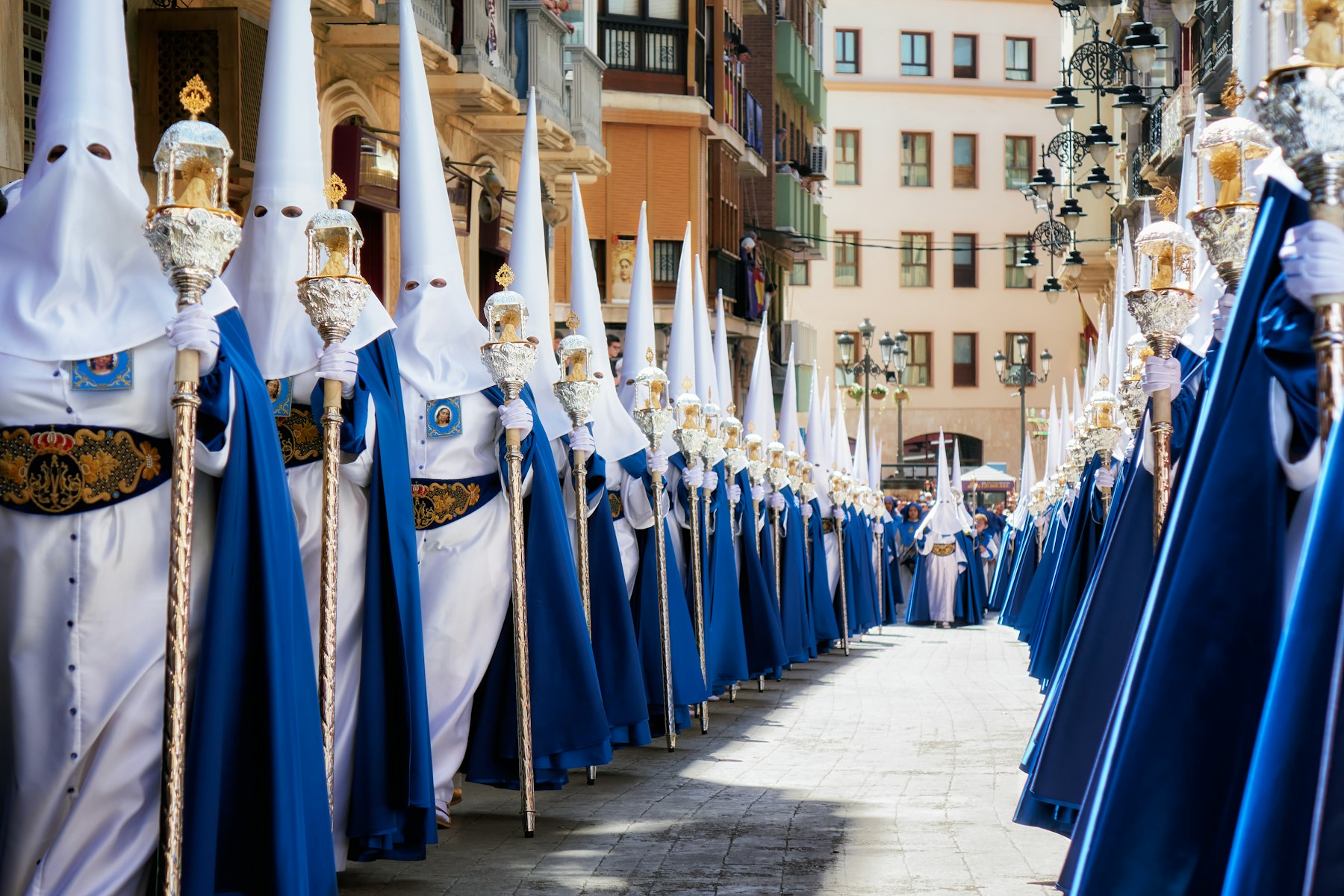
Photo: Esteban Palacios Blanco / Unsplash
The week before Easter Sunday, in March or April
In almost every Spanish city and town, with famous processions in Seville, Málaga, Granada, Zamora, León and Valladolid.
Watch a procession respectfully, listen to the processional music and, in Andalusia, perhaps hear a saeta sung from a balcony.
Semana Santa: Holy Week
Semana Santa, Holy Week, is the final week of Lent before Easter, when Christians remember the Passion, death and resurrection of Jesus. In Spain it is marked above all by the processions of Catholic brotherhoods, called cofradías or hermandades. Many of these associations date back to the Middle Ages or the Baroque period, and membership is often passed down through families.
From Palm Sunday to Easter Sunday, brotherhoods carry pasos, large floats bearing sculptures of scenes from the Passion or of the Virgin Mary, through the streets. Many of these sculptures are important works of art that brotherhoods have cared for over centuries. The pasos are often accompanied by bands playing marchas procesionales, music written especially for the processions. Many participants, known as nazarenos, wear long penitential robes with a tall pointed hood, the capirote, that covers the face. This is a centuries-old Catholic sign of penance, and its colours depend on each brotherhood. Some walk barefoot or carry candles or wooden crosses. The atmosphere varies by region: processions in Castilla y León, for example in Zamora, León and Valladolid, are known for their sombre silence, while in Andalusia, especially in Málaga and Seville, crowds may applaud as the pasos pass and someone may sing a saeta, a short flamenco verse. Holy Thursday and Good Friday are usually the most solemn days. Customs vary from town to town, and for many people it is a time of deep faith.
Learn about Semana Santa at home:
Coming soon to the App Store.
Processions are religious events. Keep quiet during solemn moments, do not cross through a procession, and avoid using flash. Popular routes are very crowded, so check timetables and arrive early. Many places have public holidays on Holy Thursday or Good Friday, and accommodation books up quickly.
A large float carrying sculptures of scenes from the Passion or of the Virgin Mary, carried through the streets by members of a brotherhood.
Members of a brotherhood who walk in the processions in penitential robes, often with a pointed hood called a capirote.
Andalusian cities such as Seville, Málaga and Granada, and in Castilla y León, Zamora, León and Valladolid.