Family custom
In Spain, the Three Kings, not Father Christmas, traditionally bring the main presents. On 5 January they parade through towns throwing sweets, and on the morning of 6 January families open gifts and share a roscón de Reyes.
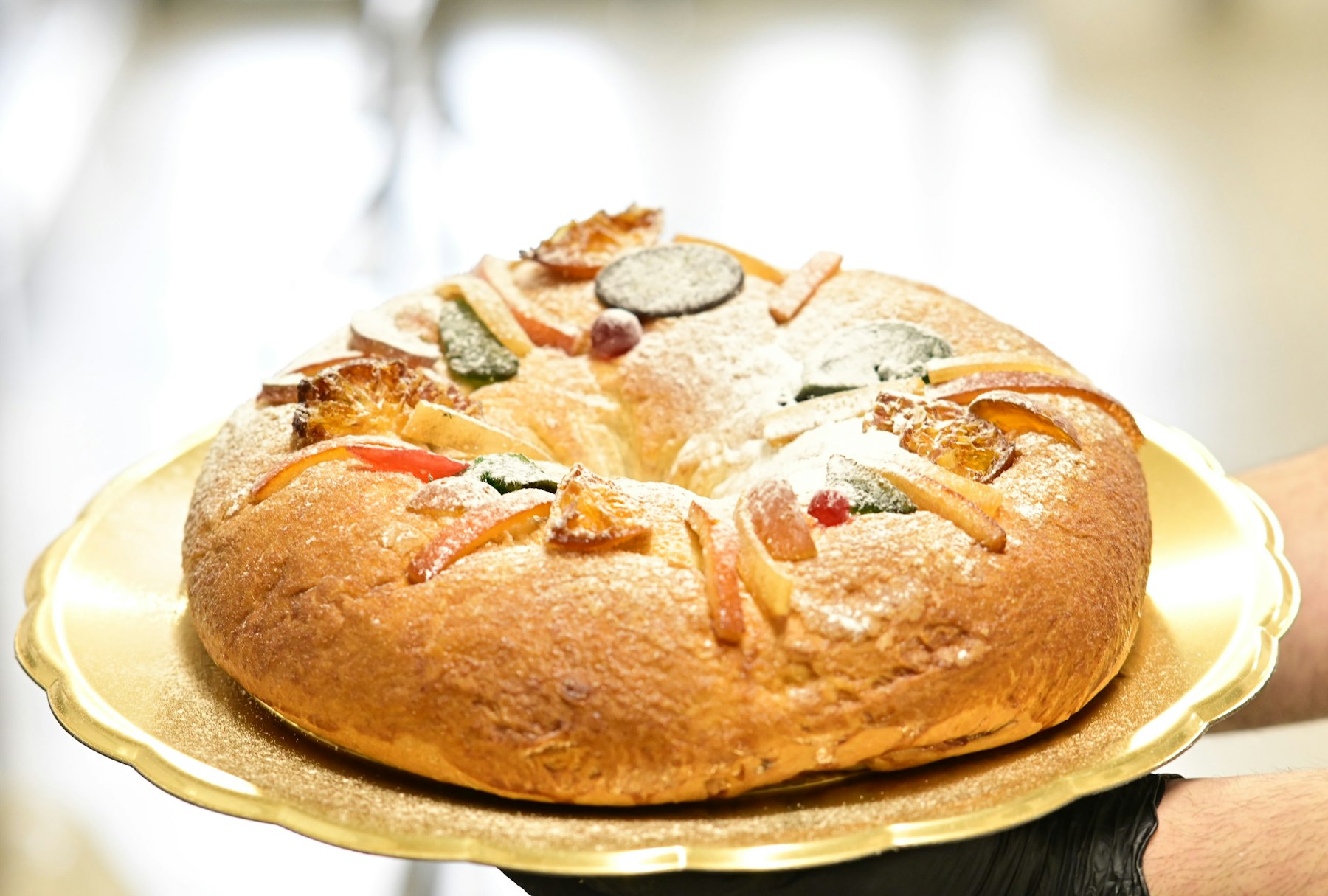
Photo: Pasquale Farro / Unsplash
6 January, with parades on the evening of 5 January
Across Spain, in almost every town and city.
Watch the Cabalgata de Reyes, leave a shoe out for presents and share a roscón de Reyes.
¡Felices Reyes!: Happy Kings’ Day!
Día de Reyes, on 6 January, is the Christian feast of the Epiphany, which remembers the visit of the Magi, the three wise men Melchor, Gaspar and Baltasar, who followed a star to bring gifts of gold, frankincense and myrrh. In Spain the Reyes Magos are the traditional bringers of the main festive presents.
In the days before, younger family members write a letter to the Kings. On the evening of 5 January, almost every town holds a Cabalgata de Reyes, a parade of floats in which the Kings and their pages throw sweets to the crowds. The oldest documented parade, in Alcoy, has taken place since the 19th century. In some places the Kings arrive in unusual ways, by helicopter in Logroño, by boat in Gijón or on skis in the Pyrenees, and the Madrid parade is broadcast nationally on public television. Before going to bed, families line up one shoe for each person in the house, and the Kings leave presents beside them during the night. In many homes people also leave something to eat and drink for the Kings and their camels, and the plates are empty by morning. On 5 and 6 January families share a roscón de Reyes, a ring-shaped sweet bread decorated with candied fruit, often scented with orange blossom water and sometimes filled with cream. Hidden inside are a small figure and a dried bean: whoever finds the figure is crowned, and by tradition whoever finds the bean pays for the roscón. Customs vary between regions and families.
Celebrate Día de Reyes at home:
Coming soon to the App Store.
Parades take place on the evening of 5 January, so arrive early for a good spot. 6 January is a public holiday in Spain, and many shops and services close.
Traditionally the Three Kings, on the night of 5 to 6 January, although many families also celebrate Father Christmas.
A ring-shaped sweet bread with candied fruit, eaten on 5 and 6 January, with a small figure and a bean hidden inside.
A parade on the evening of 5 January in which the Three Kings ride through town on floats, throwing sweets.