National day
On the night of 15 September, squares across Mexico fill with people waiting for El Grito, the cry of “¡Viva México!” that opens Independence Day celebrations, followed by fireworks, music and food.
Mexican Independence Day is observed on 16 September and recalls the Grito de Dolores of 16 September 1810, when the priest Miguel Hidalgo y Costilla called on people in the town of Dolores to rise up against Spanish rule, starting the Mexican War of Independence. The celebration begins on the night of 15 September with El Grito, a shout of “¡Viva México!” led by the president from the balcony of the National Palace in Mexico City and echoed in squares across the country. Mexican embassies and communities abroad also hold their own Grito ceremonies. The war lasted until 1821.
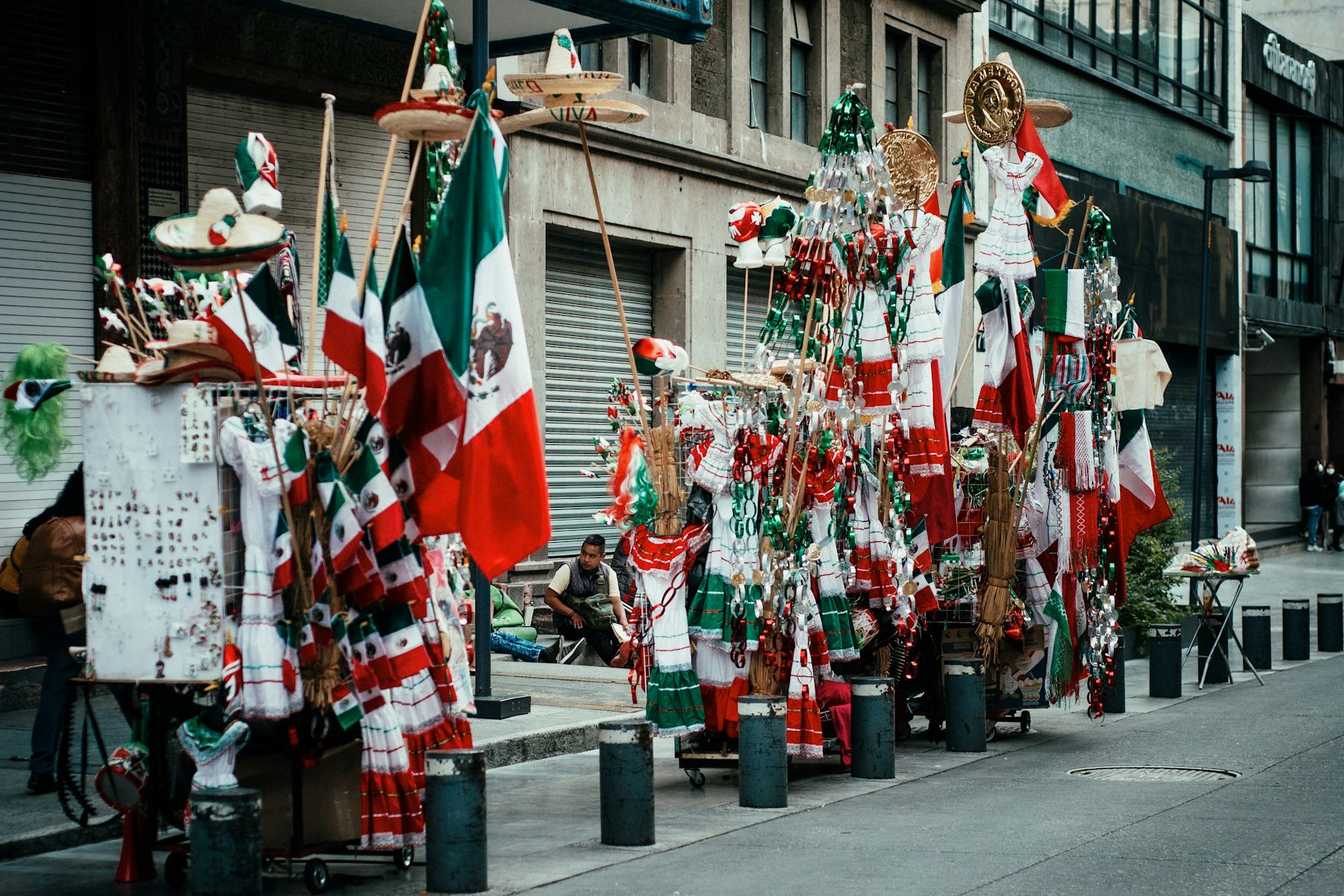
Photo: Niels Lyhne / Unsplash
Night of 15 September and 16 September
Town squares across Mexico, with the main ceremony at the Zócalo in Mexico City.
Join El Grito, watch the fireworks, enjoy music and festive food, and see the parade on 16 September.
¡Viva México!: Long live Mexico!
In the early hours of 16 September 1810, the priest Miguel Hidalgo y Costilla rang the church bell in the town of Dolores and called on people to rise up, an event remembered as the Grito de Dolores. It marked the start of the Mexican War of Independence. Today, 16 September is Independence Day, a national holiday, and the night before is when the celebrations really begin.
Every year on the night of 15 September, at around 11 pm, the President of Mexico appears on the balcony of the National Palace in Mexico City, rings the bell Hidalgo used in 1810 and recites the Grito, naming the heroes of independence and ending with three shouts of “¡Viva México!”, answered by the crowd in the Zócalo. Governors and mayors lead similar ceremonies in towns and cities, and Mexican embassies and consulates hold their own. The ceremony is followed by the national anthem and fireworks. Streets and homes are decorated in green, white and red, and families and friends gather for festive food, such as pozole or chiles en nogada, whose green, white and red colours echo the flag. On the morning of 16 September, a military parade runs through central Mexico City, and many towns hold their own parades. How people celebrate varies by region and family.
For many families, the Grito is one of the most joyful nights of the year, whether watched in a crowded square or on television at home.
Celebrate Mexican Independence Day at home:
On the App Store now. Coming soon on Google Play.
The Zócalo in Mexico City gets extremely crowded on the night of 15 September, so arrive early, travel light and agree a meeting point. Smaller town squares can be just as lively and more relaxed for families. Expect road closures for the parade on the morning of 16 September.
Prepared with AI assistance and reviewed by the Culture XI Editorial Team.
Written by
Culture XI Editorial TeamThe Culture XI Editorial Team researches and writes our guides to cultures, celebrations, weddings and cultural intelligence. Each article draws on published research and reputable sources, which we cite on the page. We update articles when we find newer or better sources.
The cry of independence, re-enacted every year on the night of 15 September. Leaders ring a bell and call out the names of independence heroes, ending with “¡Viva México!”.
No. Independence Day is 16 September. Cinco de Mayo remembers the Battle of Puebla in 1862 and is a different occasion.
The dish is made in late summer, when pomegranates are in season, and its green, white and red colours match the Mexican flag.
Dishes such as pozole, tostadas, tamales and chiles en nogada are popular. Chiles en nogada, in the colours of the flag, are especially linked to the season.