Family remembrance
Día de Muertos is a time when families in Mexico remember loved ones who have died, with home altars, marigolds, favourite foods and visits to the cemetery. It is warm, colourful and deeply personal.
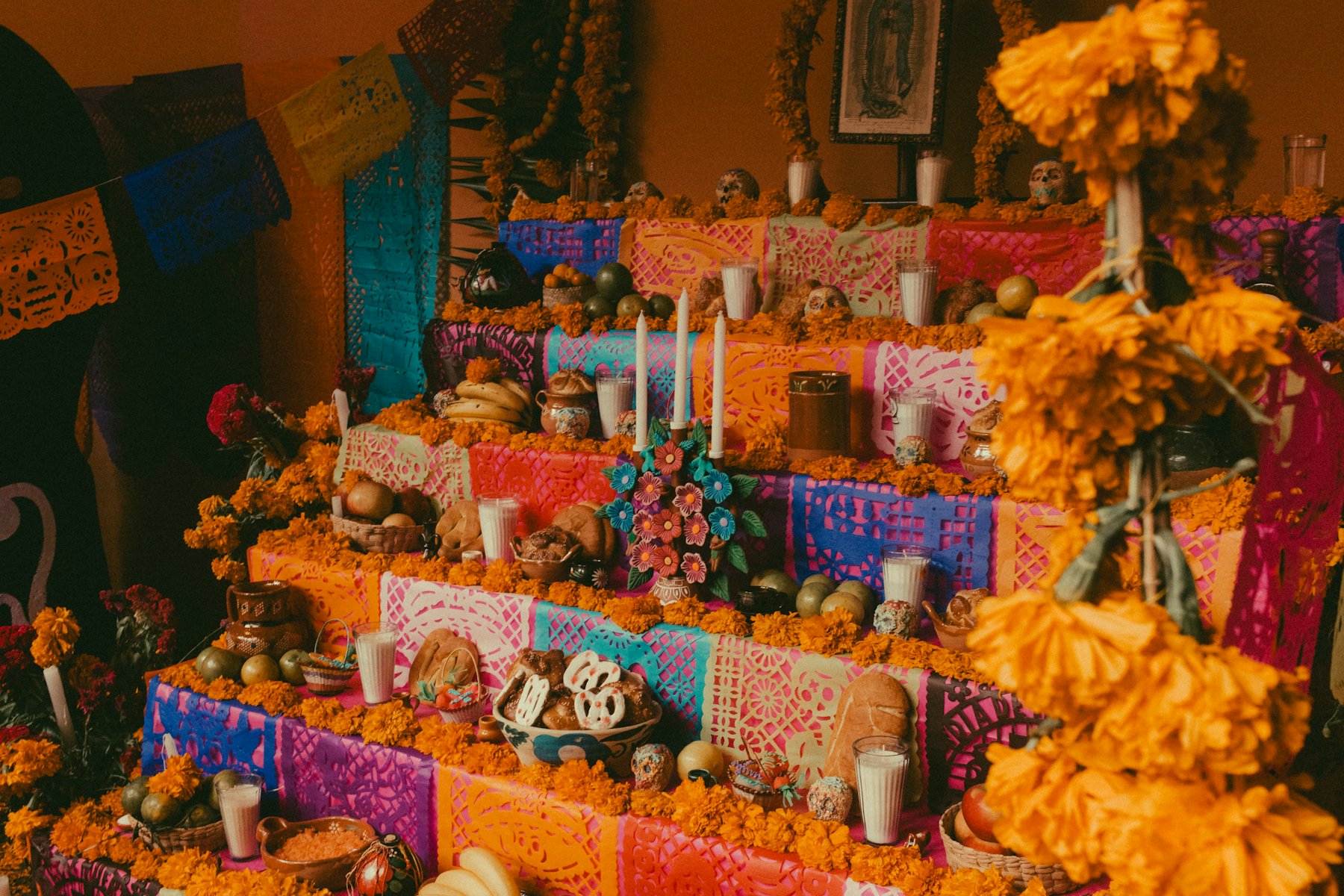
Photo: Chris Luengas / Unsplash
1 and 2 November, with dates varying locally
Homes, cemeteries, schools and public squares across Mexico.
Build an ofrenda, decorate graves with marigolds, share pan de muerto and tell stories about loved ones.
Día de Muertos: Day of the Dead
Día de Muertos is traditionally celebrated on 1 and 2 November, though some places include other days, such as 31 October. It blends Indigenous traditions with Catholic observances of All Saints’ and All Souls’ Days. The idea at its heart is that the dead are remembered with love rather than sorrow, and that for a short time they return to visit their families. In 2008, UNESCO inscribed the indigenous festivity dedicated to the dead on its Representative List of the Intangible Cultural Heritage of Humanity.
Many families build an ofrenda, a home altar with photos of the departed, candles, their favourite foods and drinks and personal mementoes. Altars are often decorated with orange marigolds, called cempasúchil. Families clean and decorate graves and may spend time in the cemetery, sharing food, music and memories; in some towns, such as Mixquic and Pátzcuaro, people stay beside the graves all night. Friends give each other sugar skulls and share pan de muerto, a sweet bread, while calaveras literarias are playful verses written about the living. The elegant skeleton figure La Calavera Catrina, created by the printmaker José Guadalupe Posada, has become a familiar image. Large public events, such as the parade in Mexico City held since 2016, sit alongside quieter family traditions. Customs vary a great deal between regions, communities and families.
For many families, Día de Muertos is above all an act of remembrance. It is not the same as Halloween, even though both fall at the same time of year.
Mark Día de Muertos respectfully at home:
Coming soon to the App Store.
Cemeteries are family spaces during Día de Muertos. If you visit, be quiet and respectful, ask before taking photos of people or graves, and never touch an ofrenda. Public altars and parades are more open to visitors. Book early if you plan to travel to well-known celebrations, such as those in Pátzcuaro or Mixquic.
No. They fall at a similar time, but Día de Muertos is a celebration of remembrance, centred on families honouring loved ones who have died.
A home or public altar with photos, candles, marigolds and the favourite foods of loved ones who have died, prepared to welcome and honour them.
Visitors are welcome at public events. In cemeteries and homes, follow the family’s lead, ask before taking photos and treat altars with respect.