Seasonal tradition
On 5 November, skies across England light up with bonfires and fireworks for Bonfire Night, also known as Guy Fawkes Night, which recalls the failed Gunpowder Plot of 1605.
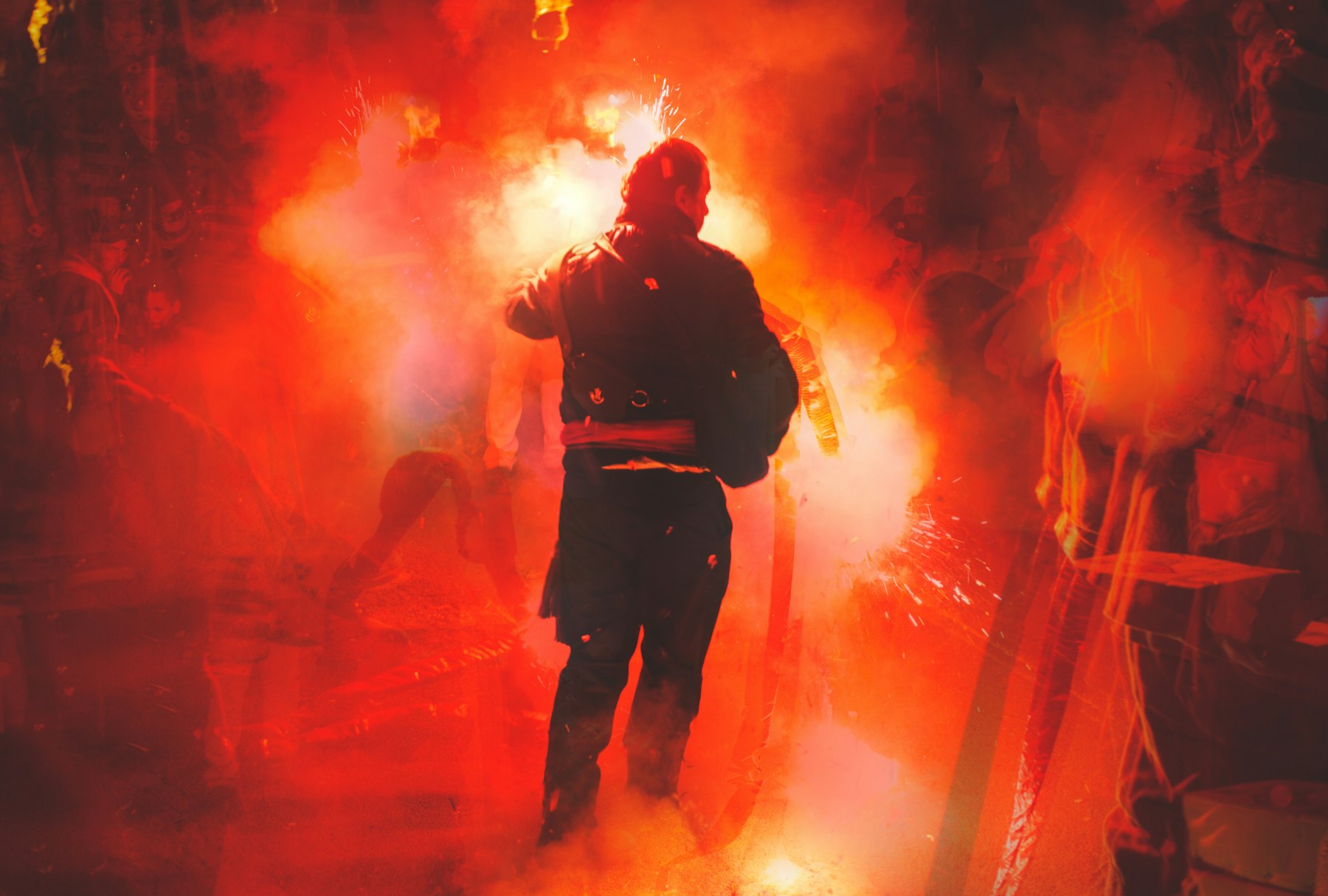
Photo: Jake Hills / Unsplash
5 November each year
Across England and the rest of Great Britain, with famous celebrations in Lewes.
Go to an organised bonfire and fireworks display, and learn the rhyme “Remember, remember, the fifth of November”.
Remember, remember, the fifth of November: the opening line of the traditional rhyme
Bonfire Night goes back to 5 November 1605, when Guy Fawkes, one of a group of plotters, was arrested while guarding explosives they had placed beneath the House of Lords. The plotters had planned to kill King James I and his parliament. To celebrate the king’s survival, people lit bonfires around London, and a few months later Parliament passed a law making 5 November an annual day of thanksgiving. For centuries the day carried strong religious and political overtones, including anti-Catholic sentiment. Observers note that these connections have largely faded, and that the focus today is mostly on the spectacle.
From the late 18th century, people made effigies of Guy Fawkes, known as guys, and took them from door to door asking for “a penny for the guy”, often singing rhymes that began “Remember, remember, the fifth of November, Gunpowder Treason and Plot”. The penny for the guy custom has now almost completely disappeared, but the rhyme is still widely known.
Most celebrations today are organised displays run by local charities and other organisations, often with paid admission and controlled access. They usually combine a large bonfire with fireworks, and some still place an effigy of Guy Fawkes on the fire. Some older customs survive: in Ottery St Mary in Devon, residents run through the streets carrying flaming tar barrels, and since 1679 Lewes in East Sussex has been the setting for some of England’s most extravagant 5 November celebrations. Some people also hold smaller gatherings at home. Rules apply: in England and Wales, fireworks must not be set off in the street or other public places, and on Bonfire Night the usual 11pm cut-off is extended to midnight. Bonfire Night is not a public holiday. Celebrations vary from town to town, and experiences of the night vary.
Mark Bonfire Night at home:
Coming soon to the App Store.
Check local listings for organised displays, which may need tickets. Dress warmly, wear sturdy shoes and follow the stewards’ instructions. Remember that fireworks must not be set off in public places.
No. It is not a bank holiday, so most people work as usual and celebrate in the evening.
It is named after Guy Fawkes, who was arrested on 5 November 1605 while guarding the explosives of the Gunpowder Plot.
Lewes in East Sussex is famous for its 5 November celebrations, and Ottery St Mary in Devon for its flaming tar barrels.