Late January or February, following the lunisolar calendar
Homes across China and Chinese communities around the world.
Share a reunion dinner, hang red couplets, give red envelopes and watch lanterns and lion dances.
新年快乐 (xīnnián kuàilè): Happy New Year!
Spring Festival, or Chūnjié, marks the beginning of the year in the traditional Chinese lunisolar calendar and the end of winter. Each year is linked to one of twelve animals of the zodiac. Celebrations run from New Year’s Eve to the Lantern Festival on the fifteenth day of the first month. Legend tells of a beast called Nian, frightened away by the colour red and loud noise, which is one explanation for the red decorations and firecrackers.
Before the festival, families clean their homes to sweep away bad luck and decorate doors with red paper-cuts and couplets wishing for happiness and good fortune. Hundreds of millions of journeys are made during Chūnyùn, the travel season around the holiday, as people head home. On New Year’s Eve, families gather for a reunion dinner; in northern China, many make jiǎozi dumplings together, while other regions have their own festive dishes. Elders give red envelopes of money to younger relatives. Over the following days, people visit relatives and friends, watch lion and dragon dances and enjoy temple fairs. Many cities restrict fireworks, so customs depend on where you are.
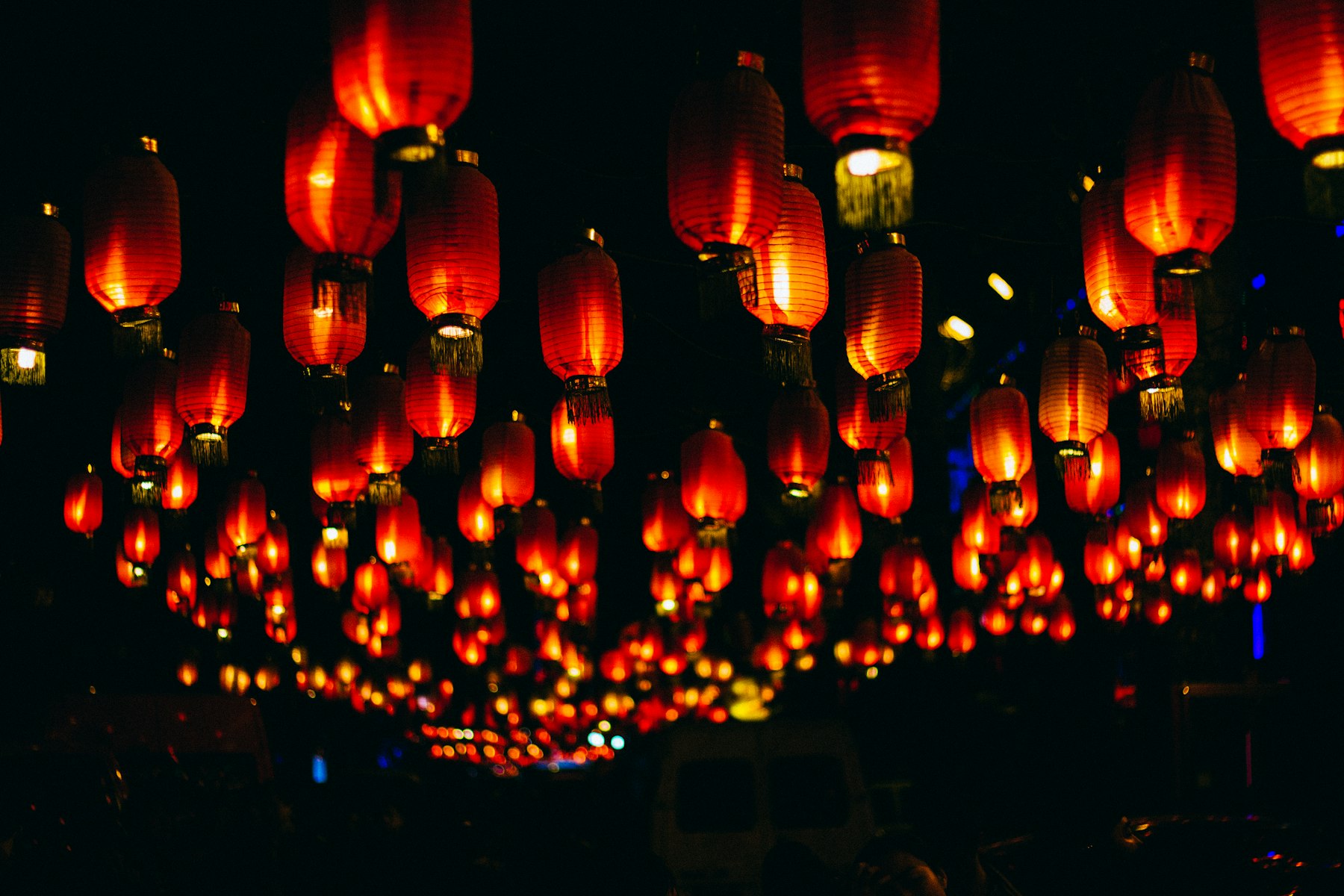
The season closes on the fifteenth day with the Lantern Festival, when streets glow with lanterns, people solve riddles and eat sweet rice dumplings called tāngyuán or yuánxiāo.
Celebrate the new year at home:
Coming soon to the App Store.
Travel around Spring Festival is extremely busy, so book transport early and expect some shops and restaurants to close for several days. If you visit a family, bring a small gift such as fruit or sweets and hand it over with both hands. Red envelopes are given by elders and married adults to younger relatives, so guests are not expected to give them unless they know the family well.
It follows the lunisolar calendar, so the date changes each year, falling between late January and mid-February.
Red symbolises luck, joy and protection in Chinese culture. Legend says the beast Nian feared red, so homes are decorated with red couplets, lanterns and paper-cuts.
Money, usually crisp new notes, given by elders to younger relatives as a wish for good luck. Many people now also send digital red envelopes by phone.