Late January or February, following the lunisolar calendar
Homes and hometowns across Vietnam, and Vietnamese communities worldwide.
Visit family, honour ancestors, share bánh chưng or bánh tét and give lucky money in red envelopes.
Chúc mừng năm mới!: Happy New Year!
Tết marks the first day of the year in the lunisolar calendar and the arrival of spring. Its roots are ancient: the legend of Lang Liêu tells how a prince won the throne by offering his father the Hung king two simple rice cakes, the square bánh chưng and the round bánh giày. Above all, Tết is about family, gratitude and a fresh start.
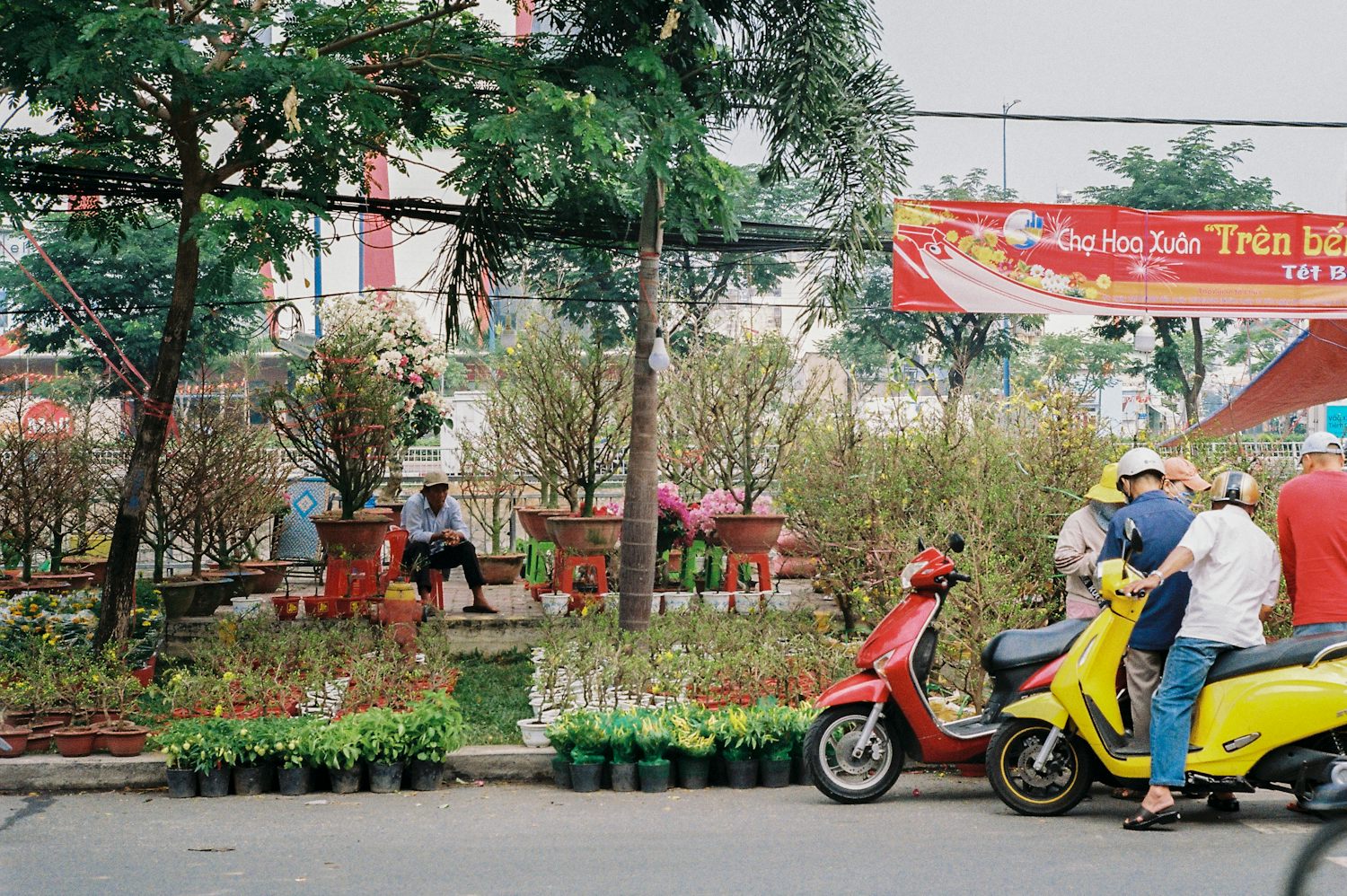
In the weeks before, families clean and decorate their homes and many travel long distances to be together. Homes fill with blossoms: peach blossom in the north, yellow hoa mai in the centre and south, and kumquat trees in many living rooms. Families visit ancestral homes and graves and prepare offerings for the family altar. Festive foods include bánh chưng and bánh tét, sticky rice cakes wrapped in leaves, along with pickles, braised pork and candied fruit. On the first days of the new year, people visit relatives, friends and neighbours, exchange good wishes and give lucky money in red envelopes, called lì xì in the south and mừng tuổi in the north. Customs vary between regions and families.
Many believe the first person to enter a home in the new year, the xông đất, shapes the family’s luck for the year. Families sometimes invite someone cheerful to be their first guest, so visitors wait to be invited on the first day.
Welcome Tết at home:
Coming soon to the App Store.
Many shops, restaurants and offices close for several days around Tết and transport is extremely busy, so plan ahead. If you visit a family, bring a small gift such as fruit, tea or sweets. Avoid visiting on the first day of the new year unless you have been invited, and greet older relatives first.
It follows the lunisolar calendar, so the date changes each year, usually falling in late January or February.
A square cake of sticky rice filled with mung beans and pork, wrapped in leaves and boiled for hours. In the south, a log-shaped version called bánh tét is popular.
Lucky money in red envelopes is traditionally given to younger family members and older relatives as a wish for health and good fortune.